1 Coat Coverage Paint: Benefits, Coverage, and Application Guide
When projects demand speed without sacrificing quality, 1 coat coverage paint delivers a compelling answer. This guide walks through everything you need to know — from how single-coat hiding power actually works, to real coverage numbers, application best practices, and smart B2B procurement strategies. Whether you are renovating a residential space or scaling an OEM interior wall paint brand, understanding what drives opacity in a single pass helps you cut labor costs, reduce material waste, and bring a stronger product to market faster.
Understanding One Coat Coverage Paint: Basics and Benefits
It usually takes two or even three coats of regular latex paint to make it completely opaque, especially when going from a dark base to a lighter finish. This problem can be fixed by putting a lot of titanium dioxide (TiO₂) and designed volume solids (usually more than 40–48% of the formula) into the 1 coat coverage paint. In one pass, the result is a contrast ratio of 0.98 or higher, which was proven by ASTM D2805 drawdown tests on black-and-white Leneta charts.
The effects on B2B buyers are important in the real world. About 70–80% of the total cost of a business painting job goes to labor (PaintSquare Industry Report, 2022). Cutting a two-coat method down to one removes a whole application cycle. This saves time and money on wages without affecting the quality of the finish.
The main reasons why single-coat systems are better at what they do make them worth looking into:
- Labor cost reduction: Getting rid of one application pass directly cuts down on billable work hours, which is especially helpful for big business or renovation projects.
- Material efficiency: More solids-by-volume means less total product is used per square meter, which means less inventory is needed for each project.
- Reduced VOC emissions: Less VOC emissions are released per finished surface area when fewer coats are sprayed, which helps meet green goals.
- Faster project turnover: The surface dries in 30 minutes, and the recoat is ready in 2 hours. This keeps building and renovation plans on track.
All of these benefits help solve the main problem that contractors and brand operators have, which is that multi-coat workflows are expensive and hard to understand. However, the performance of a single coat depends entirely on the condition of the substrate and the type of application. The sections that follow will talk directly about these topics.

Paint Coverage Explained: How Much Area Does One Coat Cover?
Standard Coverage Metrics
The amount of coverage is given in square meters per liter (㎡/L) or square feet per gallon. A well-made 1 coat coverage paint usually gives 12 to 15 ㎡/L at a dry film thickness (DFT) of about 30 microns. In US units, that's about 480 to 600 square feet per gallon, which is a lot more than the average 350 to 400 square feet per gallon of regular latex paint.
Factors That Affect Real-World Coverage
Coverage numbers that are just guesses are based on perfect conditions. How much is actually used depends on the surface's porosity, roughness, coating method, and the humidity in the air. Substrates that are rough or have a lot of pores receive a lot more material, which lowers the area. Surfaces with more than 10% wetness or a pH level above 10 make adhesion and layer stability worse, so measuring before application is required instead of optional.
For B2B procurement teams that handle bulk purchases, building in a 10–15% overage buffer based on surface audit data keeps cost models accurate and stops mid-project shortages.
Comparing One Coat Coverage Paint Options: Making the Right Choice
Performance-Driven Formulations
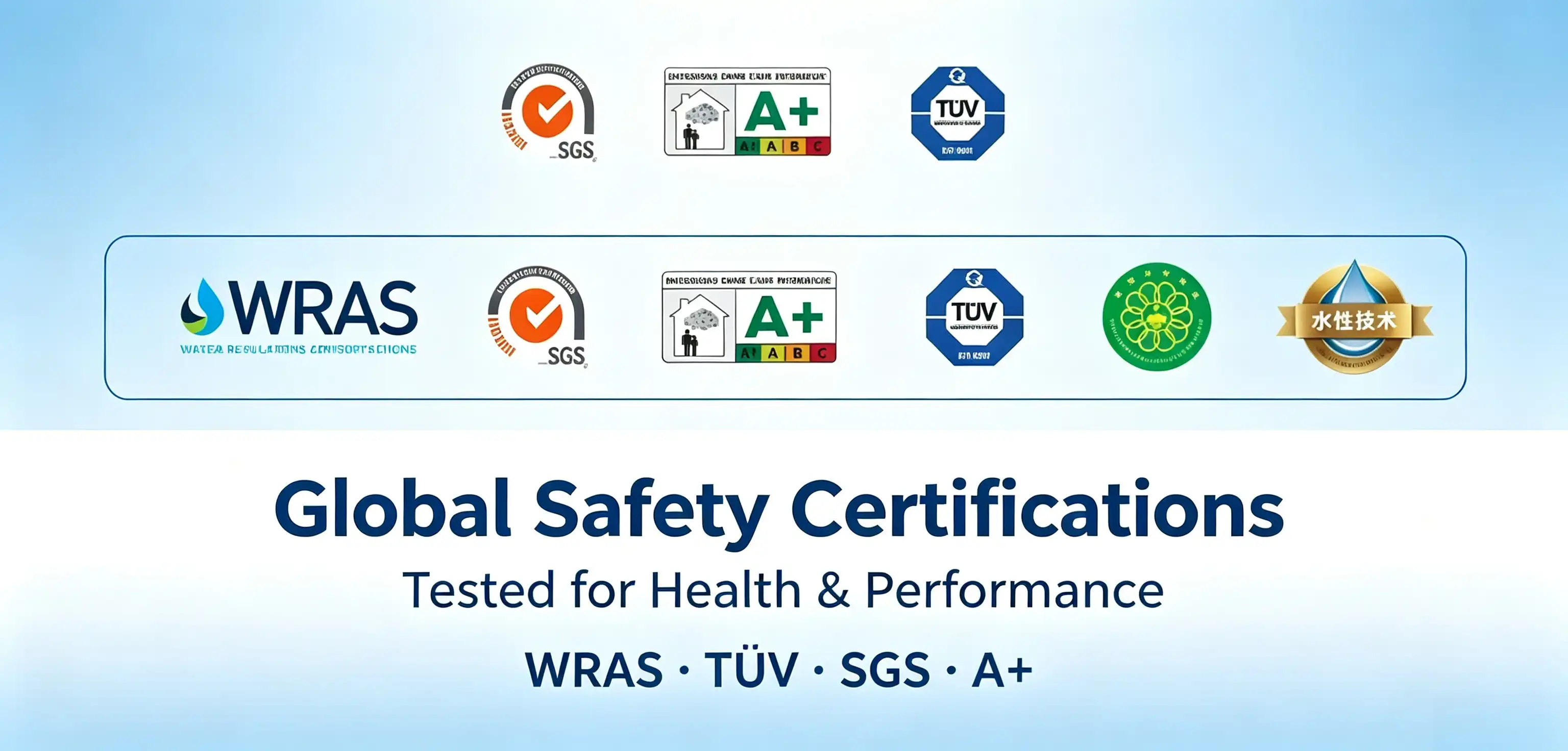
There is a wide range of 1 coat coverage paints, from cheap "self-priming" paints to real high-solids building finishes. Pigment volume concentration (PVC), resin cross-linking technology, and independent approval backing are some of the things that make them different. Premium options have certifications like French A+, EU SGS, and German TÜV. These are not just marketing claims, but real performance data checked by a third party.
The Case for Certified, Antibacterial Interior Wall Paint
OEM owners and private-label distributors can build brand value by choosing a paint that can hide well and protect against health problems. The Chuxin Antibacterial All-Purpose Interior Wall Paint from Chen Yang Water Paint combines five important features into a single water-based formula. As per HG/T 3950-2007, it has Grade I antibacterial activity against Staphylococcus aureus and Escherichia coli. It also has mold resistance certified under GB/T 1741-2020 and provides 12–15 ㎡/L coverage at 30 microns DFT — all in one application.
There is no formaldehyde, benzene-series compounds, or APEO in the formulation, and the VOC level is much lower than the national maximum set by GB 18582-2020. This mix of measurable hygiene performance and demonstrable coverage efficiency makes for a very strong market positioning for OEM brand owners that want to reach health-conscious customers or high-end home renovation markets.
Application Guide: Maximizing Coverage and Efficiency in One Coat Painting
Surface Preparation
Preparing the substrate correctly is what makes the difference between a perfect 1 coat coverage paint finish and an uneven finish that needs to be fixed. The walls need to be clean, strong, and completely dry. The level of moisture should be less than 10%, and the pH of the surface should stay below 10. Most of the time, patchiness and failure to adhere are caused by skipping this proof step.
Dilution and Application Method
For single-coat systems, dilution discipline is very important. Over-thinning lowers the ratio of solids to volume and lowers the ability to hide, which means that the one-coat performance guarantee is no longer valid. For roller or brush application, mix with clean water up to 20% of the time. Limit diluting to 10% for high-pressure airless spray, which is the best way to get a film thickness that is the same all over.
Use when the temperature is between 5 and 35℃ and the relative humidity is less than 85%. These limits on the environment are not made up; they control how the film cures and reaches its intended DFT. After using it, wash all of your tools right away with clean water. The water-based chemistry makes cleanup easy and gets rid of the need to dispose of solvents, which is a problem with oil-based systems.
Packaging and Ordering Flexibility
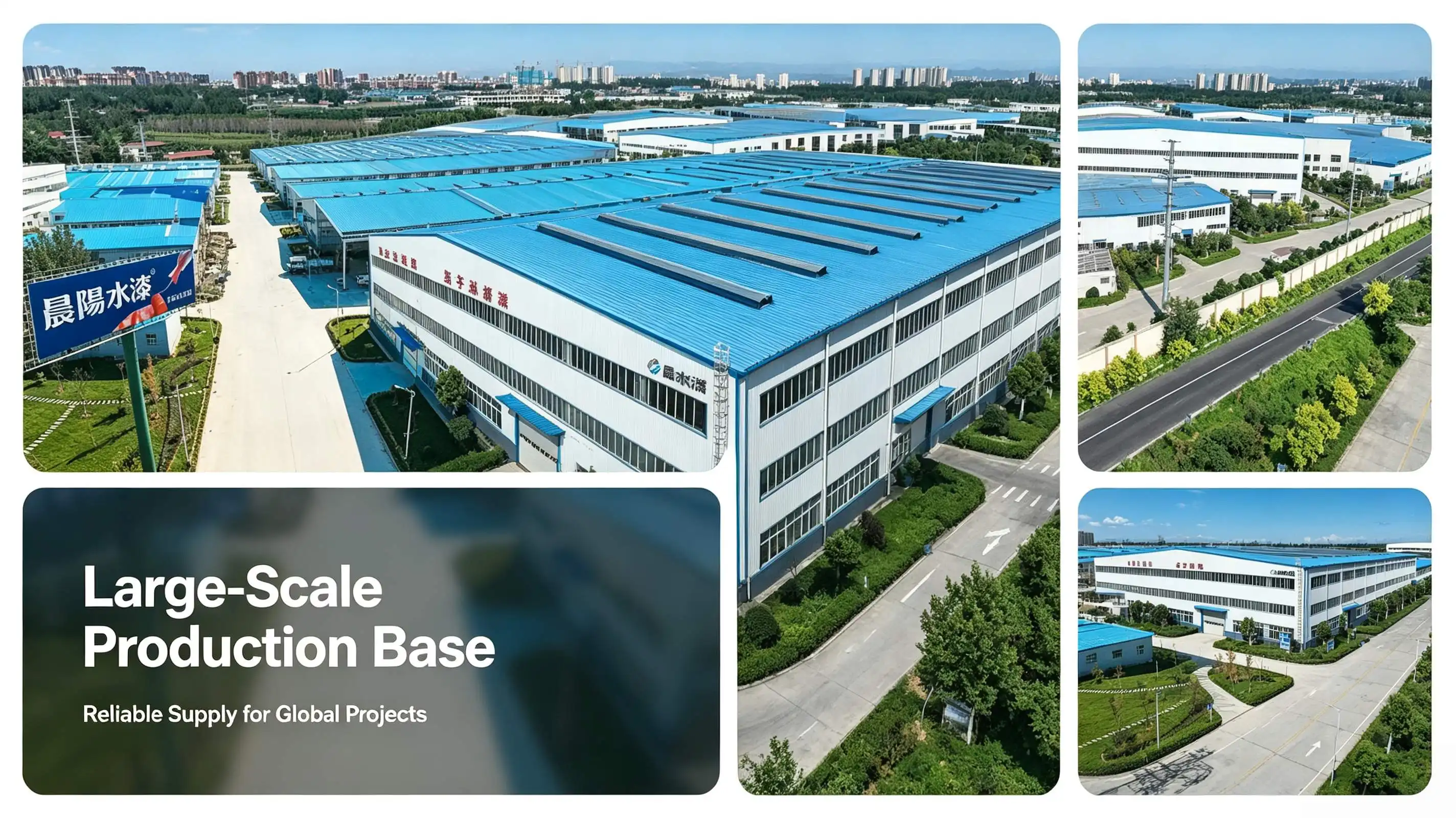
The Chuxin series comes in 6 kg, 20 kg, and 25 kg buckets, and you only need to order one bucket to get started. This means that you can do small-batch sampling for sample room demonstrations without any problems. Chen Yang's production infrastructure can handle more than 1.25 million tons of goods every year, and the normal production cycle takes 7 to 10 days. This means that OEM clients who need custom labels, proprietary color matching across thousands of shades, or market-specific packaging changes can get full OEM/ODM support.
Procurement Considerations for B2B Clients: Buying One Coat Coverage Paint
When buying 1 coat coverage paint strategically, the first thing that needs to be done is to stop comparing unit prices. The correct measure is cost per finished square meter, which takes into account covering rate, time saved, and less waste. When work is taken into account, a quality single-coat product that costs more per liter usually ends up costing less in the long run than a cheaper two-coat system.
When checking out suppliers, you should focus on color consistency from batch to batch (ΔE < 0.5 is the accepted industrial threshold for continuous surface applications), technical documentation that is easy to find, and the validity of third-party certifications. Verifiable certifications, like EU SGS, German TÜV, French A+, and British WRAS, protect the integrity of buying and meet the growing demand for environmental compliance in business purchasing policies.
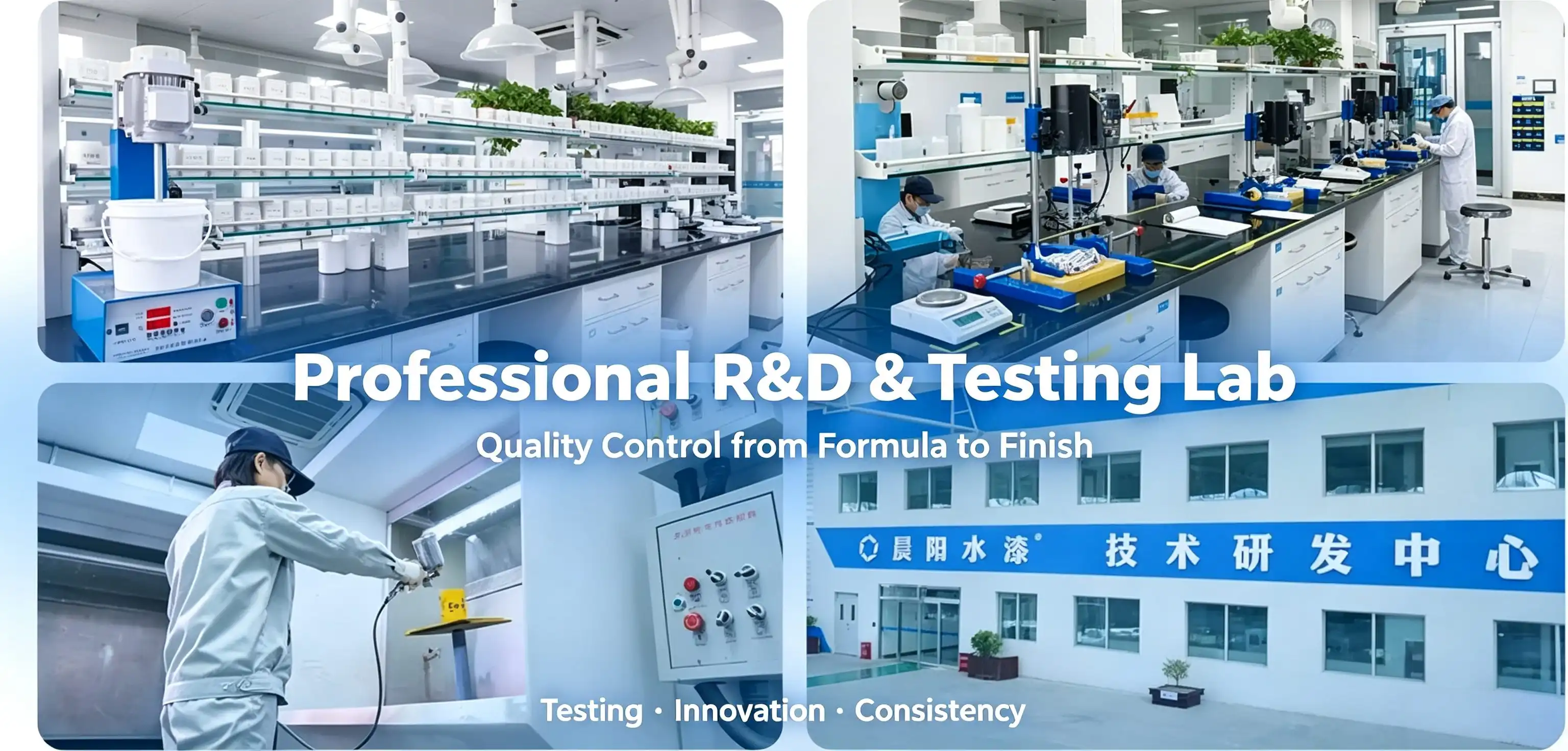
Chen Yang Water Paint has more than 1,000 patents, is a part of more than 100 industry standards, and provides full TDS and MSDS documentation in English to help with project registration and clearing international customs. Products are labeled as non-hazardous materials, which makes exporting easier and saves money on freight costs compared to solvent-based options.
Conclusion
Contractors and OEM brand owners can both tell that 1 coat coverage paint makes their jobs easier. When you combine high hidden power, fast drying, approved antibacterial activity, and environmental standards compliance, you get rid of the problems that slow down projects and raise costs. When the right formula is used, tested by a third party, and comes from a maker whose batches are always the same, one application can really do what two-coat methods used to do. Instead of just looking at unit price, it's always better for projects when procurement decisions are based on coverage data, certification verification, and the total cost of ownership.
FAQ
1. Does single-coat interior paint require a primer on new walls?
A sealer coat keeps the 1 coat coverage paint from soaking in unevenly on substrates that are very porous, like new drywall. But many high-solids products really do self-prime on surfaces that have been properly prepared and don't have pores. Before application, the substrate is checked to see if covering is needed.
2. What color contrast can a premium single-coat formula hide?
Most approved high-hiding formulas promise complete coverage over any other color when used at the suggested 12–15 ㎡/L spread rate. If you go over this spread rate, the dry film gets thinner and your ability to hide below the contrast ratio level goes down.
3. Why does my single-coat application show thin spots?
Wet film thickness that isn't uniform during application is what usually leads to thin spots. This can be caused by too much diluting, choosing the wrong roller nap, or spreading the product over an area that it's not supposed to cover. This can be fixed by keeping the thickness of the wet film constant.
4. Is the per-unit cost of high-coverage paint justified?
It's not the price per liter that matters, but the cost per finished square meter. Getting rid of a full coat cuts down on labor hours by a large amount. In business settings, where labor costs make up 70–80% of project budgets, this strongly supports premium single-coat goods.
5. How should I evaluate a supplier's batch consistency?
Ask for color data that is sent from batch to batch as Delta E values. For projects that cover smooth areas, a ΔE value below 0.5 is considered acceptable. Instead of relying on numbers that the company says they have, ask for test reports from a third party.
Partner with Chen Yang Water Paint for Certified 1 Coat Coverage Paint
Chen Yang Water Paint has been making water-based paints for 28 years and brings that experience to every OEM relationship. We support the Chuxin Antibacterial series as a reputable 1 coat coverage paint maker with EU SGS, German TÜV, and French A+ certifications, as well as OEM/ODM freedom in 6 kg, 20 kg, and 25 kg package sizes. Within days, you'll get sample kits and all the detailed information you need. To get a product sample or talk about buying it, you can email our team at sales@chenyangpaint.com or visit chenyangpaint.com.
References
1. PaintSquare Industry Report — Labor Cost Analysis in Commercial Painting Projects, 2022.
2. American Coatings Association — Architectural Coatings Industry Overview, 2023.
3. ASTM International — ASTM D2805: Standard Test Method for Hiding Power of Paints by Reflectometry, 2022.
4. ASTM International — ASTM D2486: Standard Test Methods for Scrub Resistance of Wall Paints, 2022.
5. Paint & Coatings Industry Magazine — High-Solids Formulation Technology in Interior Architectural Paints, 2021.
6. National Paint & Coatings Association — VOC Regulations and Sustainable Procurement in the Coatings Industry, 2023.
Send Inquiry
You may like