Can Non Toxic No VOC Paint Be Used in Hospitals and Schools?
When procurement managers face the challenge of maintaining operational facilities while protecting vulnerable populations, the answer becomes critical. The answer becomes very important when buying managers have to keep buildings running while also keeping vulnerable groups safe. Yes, non-toxic no-VOC paint can be used in schools and hospitals. In fact, it has become the best option for places where air quality has a direct effect on health. These improved water-based formulas have fewer than 5 grams of volatile organic compounds per litre, so they don't give off harmful gases like regular coatings do. Facilities can keep running while the paint is being applied because these paints don't require rooms to be evacuated first.
Understanding Non Toxic No VOC Paint: Definitions and Health Benefits
What Defines a Truly Non-Toxic Coating
Even buying workers with a lot of experience can get lost in the language used to talk about environmentally friendly coatings. "Low VOC" paints usually have less than 50 grams of volatile organic chemicals per litre. EPA Method 24 testing methods show that "zero VOC" goods have levels below what is needed to be detected. However, these products may still contain small amounts of harmful air pollutants. Formulations that are truly non-toxic and no-VOC paints don't contain any cancer ingredients, toxic biocides, or volatile organics.
Health Advantages in Sensitive Environments
In school settings, the quality of the air inside has a direct effect on how well students can think and breathe. According to research released by the Environmental Protection Agency, standard paint off-gassing is a major cause of Sick Building Syndrome, giving people headaches, dizziness, and breathing problems. By using mineral binders and acrylic polymer technology, water-based, non-toxic no-VOC paint options remove these risks. This method is used in the Xin Huxi Multi-functional Five-in-One Plus series, which has a recipe that has no smell and very few volatile organic compounds (VOCs), which has been approved by both Chinese national environmental protection standards and French A+ approval. The formula kills germs and stops mould growth without giving off harmful fumes. This makes it perfect for pediatric hospitals and preschool classes where kids are still developing and need extra protection.
Identifying Certified Products
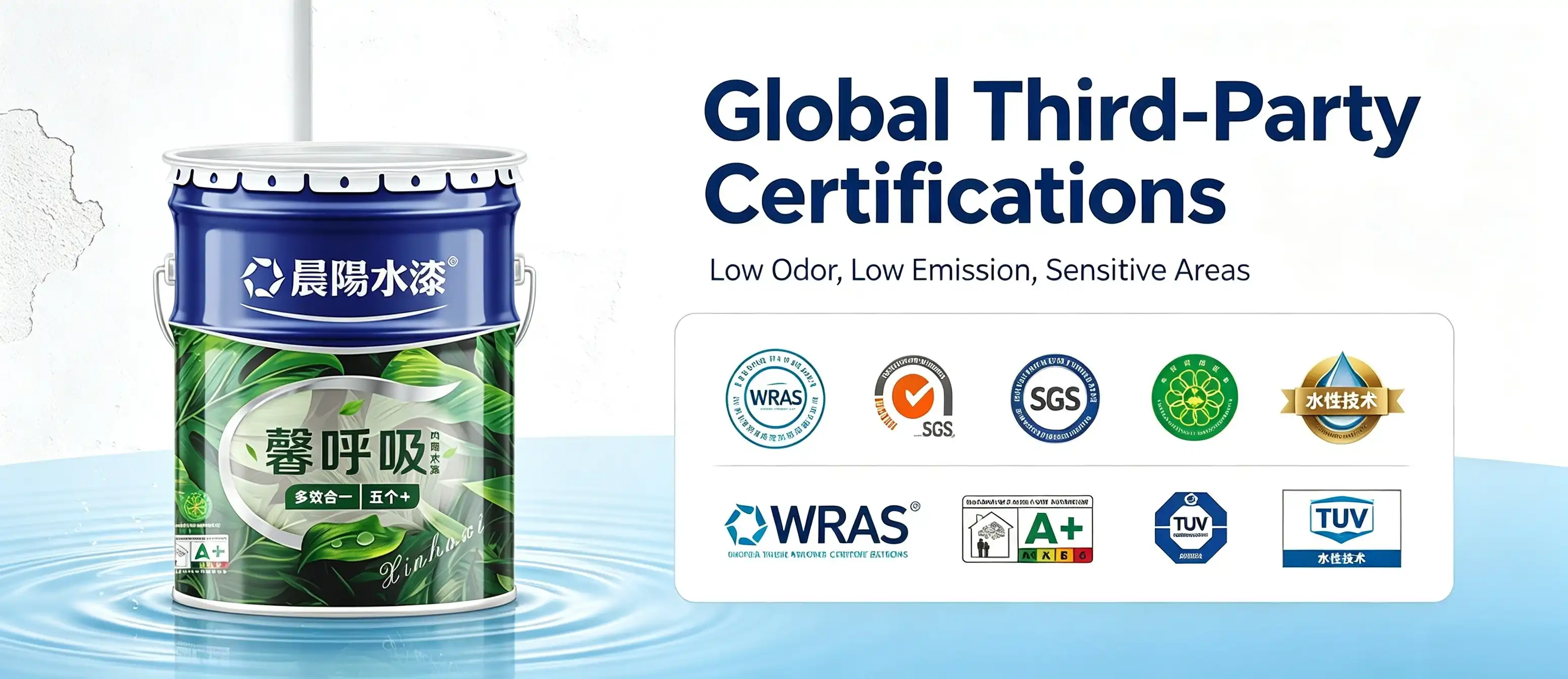
Instead of just believing what the maker says, procurement teams should check third-party testing documents. GREENGUARD Gold approval means that a product meets strict chemical pollution limits for people who are sensitive. If the total VOC levels are less than 0.5 mg/m³ after 14 days, the CDPH Standard Method V1.2 says they are safe. Products that pass EU SGS tests and UK WRAS standards show that they meet foreign safety standards. Chen Yang Water Paint goes through testing by the German TÜV and gets food-contact grade approval from the US Food and Drug Administration (FDA). This means that the formulas are safe enough to be used on surfaces in areas where food is prepared. With these certificates from multiple countries, you can be sure that coating systems meet the greatest global safety standards that apply to buying things for institutions.

Comparison Between Non Toxic No VOC Paint and Traditional Paints for Institutional Use
Chemical Composition and Emission Profiles
Traditional paints that use solvents depend on carriers made from petroleum that evaporate during drying, letting benzene, formaldehyde, and toluene into areas that are already occupied. These chemicals keep giving off gases for weeks after they are used, which means that facilities have to be closed for longer periods of time. Modern options that are water-based use 100% acrylic resins that are mixed in with water. The resins polymerize through evaporation without chemically releasing. Instead of chemical liquids, the Xin Huxi line uses clean water dilution. Roller applications need no more than 20% dilution, and airless spray systems only need 10%. At normal room temperature, this mixture dries the surface in 30 minutes, and it's fully cured in 60 minutes.
In addition to being bad for your health, traditional oil-based items are hard to use and store. International shipping rules consider them dangerous, so they need special paperwork to be shipped. This makes it more expensive and complicated to get them through customs. Water-based formulations from well-known companies like Chen Yang are considered non-hazardous cargo. This means that normal MSDS certificates and shipping condition reports are all that are needed for exporting them. This classification benefit cuts down on the cost of foreign shipping while also speeding up arrival times.
| Parameter | Specification |
|---|---|
| Coverage Rate | 8-10 m²/kg per coat |
| Dry Film Thickness | Approximately 30 microns |
| Dilution Ratio | Roller/Brush ≤20%; Airless Spray ≤10% (clean water) |
| Surface Dry Time | 30 minutes at 25-30°C |
| Hard Dry Time | 60 minutes at 25-30°C |
| Recoat Interval | ≥2 hours |
| Application Methods | Roller, brush, spray (airless spray recommended) |
| Application Temperature | 5-35°C, humidity <85% |
| Substrate Requirements | Moisture content <10%, pH value <10 |
| Packaging | 20kg/bucket, 25kg/bucket |
| Storage Temperature | 5-35°C, cool and dry location |
| Tool Cleaning | Clean with water immediately after use |
| Color Options | White base with custom color matching available |
Performance Metrics That Matter
Institutional buyers used to avoid eco-friendly options because they thought they wouldn't last as long, but new formulations now match or beat the performance of traditional paint. The ASTM D2486 scrub resistance test checks how long a layer will last after being cleaned many times. Premium water-based products have scores of more than 1,000 rounds, which means they last longer in areas with a lot of foot traffic and that need to be cleaned often, like cafeterias and hallways. In the Xin Huxi range, there is super washable technology that forms a thick, tough film that keeps walls clean even after many cleanings. Its lotus leaf surface protection keeps stains from sticking, which saves money on upkeep over the coating's lifetime.
Coverage efficiency has a direct effect on the budget for a project. The Xin Huxi mixture is supposed to cover 8–10 square meters per kilogram per coat, and the dry film can be up to 30 microns thick. This works just as well as regular goods and meets safety standards for the environment. The ASTM D2805 contrast ratio test shows that these water-based systems achieve coverage rates above 0.95. This means that you don't have to use extra coats, which add to the cost of materials and labour.
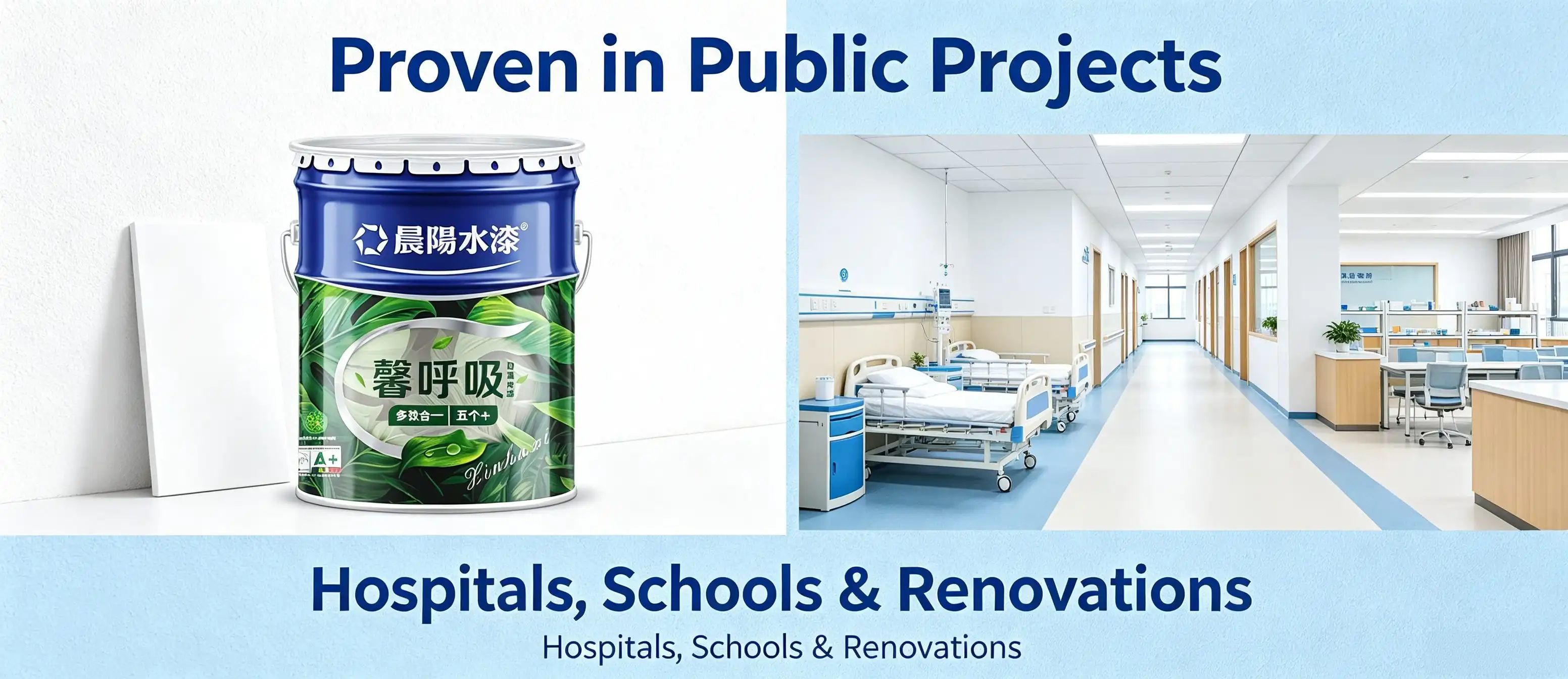
Procurement Considerations for Hospitals and Schools
Evaluating Supplier Capabilities and Certifications
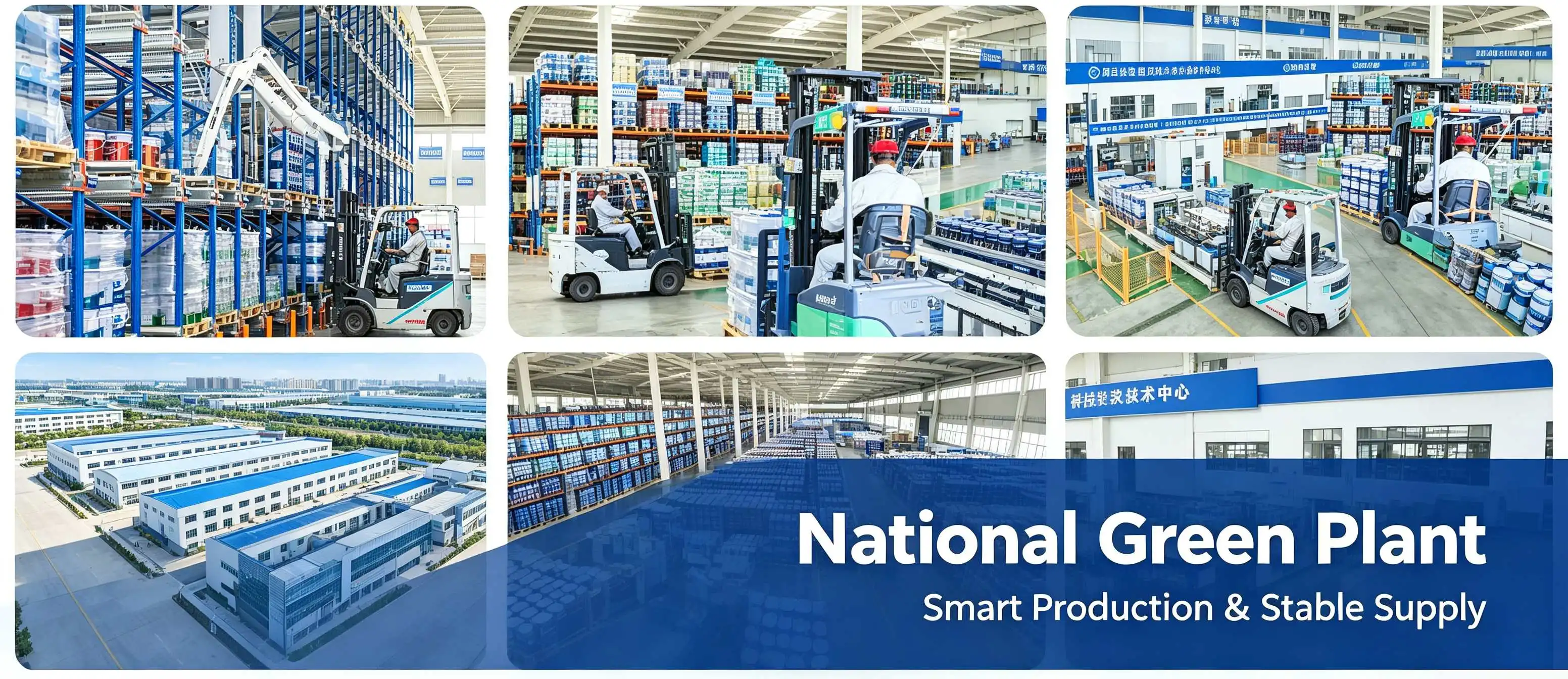
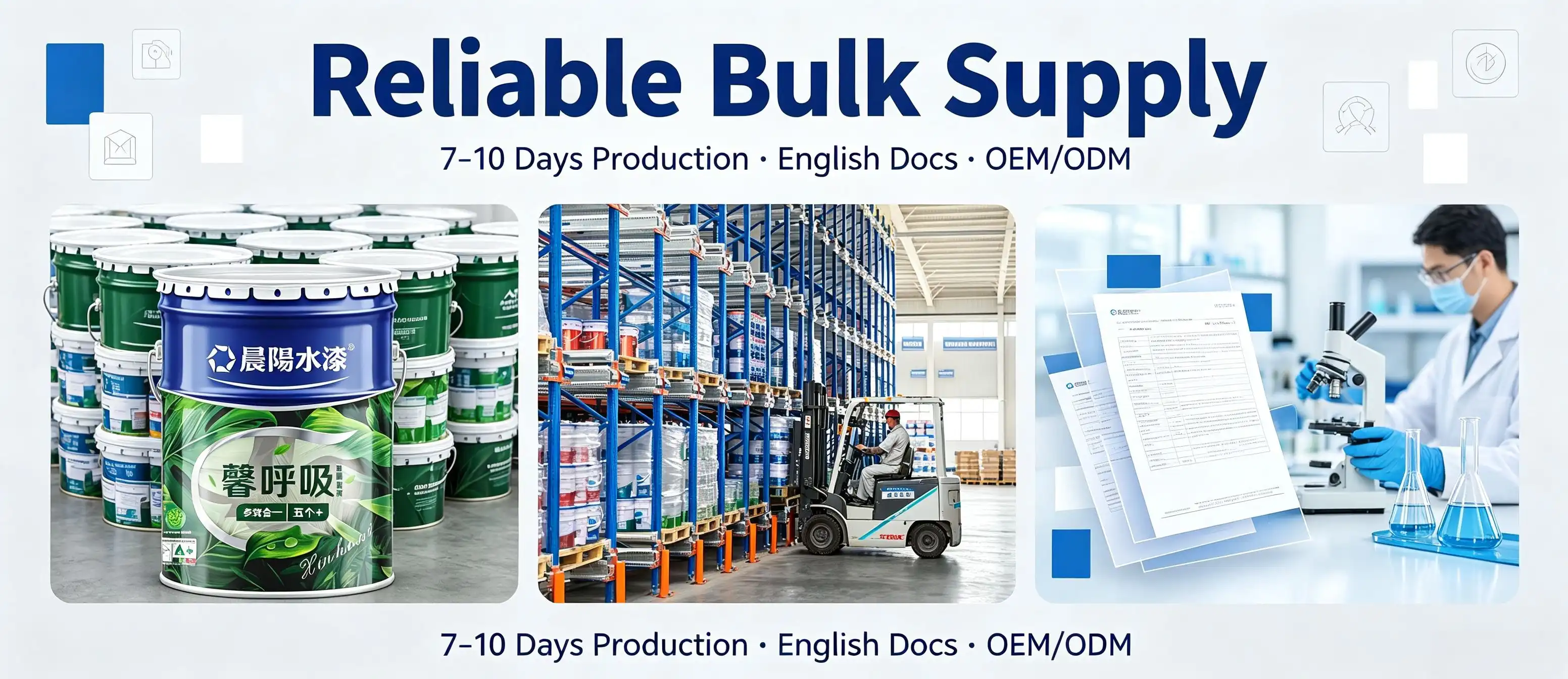
Supplier selection includes more than just the product requirements. It also includes the dependability of the production process and compliance with regulations. For institutional buying to work, supply chains must be stable and able to handle large orders within tight building deadlines. Chen Yang Water Paint runs a national-level green plant that can make more than a million tons of paint every year. This makes sure that the paint is always available, even during busy building seasons. The normal production cycle for the company is 7–10 days, which lets project managers stick to tight plans without running out of supplies.
A supplier's certification collection shows how committed they are to quality and safety. Manufacturers with multiple foreign licenses show that their goods meet the needs of a wide range of jurisdictions. Chen Yang has EU SGS testing approval, German TÜV certification, UK WRAS standards compliance, and US FDA food-contact grade permission in his collection. This variety makes sure that the goods chosen for American hospital projects meet the requirements of U.S. regulations while also being compatible with foreign design standards that more and more forward-thinking institutions are adopting.
Professional suppliers and commodity makers are separated by how easy it is to access technical documents. Full Technical Data Sheets and Material Safety Data Sheets in English make it easier to get things through customs and meet the standards for project registration. Suppliers who offer full testing results, such as ASTM D6886 gas chromatography VOC content verification and adhesion testing according to ASTM D3359 standards, give procurement workers the information they need to make smart decisions.
Cost Analysis and Bulk Purchasing Strategies
The initial cost of materials is only one part of the overall economics of the job. Through accelerated application processes and the elimination of air needs, water-based, non-toxic no-VOC paint systems lower ancillary costs. Because products like Xin Huxi have a 2-hour recoat interval, workers can put on more than one coat during the same work shift, which cuts down on labor time and building downtime. Immediate occupation potential stops hospitals from losing money when wings are closed for long periods of time, which is a big deal for hospitals that are already full.
When negotiating a bulk purchase, you should talk about both customization options and unit price. In the Xin Huxi series, there are white base formulas and colour-matching centres. This lets institutions keep their brand consistent across different buildings. Large-scale repairs and small upkeep touch-ups can both be accommodated by flexible packaging in 20 kg and 25 kg configurations with a single-bucket minimum order. Freight prepaid choices make budgeting easier because they take out the changeable cost of shipping from cost estimates.
Long-term ties with suppliers offer more value than just transactional prices. Manufacturers that offer OEM and ODM services let schools create their own colour schemes and packaging that is labeled with their building names. Chen Yang offers full customization, which includes making changes to the recipe, private labels, and finding unique ways to package the products. This adaptability is helpful for school systems with multiple campuses and hospital networks that want to make sure that all of their sites meet the same standards.
Case Studies and Industry Examples: Successful Applications in Healthcare and Education
Healthcare Facility Implementations
Compliance pressure mounted on a 400-bed regional medical centre in the Midwest after tests of the indoor air quality showed higher levels of volatile organic compounds (VOCs) in the patient areas. For a phased makeover covering 150,000 square feet of internal surfaces, the procurement leadership called for water-based, non-toxic no-VOC paint coatings. The project used high-performance formulations that met GREENGUARD Gold standards. This meant that departments next to the application site could keep working while the formulas were being used. VOC levels were below 0.3 mg/m³ within 24 hours of the final coat being applied, which was a lot higher than the original compliance goals.
The facility's head of upkeep mentioned benefits that went beyond meeting regulations. The coating system's antimicrobial features cut mould growth in damp mechanical areas by 70% compared to the annual checks that were done before. With the clean surface finish, painting will only need to be done every five years instead of every three, which will save a lot of money over the life of the building. The nursing staff noticed that patients didn't complain about the renovations because there weren't any typical paint smells. This led to higher happiness scores for outdoor comfort.
Educational Setting Transformations
After parents spoke out about chemical exposures, a neighbourhood school district with 8,000 kids made zero-VOC coating rules for 14 buildings. Specifications for buying things said that the goods had to be approved under California Section 01350 guidelines and come with proof of emissions testing. The school district worked with a qualified non-toxic no-VOC paint supplier who could send 12,000 gallons of paint in time for the summer renovation.
Beyond health results, operating efficiency was also measured as a measure of the project's success. Classrooms were back in use within 48 hours of the final treatment, instead of the week that is usually needed for regular goods. Because of this shortened plan, cleaning crews were able to put in floors and chairs before school started. The district's buildings manager found that being able to move in right away saved five extra planning days per building, which added up to $180,000 in avoided overtime costs.
Data on academic success showed gains that were not expected. Following repairs, standardized test scores went up by 4% at two elementary schools in the district's pilot program. There are many factors that affect how well students do in school, but researchers found a link between better indoor air quality and better brain performance that had been seen in other studies. Based on the possibility for health, operational, and educational benefits, the district later approved non-toxic no-VOC paint guidelines for all future projects.
Conclusion
To choose the right coatings for educational settings, you have to find a balance between health protection, performance stability, and the ease of purchase. Modern formulas that are based on water get rid of the false choice between being good for the earth and working well. Products that have passed strict international standards offer antimicrobial protection, easy cleaning, and quick occupancy without reducing the coating's durability. The Xin Huxi Multi-functional Five-in-One Plus is a great example of this change because it prevents mold, kills germs, and is resistant to alkalis while also having no smell and very few VOCs. Procurement professionals can easily specify approved non-toxic no-VOC paint systems that protect vulnerable populations while staying within budget and meeting operational requirements when dealing with the demands of healthcare and educational facilities. These coats are best practice, not experimental options, as shown by the fact that they have been used successfully in institutions.
Frequently Asked Questions About Non Toxic No VOC Paint in Institutional Settings
Does non toxic paint compromise durability in high-traffic areas?
As with traditional coatings, modern water-based, non-toxic no-VOC paint formulations have an ASTM D2486 scrub durability of more than 1,000 rounds. The Xin Huxi line uses double anti-wear technology to make a thick, tough film that can stand up to repeated cleaning in hallways and public areas. High standards for quality make sure that it lasts as long as solvent-based options.
Can these coatings be applied in specialized healthcare zones?
Coatings that meet strict cleanliness standards are needed in operating rooms, labs, and sterile handling areas. Systems that are non-toxic no-VOC paint, have antimicrobial qualities, and let a lot of air through keep microbes from colonizing while letting wall assemblies breathe. Products that meet FDA food-contact guidelines are safe enough to be used in the most sensitive medical settings.
How do I verify colourant systems maintain zero-VOC integrity?
Standard uniform tints often have explosive chemicals in them that mess up the way base paints are made. Name zero-VOC colourant systems that have been studied separately from base goods. Reliable providers offer colour-matched formulas with full emission testing paperwork that proves the tinted product meets non-toxic standards.
What recoat intervals do institutional projects require?
The Xin Huxi recipe lets you recoat after only two hours at room temperature and humidity, so you can do more than one coat in one work shift. Compared to traditional goods that need 4–6 hour breaks between applications, this quick turnaround cuts down on worker time and building disruption.
Partner With a Certified Non Toxic No VOC Paint Manufacturer
When buying from institutions, sellers must offer certified product safety, reliable manufacturing, and expert help. For 28 years, Chen Yang Water Paint has been using water-based coatings to complete high-quality work in healthcare and education. Our Xin Huxi Multi-functional Five-in-One Plus line prevents mould growth, kills bacteria, and is easy to clean. It also has very low VOC content, which has been approved by Chinese National Environmental Protection standards and French A+ tests. We keep our EU SGS, German TÜV, UK WRAS, and US FDA certifications up to date to make sure our goods meet the strict needs of American educational projects.
Our national-level green plant makes more than a million tons of concrete every year, and the normal cycle time is 7–10 days. This ensures a steady supply for large-scale renovations. We give you all the English technical paperwork you need, like TDS and MSDS certificates to help with customs clearance and project requirements. Different institutional needs can be met by customizing colors, offering a range of packing choices, and being able to work with other manufacturers. Email our purchasing team at sales@chenyangpaint.com to talk about the unique needs of your building, get technical specs, or set up a free evaluation for your next project.
References
1. United States Environmental Protection Agency. (2021). "Indoor Air Quality in Schools and Commercial Buildings." Office of Air and Radiation, EPA Publication 402-F-21-001.
2. Allen, J.G., MacNaughton, P., et al. (2016). "Associations of Cognitive Function Scores with Carbon Dioxide, Ventilation, and Volatile Organic Compound Exposures in Office Workers." Environmental Health Perspectives, 124(6), 805-812.
3. California Department of Public Health. (2017). "Standard Method for the Testing and Evaluation of Volatile Organic Chemical Emissions from Indoor Sources Using Environmental Chambers, Version 1.2." Sacramento: CDPH.
4. ASTM International. (2019). "ASTM D2486-17: Standard Test Methods for Scrub Resistance of Wall Paints." West Conshohocken, PA: ASTM Standards Publication.
5. Greenguard Environmental Institute. (2020). "GREENGUARD Certification Program: Performance Standards for Low-Emitting Products. "Atlanta: UL Environment.
6. National Institute of Building Sciences. (2018). "Indoor Environmental Quality and Health: Best Practices for Healthcare Facilities." Washington, DC: Whole Building Design Guide.
Send Inquiry
You may like