Does Low Odor Paint Mean Zero VOC?
Low odor wall coating is a cutting-edge category of building finishes made to keep bad smells to a minimum both during and after installation. But we need to clear up a common misunderstanding right away: low odor does not always mean no VOC content. The "paint smell" is greatly reduced in these coats by using improved formulas and clean raw materials, but some of them still have volatile organic chemicals that can be measured. The smell you smell comes from certain chemical compounds. VOCs, on the other hand, are a larger group of substances that may evaporate without leaving a strong scent. This difference is very important to know when you're choosing coatings for healthcare facilities, schools, business buildings, or any other place where the air quality affects people's health and the ability to follow rules.
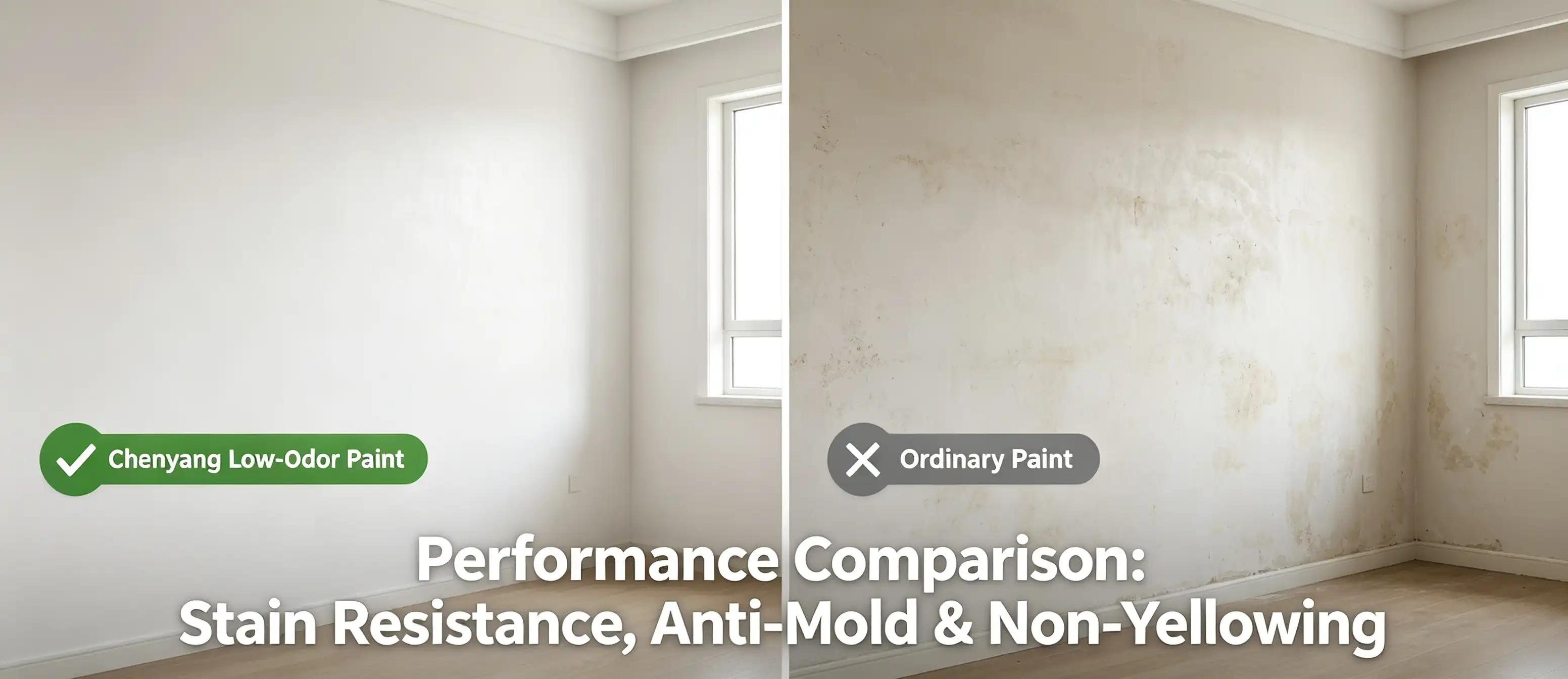

Understanding Low Odor Paint and VOCs
What Defines a Low Odor Formulation
Careful choice of raw materials and improved polymer technology are what make low-odor paints smell less strong. Solvents and monomers that give off strong smells when they dry are used in traditional coats. These days, water-based formulas use highly pure acrylic dispersions and special coalescents that evaporate with little effect on the senses. The process of making it gets rid of any leftover monomers, such as ethyl acrylate, that give it that strong smell. You're left with a layer that lets people move back into places in hours instead of days.
The Role of VOCs in Paint Chemistry
Volatile organic compounds are useful in paint formulas because they help the paint run, level, and form a film. At room temperature, these carbon-based chemicals evaporate, letting out gas into the air while they are being applied and hardened. Concerns about health range from irritation of the eyes and lungs to more major long-term effects with long-term contact. Ground-level ozone creation and adding to indoor air pollution are two environmental effects. Because of these known risks, the EPA and other foreign bodies control the levels of VOCs.
Why Low Odor Doesn't Guarantee Zero VOC
Odor and VOC levels don't always have a straight-line link. Some VOCs don't smell very bad, and there are some smelly chemicals that are present in small amounts that are below the regulatory VOC limits. A covering could have a nice smell and still give off measured VOCs, or it could have almost no smell and still have low but not zero VOC levels. Certifications in the industry, such as the Green Seal GS-11 or the EPA Safer Choice, offer factual proof that goes beyond what the senses can tell. We suggest getting both VOC test results and sensory evaluation reports when looking for coats for sensitive areas.

Comparison of Low Odor Paint vs Zero VOC Paint for B2B Use
Indoor Air Quality Performance
When people are in a place, the differences become very important. Formulations with low smell usually have VOC levels between 1 and 50 g/L, which meets strict standards but doesn't completely stop leaks. There are fewer than 5 g/L of zero-VOC goods on the market, and many of them get below 1 g/L. When hospitals are remodeling patient areas, they should keep in mind that even surfaces that are said to be "low odor" may need special rules for partial ventilation. Schools that schedule maintenance for the weekend can often get back to normal on Monday morning with truly zero VOC products, so parents don't have to worry about how long-lasting chemical exposure will affect students with lung issues.
Durability and Performance Characteristics
People in charge of buying things are often concerned that benefits for the environment will hurt performance. This gap is mostly filled by today's technology. Good coats with little smell have great resistance to being scrubbed, usually getting Class 1 scores according to EN 13300 standards. Drying times are still competitive—under normal conditions, the top dries in 30 to 60 minutes and the hard part dries in 2 to 4 hours. In the past, zero-VOC formulations haven't been as good at hide and longevity, but now expensive products are on par with regular ones. Instead of thinking that environmental treatments lower quality, the key is to match specific performance needs with project needs.
Cost Considerations for Bulk Procurement
The prices of materials show the steps that are used to improve them. Most of the time, low-odor paints cost 15–25% more than regular ones, and zero-VOC choices may cost 25–40% more than regular ones. Total cost analysis, on the other hand, changes this view. Lowering the need for air lowers the cost of running an HVAC system. Commercial areas lose less money when they are rented out quickly. Insurance companies save money when worker compensation claims from exposure events go down. When these things are taken into account for big projects or ongoing repair programs for buildings, the extra cost turns into an investment in making operations run more smoothly and lowering risk.

Environmental and Health Benefits of Low Odor Wall Coatings
Low odor wall coating treatments are good for the environment and your health.
Worker Safety and Occupational Health
When coating jobs are going on, application workers are exposed to the most. Low-odor versions greatly lower the irritation of the lungs, headaches, and sickness that are often linked to solvent-based products. Painters can work in buildings that are only partly filled without making the places around them uncomfortable or putting people's health at risk. Going along with OSHA rules is easier when you use finishes that give off few volatile fumes. Long-term benefits for workplace health include lower risks of sensitization and fewer illnesses linked to chemicals among professionals who use chemicals.
Certification Standards and Eco-Friendly Credentials
Products with good reputations and low smells have third-party certifications that back up their environmental claims. GREENGUARD Gold approval means that chemical fumes have been tested thoroughly and for long periods of time. The French VOC Regulation A+ mark is a full review of the quality of the air inside a building. Green Seal GS-11 checks both performance standards and VOC limits. These certifications give people who work in procurement concrete standards that go beyond marketing speak. Instead of depending on general environmental claims when reviewing seller offers, ask for proof of the current certification status.
Long-Term Indoor Air Quality Management
After application, emission patterns change in a big way. Standard paints may give off measured amounts of VOCs for weeks or months after they dry because solvents that are still in the film are still releasing. With enough air flow, premium low-odor wall coatings reach neutral emission states in 24 to 48 hours. This quick stability is especially important in healthcare, childcare, and leisure settings where people are sensitive and need the air quality to get better right away. Protocols for testing, like ISO 16000-9, check pollution rates every three days and every 28 days. This gives a data-driven guarantee of long-term performance.
How to Select and Procure Low Odor Wall Coatings for Your Business
How to choose and buy low odor wall coatings for your business requires evaluating several factors.
Technical Evaluation Criteria
When you're making your plan, you need to look at more than just the VOC level. Coverage efficiency and project economics are based on hiding power; for top camouflage, look for contrast ratios above 0.95. Scrub resistance tests according to ASTM D2486 show how easy it is to clean and how long it will last over time. Dry time requirements affect how long a project takes and how much it costs to hire workers. In places where wetness is common, vapor permeability is important to keep the film from blistering and the base from getting damaged. Instead of marketing outlines, ask for full technical data sheets with uniform test results.
Supplier Qualification and Certification Verification
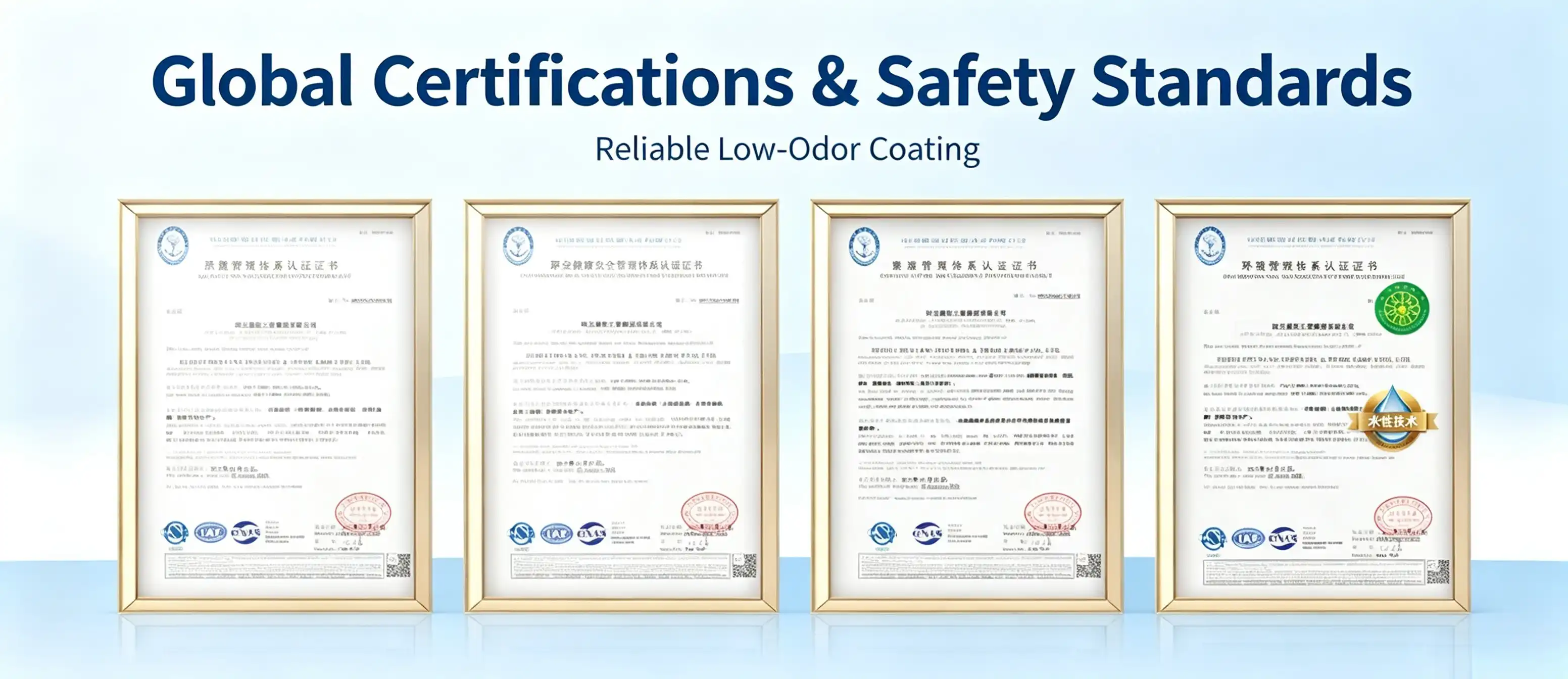
Partnering with makers who have the right certifications greatly lowers the risk of buying. EU SGS testing proves that European chemistry rules are being followed. German TÜV certification shows that quality control methods are very strict. UK WRAS approval is needed for projects with areas that will come into touch with potable water. A food-contact grade license from the US FDA can help you get jobs in food service and processing sites. Chenyang Water Paint keeps all of these certifications for all of our products. These qualifications, which are backed by more than 1,000 patents and membership in more than 100 industry standards, show real technical skill rather than just following the rules.
Practical Procurement Strategies
Mismatches in specifications can be avoided by trying samples before making a big investment. Ask for small amounts to be used for testing the application on a real job, checking the finish quality, dry times, and covering rates. Use the expert help from your provider to find the best application parameters for your substrates and working conditions. When discussing bulk orders, talk about delivery times that work with your project's schedule. Manufacturers with large production capacities, like Chenyang's yearly output of one million tons, can keep up a steady supply even during busy building seasons. Make it clear from the start what paperwork is needed, and make sure that providers give you the English-language TDS, MSDS, and certification copies that you need for foreign projects and to follow the rules.

Application and Maintenance Best Practices for Low Odor Wall Coatings
Application and maintenance best practices for low odor wall coatings ensure long-term durability.
Surface Preparation and Environmental Conditions
No matter the recipe, the performance of the coating is directly affected by how well the base is prepared. To stop adhesive failure and efflorescence, wall surfaces must have a pH value below 10 and a moisture level below 10%. Use the right ways for the base type to clean surfaces of dust, grease, and other loose material. During treatment, the temperature should stay between 5 and 35°C, and the relative humidity should be less than 85%. These factors make sure that the film forms correctly and cures properly. This is especially important for water-based low-odor formulas that need to control the rate at which water evaporates.
Application Techniques and Equipment Selection
Water-based coats with low smell can be applied in a number of ways. Roller application works well for big, flat areas, but it needs to be diluted with clean water up to 20%. Detail work and cut-in processes work well with brush methods. High-pressure airless spray covers large business jobs best because it only needs to be diluted by 10% to get a uniform film thickness. Under normal conditions, the Chenyang Aishang White Bamboo Charcoal Three-in-One is surface dry in 30 minutes and hard dry in 60 minutes. This means that it can be recoated every two hours, which is a lot faster than many competing goods.
Maintenance Protocols and Troubleshooting
Regular care keeps the covering looking good and makes it last longer. Cleaning the film regularly with light soaps keeps it clean without damaging it. Spot coating may be needed every 3 to 5 years in high-traffic areas, but covered surfaces can go longer than 7 to 10 years before they need a full repair. Chenyang's recipe includes bamboo charcoal, which actively absorbs leftover formaldehyde and volatile pollutants over time. This means that the air is cleaned for longer after the first use. Keeping an eye on the quality of the air inside schools and hospitals is made easier with this tool. If the smell stays even after using low-odor products, make sure there is enough air flow during curing and look for problems with base moisture that could be letting out contaminants that were caught.
Conclusion
The difference between zero VOC and low-odor paints is more than just a matter of words; it affects performance, health, and following the rules in a wide range of business settings. Low odor wall coating technology is much better than older methods, significantly lowering the sensory effect and speeding up the process of re-occupying the area. But procurement pros can't just depend on smells; they need to check the real VOC content through licenses and testing data. To get the best results in terms of performance, cost, and environmental responsibility, it's important to match coating standards with project needs, occupant comfort, and legal frameworks.
FAQ
Does low odor paint always mean it's safer for occupied spaces?
Formulations with low smells usually make things safer because they limit contact to strong chemicals and volatile substances. But "safer" depends on how much VOC something has, not just how it smells. Some goods with a low smell still have VOCs that can be measured and may be irritating to people who are sensitive. Always look over technical data sheets and certifications that show the results of VOC tests. Products that meet GREENGUARD Gold or EPA Safer Choice standards have safety ratings that have been checked and are safe for use in schools and hospitals.
Can low odor coatings be used in hospitals and childcare facilities?
Yes, but detail needs to be carefully looked over. Coatings that don't give off a lot of smell and don't release many volatile organic compounds are needed in healthcare and childcare settings. You can be sure that a product meets the standards set by California Section 01350 or has the Green Seal GS-11 approval. The Chenyang Aishang White Bamboo Charcoal Three-in-One is designed to meet high air quality standards. Its unscented recipe is free of benzene, formaldehyde, and APEO, and it also has bamboo charcoal adsorption technology that actively cleans the air inside.
How do I verify if a paint is truly zero VOC?
Ask for lab test results that show the amount of VOCs that were tested using EPA Method 24 or ISO 11890. Real zero-VOC goods have levels below 5 g/L, and the best ones have levels below 1 g/L. Third-party approvals from well-known groups like EcoLabel, Green Seal, or GREENGUARD provide extra proof beyond what the maker says. Know that "zero VOC" only refers to the base product. Depending on the type of colorant used, coloring may add small amounts of VOCs.
Partner With Chenyang Water Paint for Certified Low Odor Wall Coating Solutions
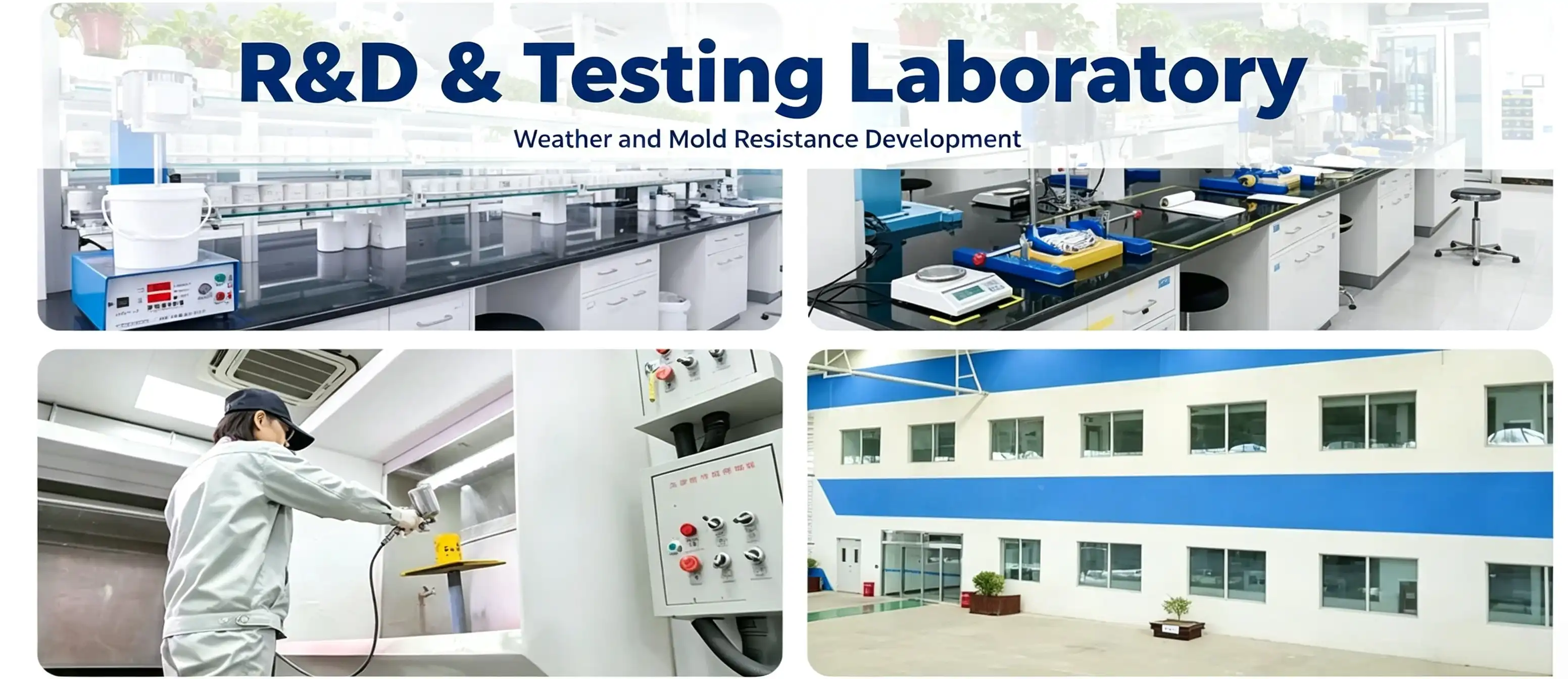
Getting low odor wall coating can be hard, so you need a seller with technical know-how, confirmed certifications, and a reliable production capacity. Chenyang Water Paint has been developing water-based coatings for 28 years and has certificates from EU SGS, German TÜV, UK WRAS, and US FDA to meet the needs of the world's most demanding markets. Our Aishang White Bamboo Charcoal Three-in-One is an example of an advanced recipe. It really does remove smells without adding any benzene, formaldehyde, or APEO, and the bamboo charcoal technology keeps cleaning the air inside for a long time after it's been used.
As a producer of low odor wall coatings with a national-level green plant that can produce over a million tons of product each year, we can keep supplies stable even during busy building seasons because our normal production cycles are only 7–10 days. Our non-hazardous classification makes foreign logistics easier by getting rid of the problems that come with sending dangerous goods. We support OEM/ODM partnerships by letting you change colors and add your own name, and we provide full English paperwork for easy customs clearance and project registration.
Email our team at sales@chenyangpaint.com to talk about your particular needs. For projects in the US and around the world, we offer expert advice, sample testing, and bulk purchasing options for healthcare, educational, business, and industrial uses.
References
1. United States Environmental Protection Agency (2023). "Volatile Organic Compounds' Impact on Indoor Air Quality." EPA Indoor Air Quality Publications.
2. Green Seal, Inc. (2022). "GS-11 Standard for Paints and Coatings: Environmental and Performance Requirements." Green Seal Certification Standards.
3. American Society for Testing and Materials (2021). "ASTM D2486-17: Standard Test Methods for Scrub Resistance of Wall Paints." ASTM International Standards.
4. European Collaborative Action Indoor Air Quality and Its Impact on Man (2023). "Evaluation of VOC Emissions from Building Products: Indoor Air Quality Assessment." European Commission Joint Research Centre.
5. National Institute for Occupational Safety and Health (2022). "Occupational Exposure to Volatile Organic Compounds in Paint Application." NIOSH Workplace Safety Publications.
6. International Organization for Standardization (2021). " ISO 16000-9: Determination of the Emission of Volatile Organic Compounds from Building Products and Furnishing. "ISO Environmental Standards.
Send Inquiry
You may like