How Anti-Fungal Paint Protects Walls in Hot and Humid Tropical Environments
When a building sits in 85% humidity for months at a time, standard exterior coatings simply cannot hold the line. Mold colonies establish within weeks, and repainting cycles shrink from years to months. Anti-fungal paint for tropics addresses this directly by embedding controlled-release biocides inside a breathable, weather-resistant film that prevents Aspergillus, Penicillium, and algal species from colonizing wall surfaces. Chenyang Water Paint's Engineering Exterior Wall Water-based Paint delivers exactly this protection — certified to GB 24408-2009, water-based, and engineered for large-scale tropical deployments.
Understanding Fungal Growth in Tropical Climates
Why Tropical Walls Are Especially Vulnerable
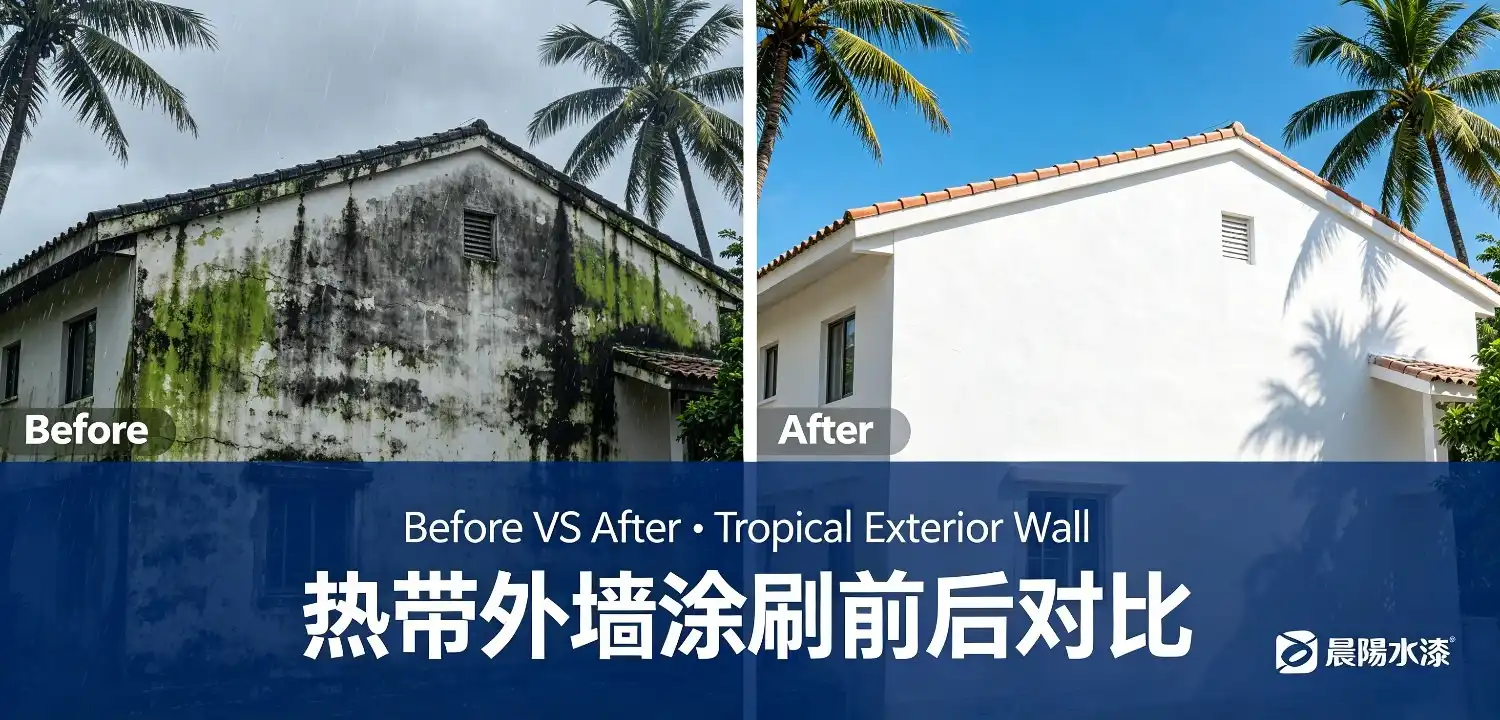
A nearly ideal environment for fungi growth is one with relative humidity above 70% and temperatures between 25°C and 35°C. Studies in the journal Building and Environment show that biofilm can start to grow on unprotected concrete walls 30 days after being exposed to equatorial temperatures. Things are even worse because spores are constantly being fed by organic dust, rainwater residue, and carbon deposits on walls.
People who work in procurement often mix up anti-mold and anti-fungal coatings, but they work in different ways. Anti-mold agents mostly stop water from absorbing, while real anti-fungal formulas use active biocides that stop the growth of fungal cell walls. If you choose the wrong product, complaints will come up again within one rainy season, which is bad for your distributor's credibility and costs a lot of money.
How Anti-Fungal Paint Works in Hot and Humid Environments
The Science Behind Long-Lasting Fungal Resistance
A synergistic chemistry base is needed for high-performance outdoor anti-fungal paint for tropics. Chenyang's water-based formula creates a microporous acrylic resin matrix that lets water vapor escape from the substrate. This stops the buildup of moisture below the surface that leads to blistering. At the same time, biocide agents that are enclosed keep their release rate low and steady. This means that protection lasts through heavy summer rain instead of being washed away with the first rain.
- Vapor permeability: The breathable film lets stored substrate moisture escape, which gets rid of the difference in pressure that causes delamination in wet places.
- UV stabilization: High solar irradiance in tropical latitudes speeds up chalking. This formula's UV-stable pigment binders keep the color from fading for years to come.
- Hydrophobic surface tension: Water beads up and rolls off the film instead of pooling on it. This gets rid of the standing water that helps spores grow.
- Low biocide leaching rate: The controlled-release encapsulation keeps active drugs working at the surface level for 5–7 years in humid field conditions, instead of quickly running out.
All of these features work together to protect much more than a regular acrylic exterior coat can. When tested in the field using ASTM D3273 protocols, which check for mold growth resistance at 100% relative humidity, high-specification water-based tropical coatings always come out on top.
Selecting the Best Anti-Fungal Paint for Tropical Construction Projects
Evaluation Criteria That Matter to B2B Buyers
The difference between smart buying and short-term saves is the total cost of ownership, not the unit price. A cheaper paint job might need to be redone every 18 months in a coastal area with a lot of humidity, but a properly chosen weatherproof exterior coating will keep its film integrity for at least 5 years. The costs of labor, scaffolding, and downtime for three painting rounds are much higher than any difference in the original price.
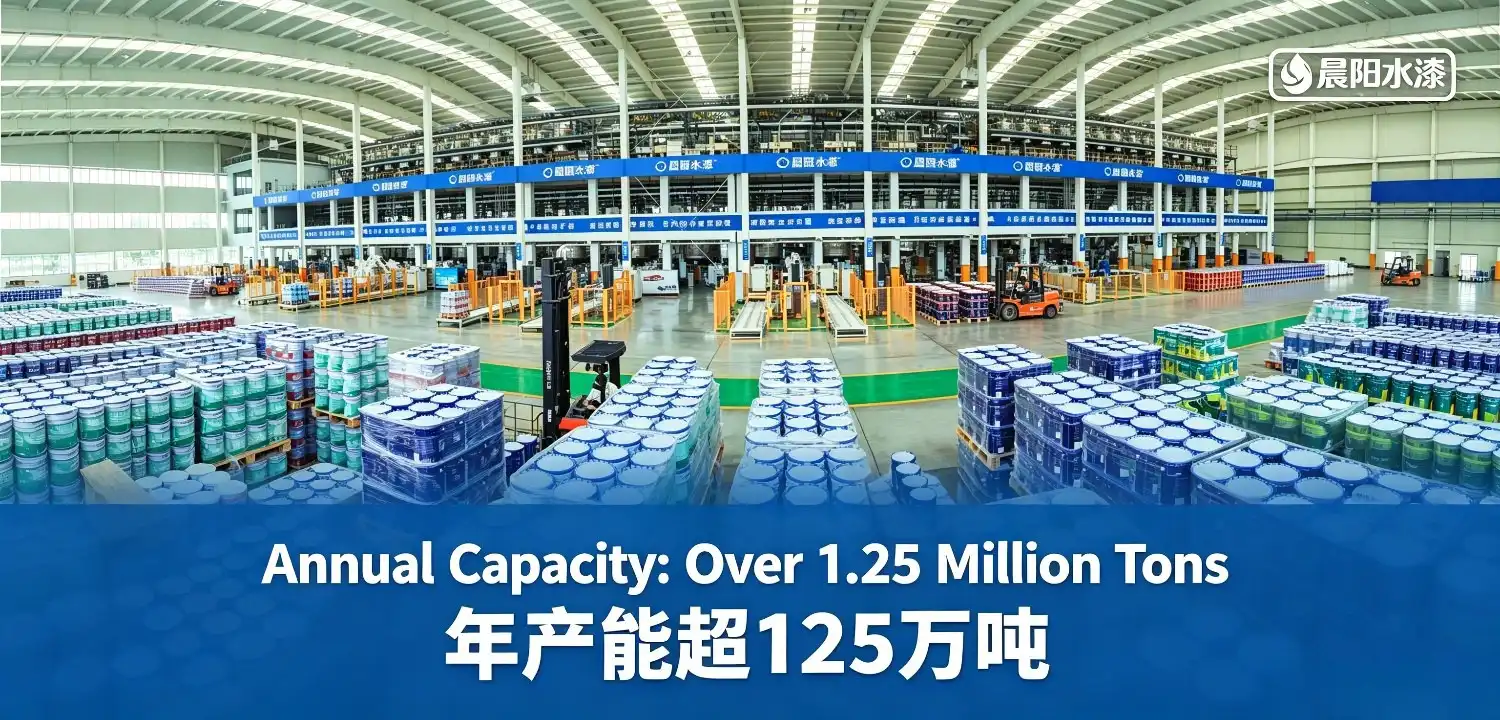
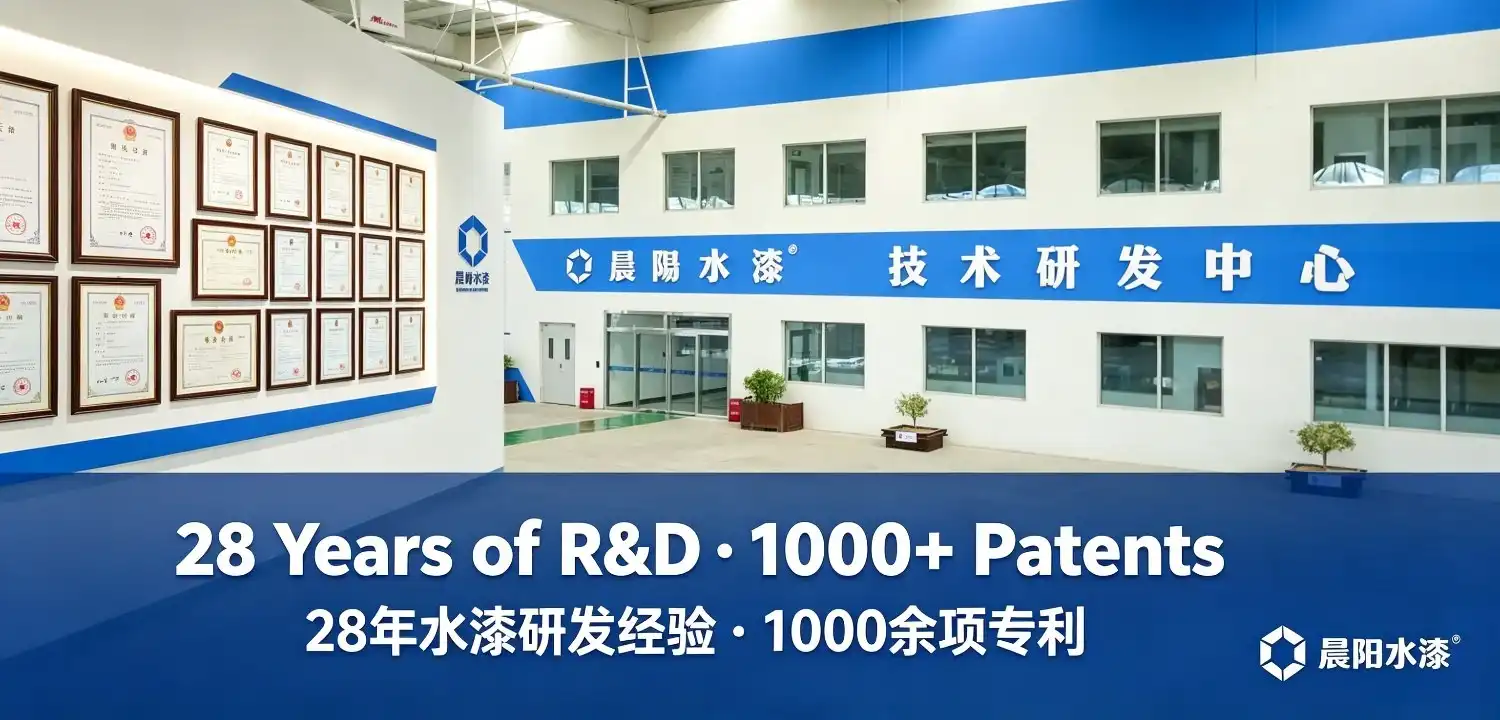
Chenyang Water Paint brings to this category 28 years of research and development into water-based paints. The company has more than 1,000 patents, has helped create more than 100 industry standards, and can produce more than 1.25 million tons of goods every year. This means that when importers place full-container orders during peak season, they won't run out of supplies. The normal time it takes to make something is 7–10 days.
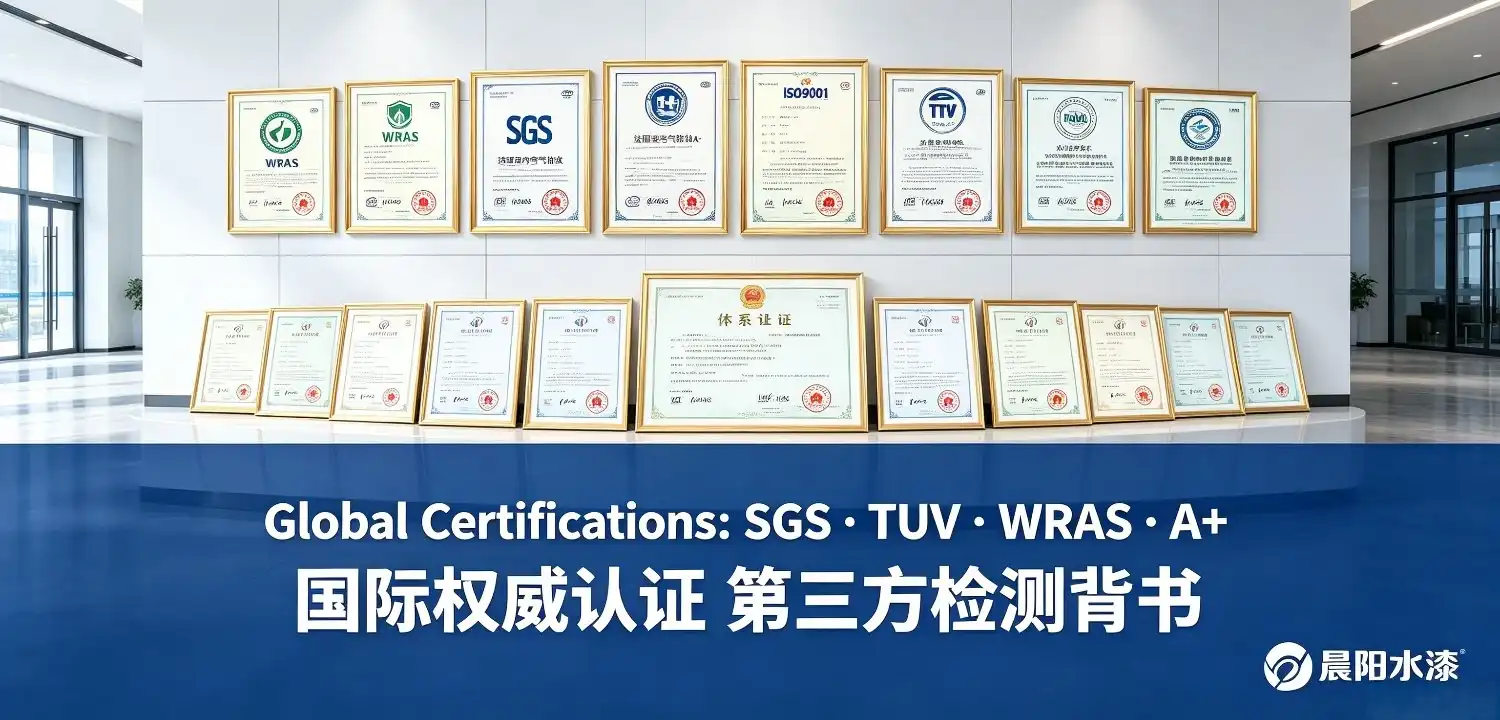
Three compliance markers should be closely examined by B2B importers when selecting an anti-fungal paint for tropics supplier. Products must have test results that can be checked against established standards. Chenyang's coatings meet national standards GB 24408-2009, EU SGS testing, and German TÜV evaluation. These are all independently checked qualifications that help with project registration and customs clearance in target markets. Every product comes with full English TDS and MSDS paperwork, which makes it easier for people in Southeast Asia, Africa, and Latin America to buy goods.
Instead of selling under a different brand name, OEM and private-label services let regional distributors build their own brand power. Chenyang offers custom label design, local language packaging, and formula changes that are tailored to different climates. This gives them a huge advantage when they have to compete with well-known international brands that are already established in the area.

Practical Guide: How to Apply Anti-Fungal Paint in Tropical Environments
Surface Preparation and Application Conditions
The quality of the application decides whether or not even the best finish works as advertised. The base must be clean, stable, and dry; the wall must have a moisture content of less than 10% and a pH level lower than 10. Before painting, you need to use a biocidal wash to get rid of any mold growth that is already there. Putting a coating over live spores will seal them under the film and make sure they come back.
The following conditions must be met when using Chenyang's Engineering Exterior Wall Water-based Paint:
- Application environment: 5–35°C and less than 85% relative humidity are good conditions for use.
- Surface drying time: 30 minutes at 25–30°C to dry the surface
- Recoat interval: at least two hours must pass between coats
- Dilution ratio: rollers or brushes can use up to 20%, and airless sprays can use up to 10%.
- Compatible substrates: concrete, cement mortar, brick, and stone are all materials that can be used.
For water-based cleanup, tools can be rinsed clean with water right away, so you don't have to buy solvents or dispose of toxic waste. You also don't need any special tools. This ease of use lowers both the cost of labor and the difficulty of managing big projects on-site.
Benefits and ROI of Using Anti-Fungal Paint in Tropical Areas
Why Long-Term Value Justifies the Investment
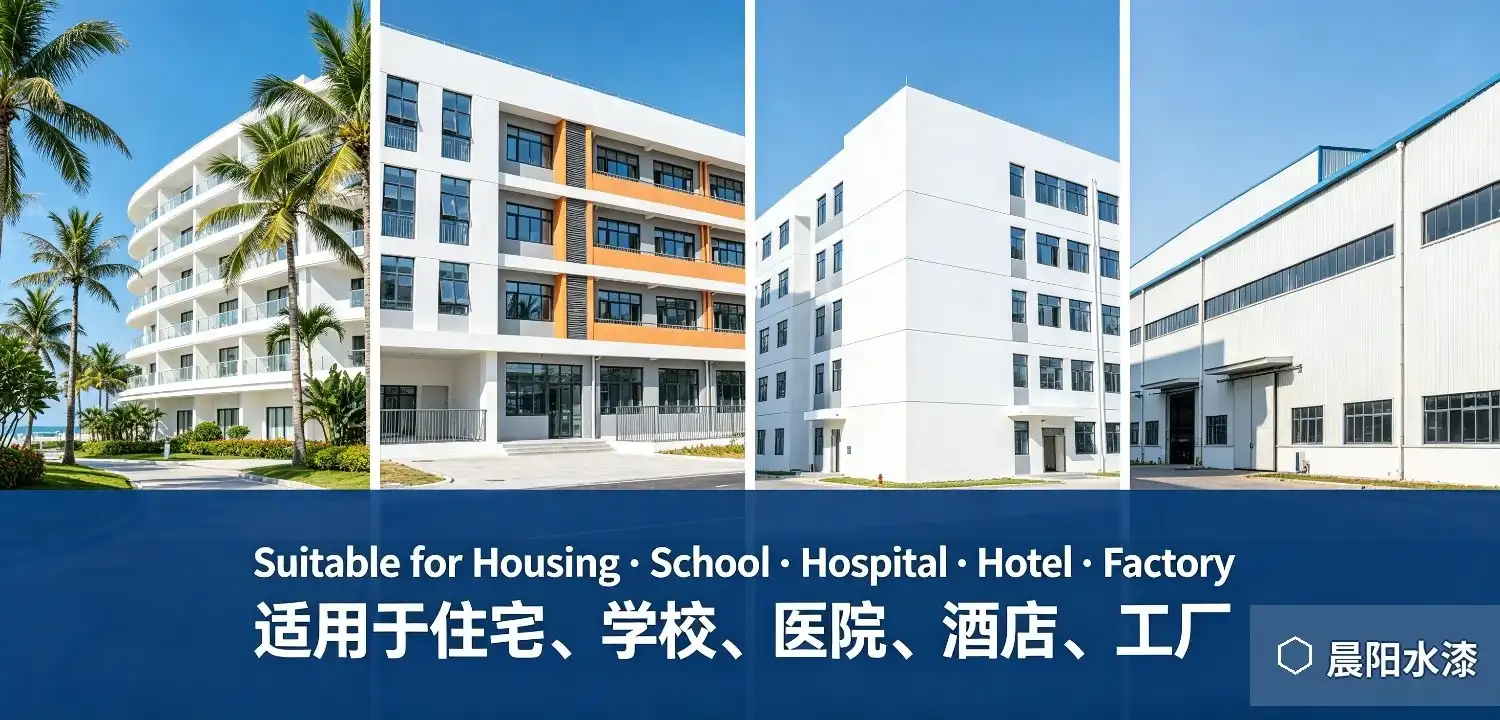
When properly specified, anti-fungal paint for tropics is used to cover buildings, it keeps their look and structural stability for a lot longer than standard goods. When there are fewer upkeep tasks, practical budgets go down for building managers who are in charge of schools, hospitals, or affordable housing blocks. For real estate investors, a facade that looks clean and well-kept leads to higher value estimates.
Low-VOC water-based formulas are better for the environment and save money at the same time. Chenyang's product meets the limits set by GB 24408-2009 for harmful substances and has the French A+ indoor air quality grade. These are important credentials to have when selecting for schools or healthcare facilities where protecting the health of people who work there is required by law.
Under international shipping rules, water-based paints are also not considered dangerous. Water-based goods can go through customs with normal MSDS paperwork, while solvent-based options need to be handled with Class 3 flammable materials. This saves importers who work in multiple markets money on freight costs and makes logistics easier.
Conclusion
Growing fungi on the outside of walls in tropical climates is a problem for engineering reasons as well as for looks. Choosing an anti-fungal paint for tropics with breathable film technology, UV-stable pigments, and effective biocide systems stops biofilm from forming, increases service life, and lowers the total cost of maintenance. Chenyang Water Paint's Engineering Exterior Wall Water-based Paint comes in 25 kg buckets, has full OEM support, English documentation, and GB 24408-2009 compliance. It is a scalable solution to this problem for importers and project procurement teams in Southeast Asia, Africa, and other places.
FAQ
1. What is the expected lifespan of this coating in a tropical climate?
High-quality water-based outdoor coatings stay resistant to fungi for 5–7 years in usual humid conditions and after the surface is properly prepared. Service life varies on the quality of the base, how well it is applied, and how much rain falls.
2. Can this paint be applied over surfaces that already show mold staining?
No, a biocidal wash must be used to get rid of all live mold and mildew before it can be used. Painting over live spores traps them under the film and makes them grow back quickly.
3. Does the water-based formula perform as well as solvent-based options in coastal environments?
Yes. The microporous film that lets air pass through and the hydrophobic surface work well in salty seaside settings. The non-hazardous classification also makes shipping easier for people who buy goods from coastal markets.
4. Is OEM private-label packaging available for regional distributors?
Chenyang Water Paint provides full OEM and ODM services, which include making custom labels, packaging in the local language, and formula changes for different climates.
5. What documentation supports customs clearance in export markets?
Full English paperwork for TDS and MSDS is available. When compared to solvent-based coatings, the non-hazardous classification makes customs much easier.
Partner With Chen Yang Water Paint for Proven Tropical Coating Solutions
With certificates from EU SGS, German TÜV, and GB 24408-2009, Chen Yang Water Paint has been selling water-based building coatings around the world for 28 years. We provide full-container pricing, OEM private-label services, free samples, and full English technical documents as a reputable producer of anti-fungal paint for tropics. You can email our international team at sales@chenyangpaint.com or go to chenyangpaint.com to get more information about our products and a custom quote.
References
1. Building and Environment — Biofilm Formation on Building Facades in Tropical Climates, 2019.
2. Progress in Organic Coatings — Biocide Encapsulation Strategies for Long-Term Antimicrobial Coatings, 2021.
3. ASTM International — ASTM D3273: Standard Test Method for Resistance to Growth of Mold on the Surface of Interior Coatings in an Environmental Chamber, 2022.
4. ASTM International — ASTM D5590: Standard Test Method for Determining the Resistance of Paint Films and Related Coatings to Fungal Defacement by Accelerated Four-Week Agar Plate Assay, 2017.
5. Construction and Building Materials — Durability of Exterior Coatings Under Tropical Weathering Conditions, 2020.
6. ISO — ISO 11998: Paints and Varnishes — Determination of Wet-Scrub Resistance and Cleanability of Coatings, 2006.
Send Inquiry
You may like