How to Choose the Best Agricultural Equipment Paint for Farm Machinery
Choosing the right agricultural equipment paint is one of the most consequential decisions a procurement manager or coating engineer can make. The wrong coating leads to premature rust, costly field repairs, and warranty claims that erode margins. The right one extends machinery service life, keeps production lines moving, and satisfies tightening environmental regulations. This guide breaks down every critical factor—from surface chemistry to supplier reliability—so your team can make a confident, data-backed decision.
Understanding the Challenges in Painting Agricultural Equipment
The conditions that farm equipment works in are some of the roughest that any agricultural equipment paint will ever have to deal with. A lot of the time, tractors and harvesters have to work through fertilizer mist, acidic crop residues, rough soil, and constant UV radiation. ASTM B117 salt spray guidelines say that agricultural equipment paint for steel structures that will be used outside must last at least 500 hours without rusting through in order to be considered heavy-duty. When fertilizer chemistry comes into play, many agricultural equipment paints fail well below that point.
Why Standard Coatings Fall Short on Farm Machinery
Electrolytes are nitrogen-based fertilizers and pesticide residues that speed up electrochemical corrosion below agricultural equipment paint films. Micro-pores in agricultural equipment paint that is poorly formulated let these chemicals get through and weaken the bonding, which leads to blistering and delamination in just one growing season. The problem is made worse by mechanical wear from soil and crop residues, which removes agricultural equipment paint from surfaces that were not made to handle that much wear.
When agricultural equipment paint fails, it's rarely just because of how it was applied. Rust that wasn't properly removed before priming, primer and topcoat chemistry that doesn't match, and not taking into account the humidity levels in the area all play a role. The only surefire way to keep agricultural equipment paint in good shape for a long time is to follow a set plan, beginning with properly cleaning the surface and ending with a tested three-layer protection system.
Core Criteria for Selecting Agricultural Equipment Paint
When purchasing teams look at finishes for tractors and harvesters, they should base their choices on real performance data instead of just knowing the brand. There are now water-based, oil-based, and powder-coat options on the market. Each has its own pros and cons.
When it comes to farming, these are the most important technical factors:
- Corrosion resistance: Equipment that works in humid or coastal areas must be able to withstand salt spray for more than 500 hours (ASTM B117). Agricultural equipment paint primers that are high in zinc offer cathodic, sacrificial protection that passive barrier coats can't match.
- Adhesion strength: A cross-cut tape test according to ASTM D3359 should give a score of 4B or 5B. In long-term pull-off tests, two-component formulations do much better than single-component alkyd systems because they chemically bond to steel substrates.
- UV and weathering stability: QUV accelerated weathering tests (ASTM G154) shows that the gloss stays on and the surface doesn't chalk. Equipment that stays out in open fields all year needs UV-stable pigments and HALS (Hindered Amine Light Stabilizers).
- Chemical resistance: The layer must not soften or change color when exposed to NPK fertilizers, diesel fuel, or hydraulic fluid.
- VOC compliance and worker safety: U.S. EPA rules and OSHA guidelines are making it harder for solvent-based agricultural equipment paints to be used in factories. Water-based formulations with low VOC content lower the risk of fire, get rid of the need to pay to get rid of hazardous waste, and make the air quality better for people working on the production line.
According to these factors, agricultural equipment paint either has real lasting value or just looks good on the first day. Using this information to guide purchases protects both the assets and the budgets for running the business.
Comparing Leading Agricultural Equipment Paint Options
Water-Based Zinc-Rich Primers vs. Solvent-Borne Alternatives
Because they dry quickly and have a high solids content, solvent-borne agricultural equipment paints have traditionally been the most popular way to finish heavy equipment. There is a big trade-off: they pose flash-point risks, make regulated hazardous waste, and need expensive ventilation systems. As the costs of following environmental rules rise in the U.S., many OEM paint lines are moving to water-based systems.
Water-based binders with two parts that are high in zinc now close the performance gap. The agricultural equipment paint system from Chen Yang Water Paint combines A and B parts in a stable, pre-engineered ratio that produces film density and adhesion that are on par with solvent-borne standards. Because it doesn't react to salt spray, dries quickly, and cures at room temperature, it can be used with current production line plans without needing new ovens.
Chen Yang Water Paint: Purpose-Built for OEM Production Lines
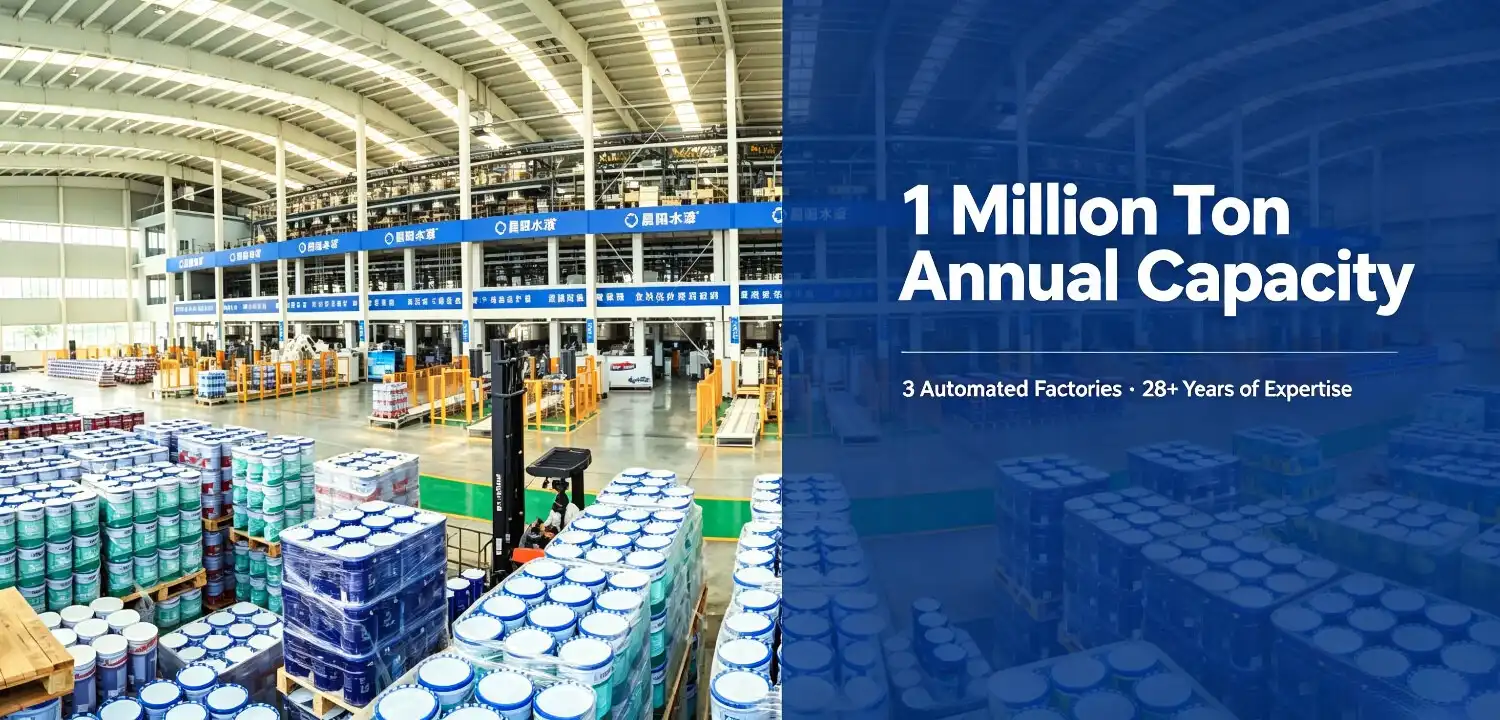
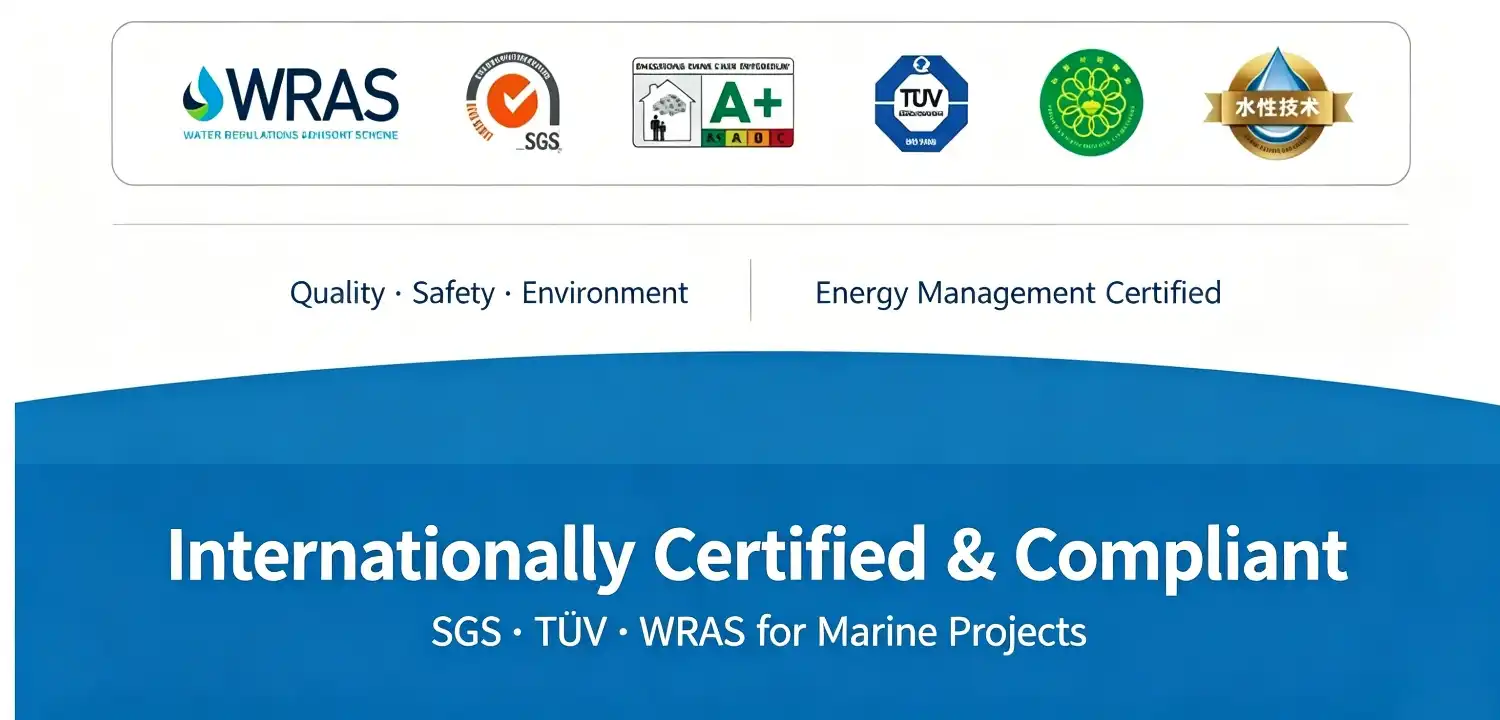
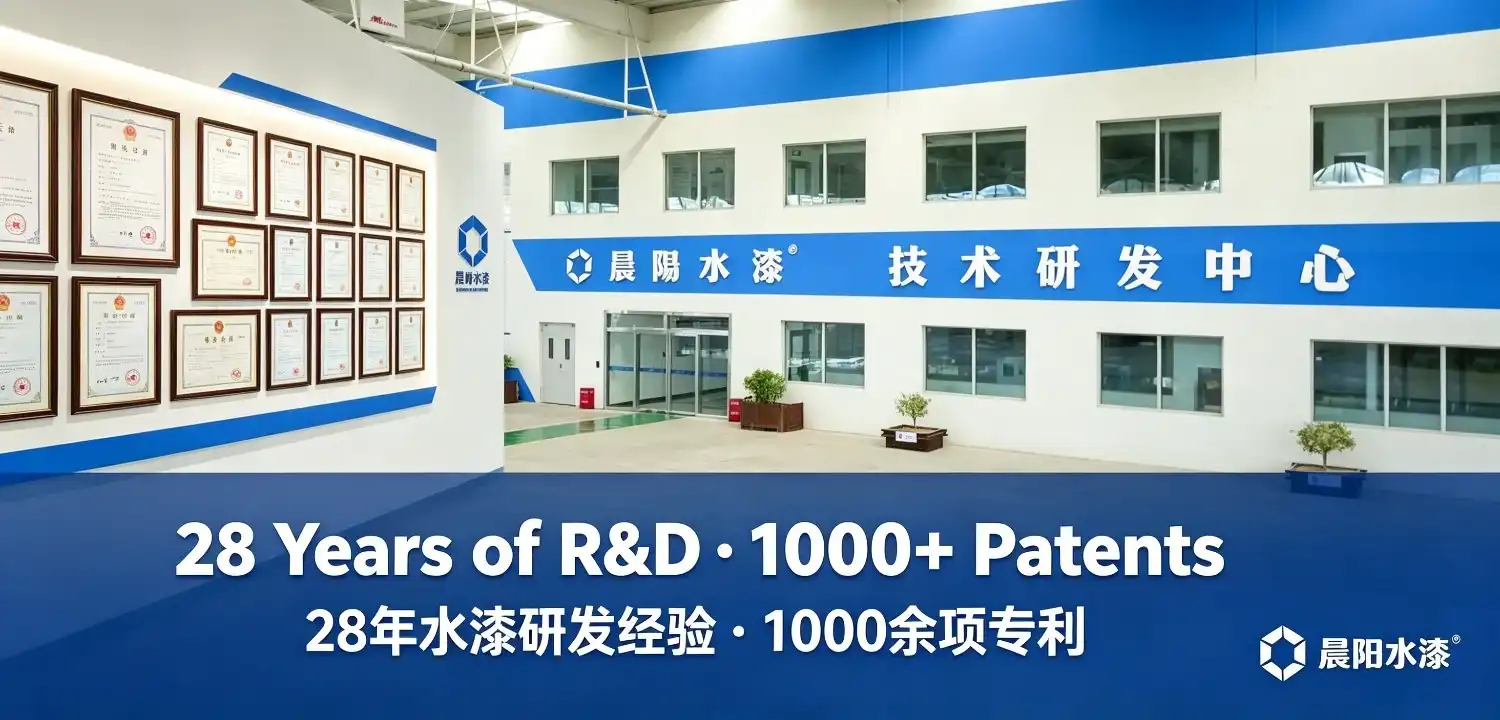
Chen Yang runs one of China's biggest water-based agricultural equipment paint factories. He has been formulating coatings for 28 years and can make more than 1.25 million tons of them every year. The company has more than 1,000 patents, is a part of more than 100 industry standards, and has been certified by the EU's SGS, Germany's TÜV, Britain's WRAS, and the US FDA for food contact.
The matte-finish, industrial-gray zinc-rich agricultural equipment paint is made for big outdoor steel structures—exactly the kind of performance that tractors, combine harvesters, and tillage tools need. Coverage of about 1 kg per square meter keeps the cost of materials stable. Because the product ships as non-hazardous cargo, it is much easier to clear customs and costs a lot less than solvent-based competitors. This is a big plus for U.S. importers who have to deal with DOT and IATA rules.
Step-by-Step Guide to Applying Farm Machinery Coatings
To get the most out of any agricultural equipment paint, the surface needs to be carefully prepared and then applied in layers.
To get rid of grease, mill scale, and free rust, clean all metal surfaces very well. Using abrasive blasting to Sa 2.5 (ISO 8501-1) creates the anchor profile that works best for mechanical adhesion. Surfaces must be completely dry—any wetness left under a zinc-rich agricultural equipment paint primer will speed up the corrosion that the covering is meant to stop.
Follow the standard ratio that the manufacturer gives you for mixing parts A and B. Changing the mix ratio from what was specified lowers the cross-link density, which in turn lowers the hardness and chemical resistance. Depending on the shape of the part, you can use standard airless spray tools, a brush, or a roller to apply. The cross-linking process can happen at room temperature without the need for special heating equipment. This gives production schedulers more freedom during busy times.
The Three-Layer System That Delivers Maximum Protection
There is a tried-and-true order to a full anti-corrosion build: a zinc-rich agricultural equipment paint primer as the cathodic base, an intermediate coat for film build and mechanical resistance, and a UV-stable topcoat for weathering performance and color retention. Each layer chemically links to the one below it, making one protective shield instead of three separate ones. In controlled tests, this architecture always works well with salt spray for 1,000 hours.
Purchasing Agricultural Equipment Paint: Sourcing and Procurement Tips
Finding a highly qualified provider isn't the only hard part of procurement. For OEMs with tight production schedules, supply chain reliability, custom color matching, and quick expert help are all important.
Ask for documented test data, not just specification sheets, when you are looking at agricultural equipment paint suppliers. Get ASTM B117 salt spray reports, ASTM D3359 adhesion ratings, and QUV weathering data that you can ask for. Suppliers who can't give you data that has been checked by a third party add an unknown amount of risk to the production process.
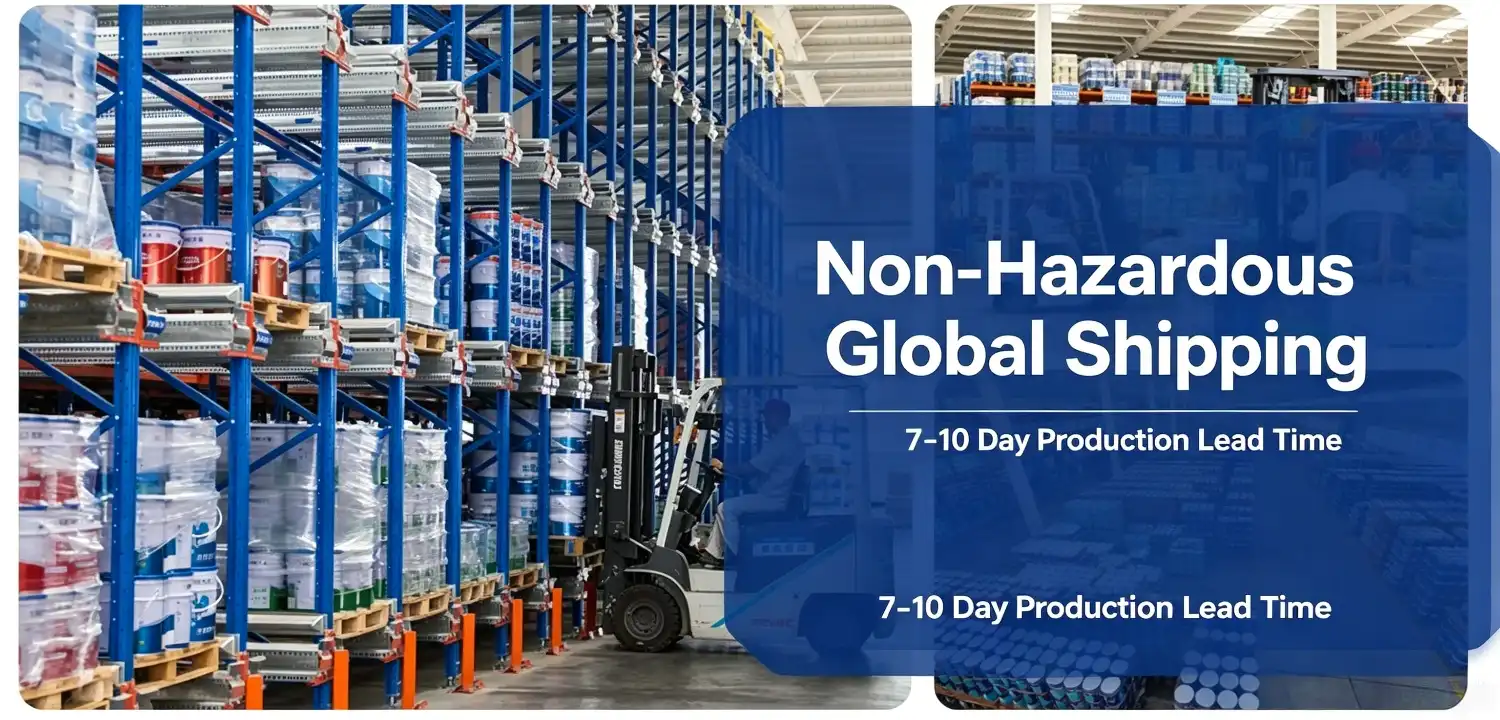
Chen Yang provides flexible OEM and ODM services, such as private-label packaging, custom color matching against your current color cards, and full English-language TDS and MSDS paperwork to help with U.S. customs clearance. Standard production processes last between 7 and 10 days, and the company's yearly capacity of 1.25 million tons protects against supply problems during busy times for farm manufacturing.
Conclusion
Choosing the right agricultural equipment paint for farm equipment is a business and technical choice that will have long-lasting effects. Today, water-based zinc-rich primer systems provide the corrosion resistance, adhesion strength, and regulatory compliance that modern OEM paint lines need, without the fire risks, VOC liabilities, and high costs of toxic trash that come with solvent-based options. A long-lasting result requires three things: a properly prepared surface, a three-layer agricultural equipment paint method that has been tested, and a supply partner with performance data that can be shown.
FAQ
1. Why does coating on fertilizer spreaders peel so quickly?
Remains of fertilizer work as electrolytes to cause rusting through tiny holes in the agricultural equipment paint film. This path can't go through a high-density, chemical-resistant epoxy or zinc-rich primer because they seal the base better than regular agricultural equipment paints.
2. Can I apply a two-component polyurethane topcoat over an old alkyd primer?
In 2K systems, strong solvents can break down some of the 1K alkyd layers that are already there. Before the whole job is done, a cross-hatch compatibility patch test must be done on a small area to make sure there is no delamination.
3. What temperature range works best for applying water-based farm coatings?
The best conditions for cross-linking and adhesion development for water-based agricultural equipment paint are between 15°C and 30°C (59°F to 86°F) and below 85% relative humidity. When it's below 10°C, water evaporates more slowly and it's harder for a film to form.
4. Is a zinc-rich primer better than a direct-to-metal coating?
Yes, for places on tractors and harvesters where rust is bad. Zinc particles offer active cathodic protection instead of passive barrier resistance. This makes zinc-rich agricultural equipment paint systems the best choice when salt spray exposure is a design requirement.
5. How often should painted farm equipment be inspected for coating integrity?
Micro-cracks, edge corrosion, and film delamination can be found early with annual checks done before and after the main working season. At this point, quick touch-ups of the agricultural equipment paint are much cheaper than a full repair.
Partner with Chen Yang Water Paint for Your OEM Coating Needs
Chen Yang Water Paint provides a tried-and-true agricultural equipment paint option that is favored by big makers in tough markets. Our water-based, two-part zinc-rich primer can be shipped as non-hazardous goods. It has been certified by EU SGS, German TÜV, and British WRAS, and we have over 1,000 patents and 28 years of experience making it. Whether you need OEM production-line quantities or agricultural equipment paint touch-up kits that are color-matched just for your project, our team is ready to help. To get samples and scientific data packages, email sales@chenyangpaint.com or go to chenyangpaint.com and ask for our agricultural equipment paint supply team.
References
1. American Society for Testing and Materials. ASTM B117: Standard Practice for Operating Salt Spray (Fog) Apparatus. ASTM International, 2019.
2. American Society for Testing and Materials. ASTM D3359: Standard Test Methods for Rating Adhesion by Tape Test. ASTM International, 2022.
3. American Society for Testing and Materials. ASTM G154: Standard Practice for Operating Fluorescent Ultraviolet Lamp Apparatus for Exposure of Nonmetallic Materials. ASTM International, 2023.
4. International Organization for Standardization. ISO 12944: Paints and Varnishes—Corrosion Protection of Steel Structures by Protective Paint Systems. ISO, 2018.
5. Weldon, David G. Failure Analysis of Paints and Coatings. John Wiley & Sons, 2009.
6. Wicks, Zeno W., Frank N. Jones, S. Peter Pappas, and Douglas A. Wicks. Organic Coatings: Science and Technology. 3rd ed. Wiley-Interscience, 2007.
Send Inquiry
You may like