How to Choose the Best Non Toxic No VOC Wall Paint?
Understanding your project's environmental safety needs and performance goals is the first step in selecting the best non toxic no VOC paint. According to EPA Method 24, these modern water-based coatings have less than 5 grams per liter of volatile organic compounds. This means that they don't give off any dangerous gases that can damage the quality of the air inside. Unlike traditional solvent-based paints, zero-emission paints can be used right away after they are applied. This makes them essential in places like hospitals, schools, and businesses where downtime can affect operations. When procurement managers look at their choices, they should put third-party certifications, technical performance data, and the manufacturing skills of the seller at the top of their list. This will make sure that the products meet regulations and last for a long time.

Understanding Non Toxic No VOC Paint: What It Is and Why It Matters
The Chemistry Behind Zero-Emission Coatings
Non toxic no VOC paints are very different from the way coatings have been made in the past. Traditional paints use solvents that come from petroleum. These solvents evaporate as the paint dries, releasing volatile organic chemicals into the air for weeks or months after the paint is applied. People who live or work in these buildings are constantly exposed to these fumes, which can cause sick building syndrome and respiratory issues.
Modern formulas with no emissions use mineral-based binders or 100% acrylic resins mixed in water instead of chemical solvents. Due to the lack of glycol ethers, aromatic hydrocarbons, and poisonous biocides, these coats only dry through water evaporation, leaving no chemical off-gassing behind. Modern polymer science has made it possible for makers to make paints that stick well, last a long time, and keep their color without using the harmful chemicals that were used in older paints.
Health and Environmental Advantages
The perks go far beyond just following the rules. Because zero-emission paints don't require the evacuation of whole areas or floors during application, healthcare facilities can keep running while renovations are being done. Paint jobs can be scheduled for school breaks so that schools can restart right away without worrying about children being exposed to fumes. Commercial spaces get new tenants more quickly, which cuts down on vacancies that hurt income.
Environmental certifications, such as GREENGUARD Gold and the French A+ Indoor Air Quality Label, make sure that goods meet the tightest chemical emission limits set for people who are sensitive. These validations from a third party are very important during the procurement qualification process because they provide objective proof that goes beyond what the maker says on the marketing materials.
Regulatory Framework and Compliance
Knowing the laws helps procurement teams make good decisions about seller offers. The National Volatile Organic Compound Emission Standards for Architectural Coatings from the EPA set the highest VOC limits. However, goods that are really safe go far beyond these base standards. The Californian CDPH Standard Method V1.2 is now the standard way to measure overall chemical pollution over long periods of time. It can measure VOCs, formaldehyde, acetaldehyde, and other dangerous air pollutants.
International norms are very different from one market to the next. According to the European EN 13300 grading methods, environmental impact is measured along with washability and hiding power. The UK WRAS certification proves that it is safe to use in places where drinking water is present, and the FDA food-contact approvals make it possible to use in places where food is processed and medicines are made, where keeping things clean is very important.
| Parameter | Specification |
|---|---|
| Coverage Rate | 8-10 m²/kg per coat |
| Dry Film Thickness | Approximately 30 microns |
| Dilution Ratio | Roller/Brush ≤20%; Airless Spray ≤10% (clean water) |
| Surface Dry Time | 30 minutes at 25-30°C |
| Hard Dry Time | 60 minutes at 25-30°C |
| Recoat Interval | ≥2 hours |
| Application Methods | Roller, brush, spray (airless spray recommended) |
| Application Temperature | 5-35°C, humidity <85% |
| Substrate Requirements | Moisture content <10%, pH value <10 |
| Packaging | 20kg/bucket, 25kg/bucket |
| Storage Temperature | 5-35°C, cool and dry location |
| Tool Cleaning | Clean with water immediately after use |
| Color Options | White base with custom color matching available |
Key Criteria to Consider When Choosing Non Toxic No VOC Paint
Certification Validation and Documentation Requirements
Procurement teams evaluating non toxic no VOC paint should expect a lot of proof to back up environmental promises. Instead of just believing what the maker says, third-party lab testing results should use gas chromatography analysis to confirm the VOC content. Check for licenses from well-known groups such as UL Solutions, Scientific Certification Systems, or national environmental product certification programs that do regular checks to make sure they are following the rules.
Technical Data Sheets should list the exact chemicals that are in the package, Material Safety Data Sheets should explain how to handle the chemicals safely, and emission testing results should show that the package meets all standards. For projects that need to be LEED certified, the goods used must help earn Indoor Environmental Quality credits. This means that specific proof of low-emitting material guidelines is needed.
Performance Specifications That Matter
Even though different goods have different unit prices, coverage efficiency has a direct effect on the total project costs. Paints that cover 8–10 square meters per kilogram per coat use less material and work than paints that need to be applied more than once to cover evenly. Before committing to large-scale purchases, request trial apps to compare theoretical consumption rates to real field performance.
Tests of durability show that something will be useful for a long time after it is first used. ASTM D2486 standards measure scrub resistance, which shows how well coats can handle being cleaned over and over in high-traffic areas. More than 1,000 scrub rounds means that the look lasts longer, which lowers the cost of painting and the number of times it needs to be done. In places like schools, hospitals, and food service areas where walls are constantly exposed to dirt and germs, stain protection is very important.
Application Environment Considerations
In different business settings, certain success traits are needed. Places with a lot of wetness, like business kitchens and public bathrooms, need materials that are very resistant to moisture and kill microbes to keep mold from growing. Instead of toxic fungicides that hurt the non-toxic character, the best formulas use natural antimicrobial technology like silver ions or high-pH mineral bases.
Temperature and humidity during application affect how long it takes to cure and what the end film is made of. Quality goods keep working well over a wide range of temperatures and humidity levels, usually between 5 and 35°C. This gives project schedulers more freedom. Conditions at the site must match the standards for surface preparation, such as the maximum amount of moisture in the base and the pH level, to make sure there is proper adhesion and avoid failure too soon.
Supply Chain and Logistics Factors
When you buy things in bulk, it's harder to keep your storage stable and keep track of your goods. When stored properly, products that last 12 to 24 months give big projects with phased deployment plans a fair amount of freedom. Most storage needs call for temperature-controlled areas between 5°C and 35°C to keep things from freezing and breaking down too quickly.
It's impossible to say enough good things about water-based materials for transportation. Solvent-based products that are labeled as dangerous goods come with a lot of paperwork, shipping limits, and higher costs that come with being labeled as non-hazardous materials. This makes things easier, which speeds up the clearance process for foreign projects and makes the whole delivery chain less stressful.
Comparing Top Non Toxic No VOC Paint Brands and Products
There are many non toxic no VOC paint products on the market claiming to be eco-friendly, but quality varies significantly across formulations and certifications. Well-known names in North America, such as Benjamin Moore Natura and Sherwin Williams Harmony, have built strong reputations by consistently producing high-quality products that are easy to find. These products usually come with a lot of different certifications and color systems that are good for big business projects that need to match colors exactly across multiple orders.
Brands like Behr Premium Plus Ultra and Kilz Tribute that are good for saving money have reasonable prices for jobs that need to keep costs down. These options meet basic environmental standards, but they might need more coats to get the same level of coverage and sturdiness as more expensive choices. It's important to think carefully about the trade-off between unit cost and total application cost based on project timelines and wage rates.
Specialized manufacturers such as ECOS Paints and AFM Safecoat produce non toxic no VOC paint designed for chemically sensitive environments. These products often get rid of even small amounts of chemicals that could cause reactions in people who are more likely to be affected. This makes them perfect for places like hospitals, schools, and nursing homes where the health and safety of the residents is important enough to justify the higher prices.
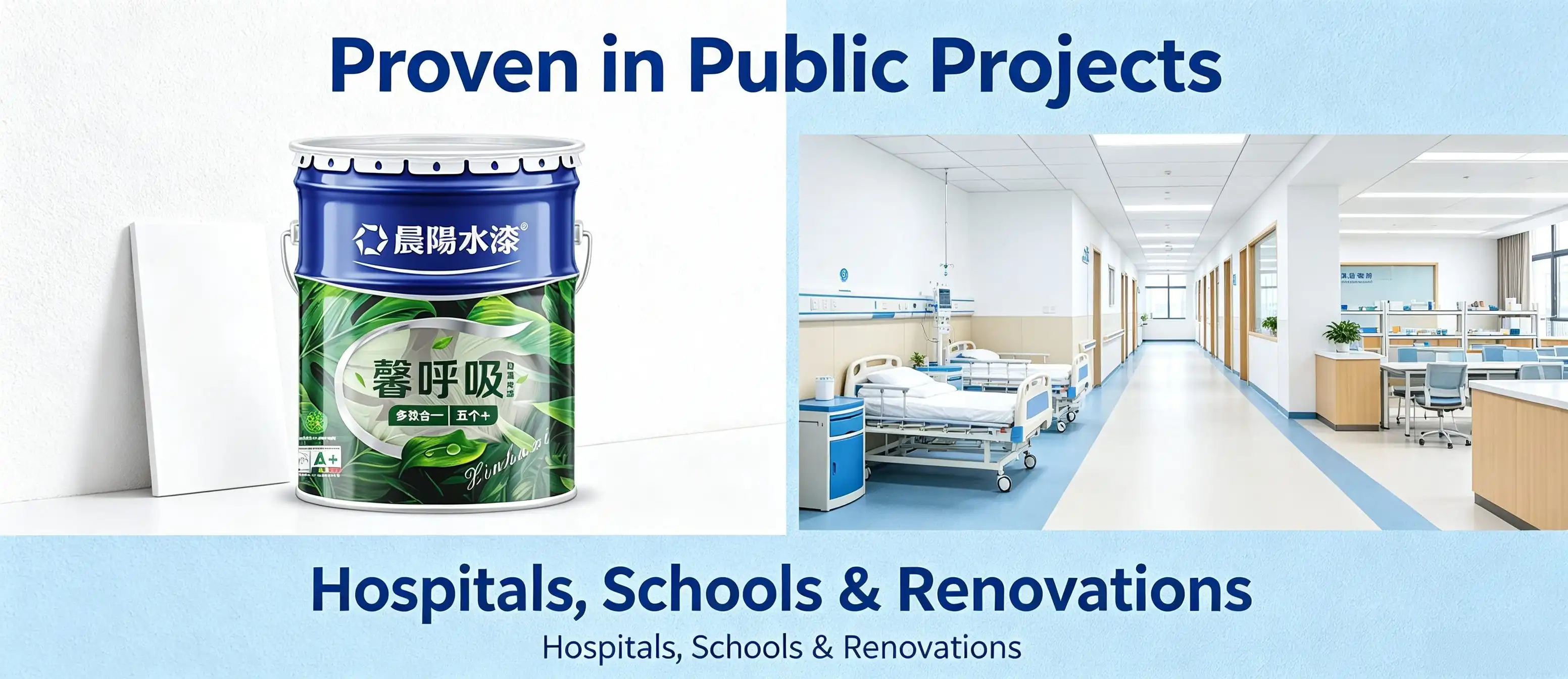
Chenyang Water Paint's Xin Huxi Multi-functional Five-in-One Plus represents a compelling option for procurement professionals seeking certified performance backed by robust manufacturing capabilities. The Chinese National Environmental Protection Product Certification confirms that this water-based internal paint has very low VOC levels, and it also meets French A+ indoor air quality guidelines. The formula includes five important performance traits: it stops mold growth, gets rid of smells, kills bacteria, is very easy to clean, and is resistant to alkalis. These traits cover the most common failure modes seen in business settings.
The technical specs of the product show that it works well enough for business use. It covers 8–10 square meters per kilogram per coat and dries quickly enough that you can coat it again after only two hours. At normal temperatures, the surface dries in 30 minutes, so there isn't much disruption while the building is being used. The lotus leaf surface protection technology makes it so that stains don't stick to the surface, so it cleans itself. This makes regular care easier in places that get a lot of use.
20kg and 25kg buckets are available for packaging, so they can be used for both big jobs and small renovations. You can order as few as one bucket, which gives you more buying choices. Professional color centers can match any color to the white base, so your image will stay consistent across multiple sites. Most importantly, the odorless mixture lets people move in right away after it's been applied, so there are no more expensive "exclusion periods" that stop businesses from running during regular coatings.
How to Source and Procure Non Toxic No VOC Paint Efficiently
Supplier Qualification and Verification
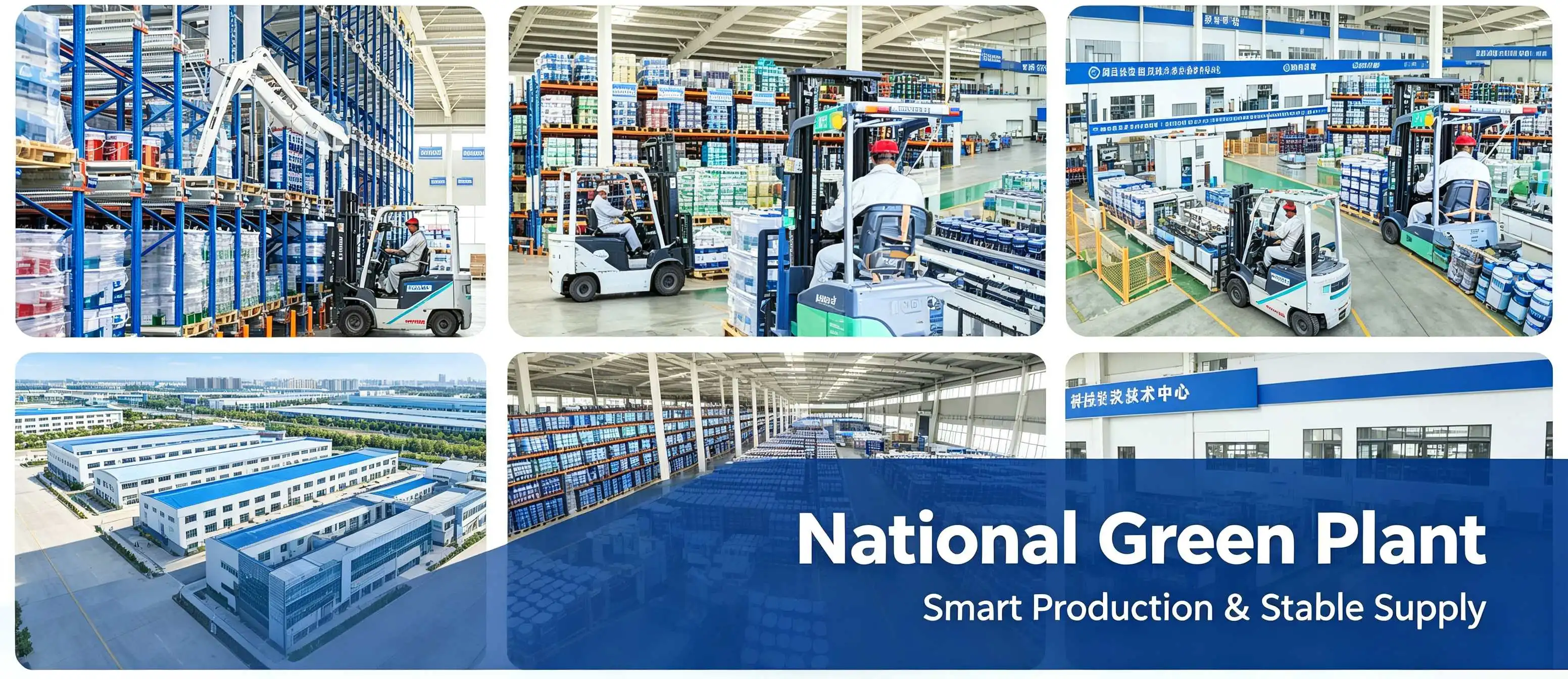
The first step in building a reliable relationship for non toxic no VOC paint is to carefully check out a provider’s manufacturing skills and quality control systems. Teams in charge of buying things should look into how much they can make to make sure that sellers can meet project needs even when building is busy. Chenyang's highly automated facility, which makes more than a million tons of goods every year, shows the size needed to handle big business accounts without supply delays that throw off project schedules.
The amount of mechanization in manufacturing is directly related to how consistent the products are. Facilities that use automatic batching, mixing, and quality control systems make goods that are more consistent across production runs than those that use human processes, which can vary. Green factory titles at the national level and involvement in government technology programs like China's 863 Initiative show that the business is running well and following the rules.
Certification portfolios show if providers meet the needs of the foreign market in addition to their local duties. Products that pass EU SGS testing, German TÜV inspection, UK WRAS standards, and US FDA food-contact practices show the quality levels that workers in the developed market look for. These certificates are very important for projects that need to show that they follow certain rules or green building standards.
Strategic Procurement Practices
Before making a big buy, you should test samples first. Ask for small amounts to be used for pilot tests on sample substrates in real-life site circumstances. Specifications alone can't show how to apply the product, how well it covers, how long it takes to dry, and how it looks when it's done. This practical review does. Testing also makes sure that it works with current surface treatments and that the color matching meets the needs of the project.
Long-term relationship deals keep prices stable and make sure that supplies are distributed evenly during times of high demand. Flexible OEM and ODM service providers can change goods, packaging, and labels to work with private label programs for distributors or to meet the special needs of a project. Color customization lets you keep your brand's look consistent across all of your business or school's buildings, where specific color palettes help strengthen your organization's character.
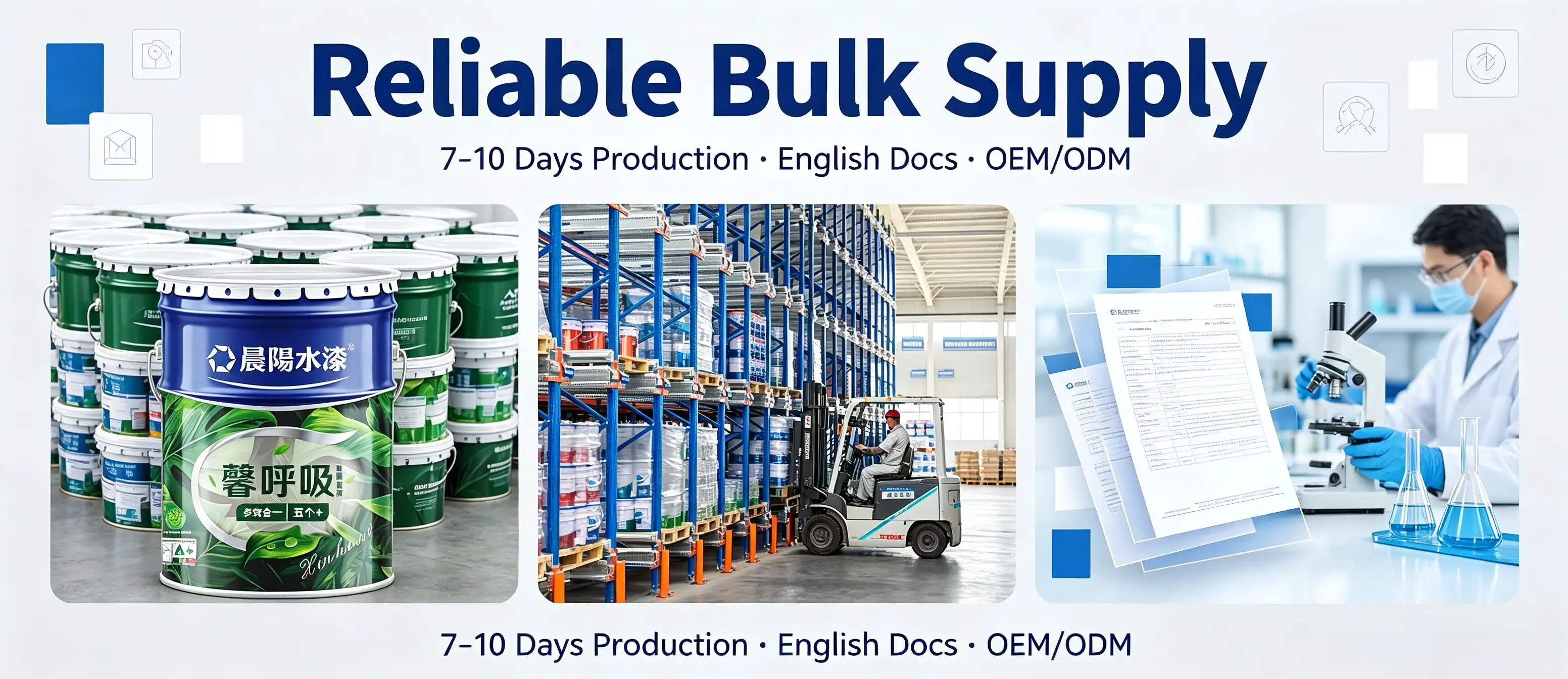
Support for documentation makes foreign buying and project compliance easier. Suppliers who offer full technical data sheets, material safety data sheets, and certification papers in English make it easier to clear customs and meet legal needs in target markets. Leading manufacturers stick to a standard production cycle of 7–10 days, which makes sure that shipping times are reliable and match up with building schedules.
Cost Optimization Without Compromising Quality
Total cost analysis needs to look at more than just unit prices. It needs to look at things like covering efficiency, durability, and lifecycle costs. Many times, products that cost 15 to 20 percent more per unit may be a better deal if they hide better, need fewer covers, last longer, and need less upkeep. To make useful comparisons, figure out the cost per square meter of finished area instead of the cost per liter of paint.
When you buy in bulk, you can get volume savings, better payment terms, and lower freight costs by combining your orders. Because water-based paints are not considered dangerous, they are much cheaper to ship than solvent-based options that have to pay extra for dangerous goods and follow special handling rules. These savings add up over the course of long-term property management contracts or big projects.

Practical Tips for Applying Non Toxic No VOC Paint in Commercial Spaces
Surface Preparation Protocols
Whether elite coatings work as well as they can or fail too soon depends on how well the base is prepared, no matter how good the formulation is. To get rid of dirt, grease, and other things that don't stick, commercial surfaces need to be cleaned very well. To keep alkaline substrate reactions from happening that darken and peel, wall moisture content must stay below 10% and pH levels must stay below 10.
Priming is necessary for surfaces that are weak, have stains, or have a lot of color variation. Using starters from the same company and line of products makes sure that they are chemically compatible and keeps the zero-emission profile throughout the whole finishing system. Even if you use zero-emission topcoats, bases that don't match can introduce VOCs that make the air inside your home less healthy.
Application Techniques and Environmental Controls
High-pressure airless spray application is the best way to cover big commercial jobs quickly and evenly, while also saving money on labor. Roller and brush methods work well for smaller areas and fine details, but they need the right amount of water to work properly—up to 20% for rolling or brushing and 10% for spraying. Over-dilution weakens the ability to hide and breaks down over time, while under-dilution makes it hard to apply and gives surfaces that aren't even.
Common failure modes can be avoided by keeping the right weather conditions during the application. Temperatures between 5 and 35°C and a relative humidity below 85% are needed for drying and film production to work right. Extreme temperatures make drying take longer, make the film shrink more, and can stop it from cross-linking properly. Even with zero-emission goods, it's still important to have enough ventilation to help water evaporate and keep the workplace warm.
Post-Application Care and Maintenance
Long-term stability is best achieved by giving surfaces enough time to cure before they are heavily used or cleaned aggressively. From an air quality point of view, zero-emission coatings allow instant occupation, but the film needs to harden for several days. The minimum two-hour recoat interval speeds up the job, but for best results, keep the surface dry and away from water and rough surfaces for 48 to 72 hours after the final coat is applied.
Regular care greatly increases the life of coatings. Premium goods can be washed more often without wearing out too quickly because they are more washable. When you use mild soaps and soft cleaning tools, you stop the needless wear and tear that breaks down even the strongest films over time. Taking care of stains and marks right away keeps them from becoming fixed, so the coating's look stays the same over time.
Conclusion
Environmental performance, technical requirements, supplier skills, and total lifetime costs must all be balanced when choosing the best non toxic no VOC paint. Third-party certifications that check safety claims, real-world performance characteristics beyond marketing materials, and building relationships with manufacturers who have the scale and expertise to support demanding commercial applications are the most effective ways to buy things. Water-based covering technology has grown up to the point where being environmentally friendly doesn't mean sacrificing effectiveness. If procurement workers know the technical differences between truly safe goods and regular options, they can choose coatings that protect people's health, meet government standards, and last for a long time in a variety of business settings.
FAQ
Is non toxic no VOC paint completely safe for sensitive environments like hospitals and schools?
Yes, zero-emission paints that have been properly approved are made for sensitive areas. Products that meet the standards for GREENGUARD Gold and French A+ are put through a lot of tests that measure hundreds of possible chemical releases over long periods of time. Because they don't contain any harmful chemicals, heavy metals, or biocides, these coatings can be used in schools, newborn intensive care units, and pediatric wards. It is important to check approvals through independent third-party laboratories instead of just believing what the maker says.
How does performance compare between zero-VOC and low-VOC products?
Modern versions with no emissions are just as durable, cover more, and wash easier than good low-VOC options. Early water-based paints didn't work as well as later ones, but improvements in acrylic resin technology have gotten rid of these problems. Premium zero-emission products now have a scrub resistance of more than 1,000 cycles, a hiding power of more than 0.95 contrast ratio, and service lives that are similar to solvent-based coatings while still having better environmental profiles.
What certifications should procurement managers prioritize?
Pay attention to EPA Method 24 verification for VOC content, GREENGUARD Gold for full chemical emissions testing, and appropriate foreign standards such as UK WRAS for water-contact uses or FDA approval for food-contact uses. Products that are recognized by more than one independent body show that they care about quality above and beyond what is required by law. They also provide the proof needed for green building certification programs and project-specific standards.
Partner with Chenyang Water Paint for Certified Zero-Emission Coating Solutions
Chenyang Water Paint provides non toxic no VOC paint options backed by 28 years of experience with water-based coatings and foreign standards such as EU SGS, German TÜV, UK WRAS, and US FDA approvals. Our Xin Huxi Multi-functional Five-in-One Plus is approved to be safe for the environment and has been used in famous buildings like Tiananmen Square and the Bird's Nest Stadium to show how long it can last. We offer the supply dependability, technical documents, and OEM customization capabilities that high-level B2B buying demands as a reputable non toxic no VOC paint manufacturer with national-level green factories and a yearly production capacity of over one million tons. The non-hazardous label on our goods makes foreign shipping easier and lets you start using them right away, which keeps the project running smoothly. Get in touch with our purchasing agents at sales@chenyangpaint.com to talk about your specific needs, ask for technical paperwork, and set up sample testing that shows the performance benefits of truly approved zero-emission coatings.
References
1. Environmental Protection Agency. "National Volatile Organic Compound Emission Standards for Architectural Coatings: Technical Overview and Compliance Guidelines." Government Publishing Office, 2021.
2. California Department of Public Health. "Standard Method for the Testing and Evaluation of Volatile Organic Chemical Emissions from Indoor Sources Using Environmental Chambers, Version 1.2." Sacramento: CDPH, 2017.
3. ASTM International. "ASTM D2486-17: Standard Test Methods for Scrub Resistance of Wall Paints." West Conshohocken: ASTM International Standards Organization, 2017.
4. GREENGUARD Environmental Institute. "GREENGUARD Certification Program Method for Measuring and Evaluating Chemical Emissions from Building Materials Using Dynamic Environmental Chambers. "UL Environment, 2019.
5. Society for Protective Coatings. "Comparative Performance Analysis of Water-Based and Solvent-Based Architectural Coatings in Commercial Applications." Journal of Protective Coatings and Linings, Vol. 36, 2019.
6. International Standards Organization. ISO 11890-2: Paints and Varnishes - Determination of Volatile Organic Compound Content - Gas-Chromatographic Method. "Geneva: ISO Standards Press, 2020.
Send Inquiry
You may like