Is Non Toxic No VOC Paint Really Safe for Children?
Is non-toxic no-VOC paint really safe for kids? This is a question that always comes up when purchasing managers and sellers review coatings for schools, daycare centers, or healthcare facilities. The simple answer is yes, as long as it is properly written and approved. According to EPA Method 24, these water-based coatings have less than 5 grams per liter of volatile organic compounds. The best ones have pollution amounts that can't be found. Traditional solvent-based paints give off dangerous fumes for days. Certified water-based paints, on the other hand, can be used right away, so there is no exposure to lung irritation or developmental toxins. But safety depends on strict testing by a third party, clear labeling of ingredients, and following international standards like GREENGUARD Gold and CDPH Standard Method V1. 2.
Understanding Non Toxic No VOC Paint: What Does It Really Mean?
The Technical Definition of No VOC Paint
No-VOC in the coatings business means that the formulas have less than 5 grams per litre of volatile organic compounds, which can be found using ASTM D6886 gas chromatography tests. This level is 99% less than what is normally found in solvent-based paints, which have between 250 and 450 grams per liter. For these modern mixtures, 100% acrylic resins or silicate material binders are used. They cure by evaporating water instead of chemicals giving off gases. Because they don't contain glycol ethers, formaldehyde, or fragrant hydrocarbons, they don't have the strong chemical smell that standard paints do, so they can be used in places where people will be.
Low VOC Versus No VOC: Critical Distinctions
There is a big performance gap between low-VOC and no-VOC, which is something that many buying pros get wrong. Low-VOC paints still give off fumes when they are applied and cure—50 to 200 grams per liter. Studies released by the California Air Resources Board show that low-VOC products can keep releasing chemicals for up to 72 hours after they are applied, which means that sensitive groups need to be temporarily moved out of the area. True no-VOC formulas, on the other hand, meet CDPH Standard Method V1.2 and show total emissions below 0.5 mg/m³ after 14 days. This difference is very important for projects that need to keep downtime to a minimum, and indoor air quality must not be affected.
Common Misconceptions About Non-Toxic Labels
The market is confused because the term non-toxic does not have a uniform regulatory meaning. This mark is sometimes put on goods that don't contain any heavy metals or harmful biocides but do have volatile organic compounds (VOCs) from dyes or preservatives. Teams in charge of procurement must make sure that claims that a paint is non-toxic are backed up by thorough testing of the entire system, including binders and colorants. Products with the Green Seal GS-11 approval or the Cradle to Cradle Gold grade have been thoroughly checked for chemical ingredients, fumes, and health effects on humans. These standards are reliable for confirming safety.
| Parameter | Specification |
|---|---|
| Coverage Rate | 8-10 m²/kg per coat |
| Dry Film Thickness | Approximately 30 microns |
| Dilution Ratio | Roller/Brush ≤20%; Airless Spray ≤10% (clean water) |
| Surface Dry Time | 30 minutes at 25-30°C |
| Hard Dry Time | 60 minutes at 25-30°C |
| Recoat Interval | ≥2 hours |
| Application Methods | Roller, brush, spray (airless spray recommended) |
| Application Temperature | 5-35°C, humidity <85% |
| Substrate Requirements | Moisture content <10%, pH value <10 |
| Packaging | 20kg/bucket, 25kg/bucket |
| Storage Temperature | 5-35°C, cool and dry location |
| Tool Cleaning | Clean with water immediately after use |
| Color Options | White base with custom color matching available |
Health and Safety: Is Non Toxic No VOC Paint Really Safe for Children?
Scientific Evidence on Pediatric Safety
Studies published in Environmental Health Perspectives indicate that choosing a certified non toxic no VOC paint can significantly reduce children's exposure to harmful airborne chemicals commonly found in conventional coatings. Their breathing systems are still growing, and they are more likely to come into contact with painted surfaces when they play on the floor or put their hands together. These risks are taken away by water-based, no-VOC formulas, which get rid of the chemicals that cause inflammation in the lungs. The research done by Eurofins Scientific in the lab shows that water-based paints that are properly mixed don't release any harmful air pollutants (HAPs) like benzene, toluene, or xylene. These HAPs are linked to cognitive damage in children.
Regulatory Standards and Certification Requirements
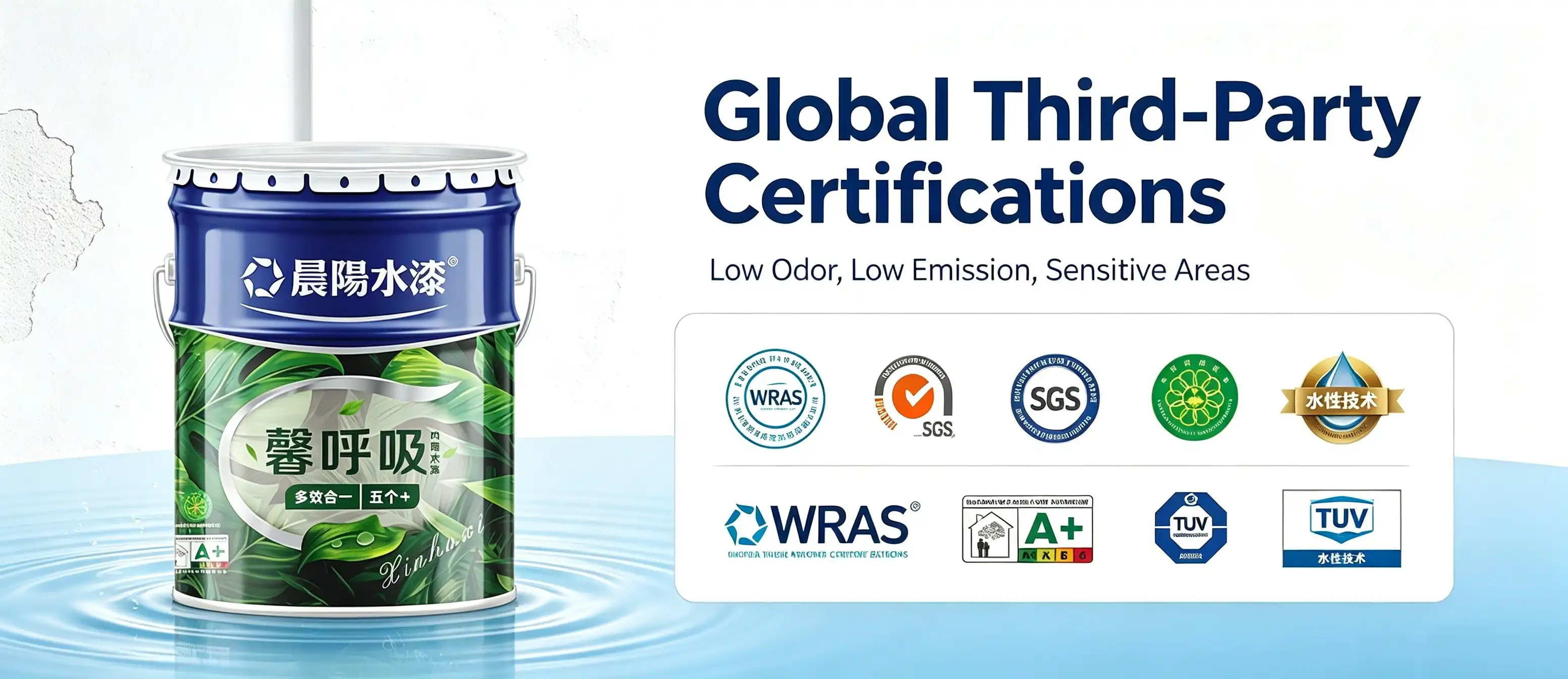
International licensing standards make sure that safety is being checked objectively. To get GREENGUARD Gold approval, goods must meet strict chemical emission limits based on standards set by the state of California for use in healthcare and school sites. The UK WRAS (Water Regulations Advisory Scheme) approval makes sure that surfaces meant to come into contact with potable water don't release any dangerous chemicals. This means that they can be used in places where food is prepared and in drinking water systems. The US FDA food-contact grade approval proves that the coating parts meet the safety standards set out in Title 21 CFR for indirect food contact. When buying things for schools, purchasing managers should demand that sellers show proof of compliance with these standards from a third party, not just what the maker says. These certifications provide reliable evidence that a non toxic no VOC paint meets strict safety requirements for child-focused environments.
Identifying Truly Child-Safe Products
While most no-VOC paints are safe, not all of them are. In addition to VOC content, procurement teams must check a number of technology factors. To keep pollution from being released during coloring, the product should have zero-VOC colorant systems. Chemical fungicides are not as good as natural antibacterial qualities that come from high-pH mineral bases or silver-ion technology. According to ASTM D2486, surfaces can be scrubbed more than 1,000 times without damaging the protected film. Vapor permeability rates above 10 perms keep wetness out, which is bad for mold growth. The Xin Huxi Multi-functional Five-in-One Plus line from Chen Yang Water Paint meets all of these needs because it has very low VOC content, antibacterial qualities, mold resistance, and is washable. The recipe lets people move in right away, and there is no building smell, which makes it perfect for nurseries and infant healthcare settings.

Environmental and Indoor Air Quality Benefits of Non Toxic No VOC Paint
Measurable Indoor Air Quality Improvements
Research from the Indoor Air Quality Association shows that using non toxic no VOC paint instead of traditional solvent-based coatings can dramatically reduce indoor pollutant levels. Because of these changes, people who live or work in the building are reporting fewer headaches, eye pain, and breathing problems related to sick building syndrome. In school settings, better air quality is linked to measured increases in student attendance and success on cognitive tests. The New York City Department of Education did a case study that showed that when no-VOC coatings were used in elementary schools across the whole city, respiratory-related absences dropped by 15%.
Carbon Footprint and Sustainability Advantages
Making water-based mixtures takes a lot less energy than making solvent-based goods, which need to be processed at high temperatures and use raw materials that come from oil. The Sustainable Coatings Consortium did life cycle studies that show water-based paints produce 40% less greenhouse gas emissions during the production, shipping, and disposal stages. Because these goods aren't considered hazardous, they don't need to be handled by special teams, and because of this, shipping costs are cut by 20–30%. These things are in line with corporate social responsibility efforts and help green building projects meet LEED certification standards. This makes them strategically valuable for wholesalers who want to serve environmentally conscious customers.
Supporting CSR and Regulatory Compliance
Europe, North America, and Asia all have governments that are putting in place tighter controls on VOC emissions. The VOC content of building coatings is limited to 30 grams per liter by the European Union's Directive 2004/42/EC. In California, the CARB rules set even lower limits. Strategies for buying things that don't have volatile organic compounds (VOCs) protect supply lines from changes in regulations and possible market limits. In addition to meeting regulations, these choices show a real concern for the health of occupants and the environment, which improves the brand's image among big clients. When distributors work with certified makers, they can stand out in bids for government contracts, healthcare building, and upgrades to schools.
Comparing Market Options: How to Choose the Best Non Toxic No VOC Paint for Your Projects
Evaluating Performance Parameters
Technical data sheets show important changes in performance when compared to suppliers. According to ASTM D2805, a contrast ratio above 0.95 means that the paint has better hiding power, which means that fewer coats are needed and labor costs are lower. Cross-hatch testing (ASTM D3359) measures the adhesion power and makes sure that the product will last for a long time on surfaces like drywall, masonry, and wood. Washability scores are especially important in areas with a lot of foot traffic; goods that can handle more than 2,000 scrub cycles will keep their look even after being cleaned a lot. Chen Yang Water Paint's Xin Huxi line can theoretically cover 8–10 square meters per kilogram per coat. It has a thick, tough film structure that can be washed many times without breaking down the protective barrier.
Supply Chain Reliability and Customization Capabilities
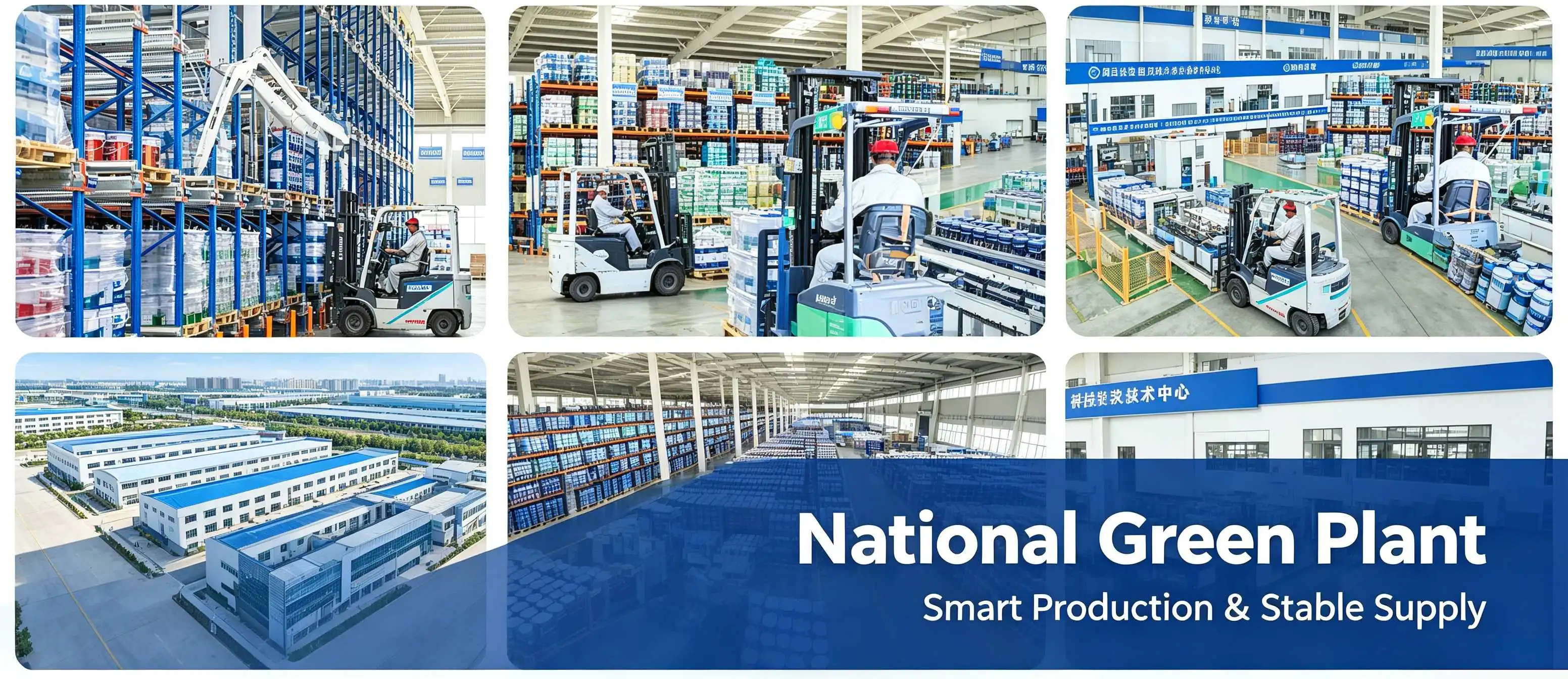
Purchasing managers give more weight to sellers whose production capabilities have been proven and whose customization services are open. A production capacity of more than one million tons per year guarantees a steady supply during busy building seasons, avoiding delays in projects. Standard production processes of 7–10 days make it possible to quickly fill orders. OEM/ODM features, such as custom color matching, private labeling, and package specs, make it more valuable for distributors who serve a variety of regional markets. Chen Yang Water Paint runs a green plant on a national level with automatic production lines. The company also holds more than 1,000 patents, which helps it be both large and innovative in its technology. Engineering-level quality control is shown by the company's work on China's National 863 Program and important projects like the Bird's Nest Stadium.
Cost-Benefit Analysis and Total Ownership Value
Although non toxic no VOC paint generally carries a higher upfront cost than conventional coatings, its long-term economic value is often superior. Immediate usage gets rid of the costs of temporary moving and the loss of income caused by the facility being closed down. Because a single coat covers more area and dries faster (30 minutes for the surface and 60 minutes for the hard dry at 25–30°C), fitting costs are cheaper. Lifecycle costs are lower because upkeep times are longer because the product lasts longer. Instead of just looking at the original purchase price, distributors should figure out the total cost of ownership over a 10-year period. They should also keep in mind that performance and safety certifications support premium placement in competing tenders.

Best Practices for Using Non Toxic No VOC Paint in Child-Focused Environments
Surface Preparation and Application Protocols
The right way to apply starts with getting the base ready. For best adhesion, walls must have a moisture content below 10% and a pH number below 10. For the Xin Huxi series, only clean water should be used to dilute the paint so that it doesn't go over 20% when applied with a roller or brush and 10% when sprayed without air. Large business jobs should use high-pressure airless spray because it makes a uniform film thickness and works well for applications. For good drying, the temperature should stay between 5°C and 35°C, and the relative humidity should be less than 85%. Recoat intervals of at least two hours keep the film from getting flaws and make sure that all of the layers stick together perfectly.
Color Selection and Finish Considerations
According to studies in color psychology, soft, neutral tones help kids concentrate and feel calm in school settings, while bright accent colors encourage creativity in play areas. Matte and eggshell finishes are easier to clean than flat sheens, so they are good for areas where a lot of people touch the floor, like hallways and classes. The Xin Huxi line has white base formulas that can be customized with colors from Chen Yang's color center. This makes it possible to work with school branding and design principles for learning. The lotus leaf surface protection technology in the recipe makes sure that stains don't go through, which makes upkeep easier and keeps the surface looking good for longer.
Maintenance and Long-Term Air Quality Preservation
Long-term maintenance practices play an important role in preserving the indoor air quality benefits of non toxic no VOC paint. To keep the film surface from getting scratched, cleaning instructions should call for pH-neutral soaps and soft cloths. Trace emissions from furniture and building materials are diluted by regular ventilation, which is important even in rooms that have been covered with water-based paint. Mold doesn't grow under the paint film because it is checked for moisture entry on a regular basis and broken areas are fixed right away. Procurement managers should build relationships with makers that offer technical support and application training. This way, they can make sure that installation teams follow best practices and that building maintenance staff know how to take care of things the right way.
Conclusion
When choosing safe surfaces for places where kids are, you need to look at a lot more than what the company says on the label. When non-toxic no-VOC paint is backed by third-party standards and made with water-based polymers, it is known to be safe for children because it doesn't give off any dangerous emissions. The environmental benefits, like a smaller carbon impact, better indoor air quality, and following the rules, make it more important for buying managers to find a balance between safety, sustainability, and cost-effectiveness. Performance factors like being able to be washed, having antimicrobial qualities, and curing quickly make sure that these goods meet the strict needs of academic uses. Partnering with qualified makers who offer clear technical documents, open customization, and reliable supply chains can turn choices about what to buy into effective competitive advantages.
FAQ
Can trace chemicals still emit from non toxic no VOC paint?
Even products that are approved as having no-VOC still have small amounts of water, acrylic polymers, and mineral binders that give off very little water vapor when they cure. These fumes are not as dangerous as chemical solvents. After 14 days, products that meet CDPH Standard Method V1.2 show total VOC emissions below 0.5 mg/m³, which is about the same as the amounts found in buildings that haven't been painted. To make sure safety claims are true, procurement teams should ask for emission test results from reputable labs like Eurofins or UL Solutions.
How can procurement managers verify product safety?
There are several steps needed for verification. Ask the maker for copies of third-party certifications like FDA food-contact grade certificates, Green Seal GS-11, or GreenGuard Gold. Look over full technical data sheets that show all chemical parts, not just VOC levels. Ask for the results of the ASTM D6886 gas chromatography test that show which volatile chemicals are being tested for. Check with the certification groups to make sure the certificate is still current. For clear quality confirmation, Chen Yang Water Paint offers a lot of English paperwork, such as TDS, MSDS, and certificates from EU SGS, German TÜV, UK WRAS, and US FDA.
Do no VOC paints cost significantly more than conventional products?
Unit prices are usually 15–25% higher, but the total cost of the project is often less because the building can be used right away, less work needs to be done because it dries faster, and upkeep can be put off for longer. Within the first year, the investment pays for itself because there are no longer any temporary moving costs or lost output due to building downtime.
Partner with Chen Yang Water Paint for Certified Non Toxic No VOC Paint Solutions
With 28 years of experience in water-based coating technology, Chen Yang Water Paint is a top non-toxic no-VOC paint provider. Our Xin Huxi Multi-functional Five-in-One Plus line has very low VOC content, no building smell, and can be used right away, making it perfect for schools, hospitals, and child care centers. The EU SGS, the German TÜV, the UK WRAS, the US FDA food-contact grade, and the Chinese National Environmental Protection Product Certification are just a few of the certifications that show that the products meet the strictest foreign standards. We promise stable supply, flexible OEM/ODM customization, and 7–10 day production processes. We have more than 1,000 patents and can make more than a million tons of products every year. Our non-hazardous classification makes it easier to send goods and lowers the cost of moving them. You can email our procurement team at sales@chenyangpaint.com to get scientific information, product samples, or to talk about large-volume supply deals that are made to fit the needs of your project.
References
1. California Air Resources Board. (2019). Indoor Air Quality Guidelines for Volatile Organic Compounds in Architectural Coatings. Sacramento: California Environmental Protection Agency.
2. Environmental Health Perspectives. (2018). "Pediatric Respiratory Outcomes Associated with Volatile Organic Compound Exposure in Residential Environments. "Volume 126, Issue 4, pp. 047006.
3. GREENGUARD Certification Program. (2021). Product Certification Standards for Low-Emitting Products Used in Schools and Healthcare Facilities. Marietta: UL Environment.
4. Indoor Air Quality Association. (2020). Comparative Study of Indoor Air Quality Improvements Following Water-Based Paint Application in Educational Facilities. Rockville: IAQA Publications.
5. Sustainable Coatings Consortium. (2022). Life Cycle Assessment of Architectural Coatings: Carbon Footprint Analysis of Solvent-Based versus Water-Based Formulations. Boston: SCC Research Division.
6. UK Water Regulations Advisory Scheme. (2023). WRAS Approval Standards for Non-Metallic Materials in Contact with Drinking Water. Coventry: WRAS Technical Publications.
Send Inquiry
You may like