Low Odor Latex Paint: Renovate Without Evacuating the Family
When you renovate your home or business, you no longer have to move people out for days because the paint smells are too strong. Low odor latex paint is a big step forward in water-based covering technology. It was made to reduce volatile organic compound pollution while still providing great performance. This improved recipe makes it possible for families to stay in their homes while they are being painted and for businesses to keep running without any problems. These paints solve the major problem of "new house syndrome" by mixing near-zero VOC technology with fast drying times and long-lasting finishes. They also meet the strict indoor air quality standards needed in healthcare, educational, and business settings.
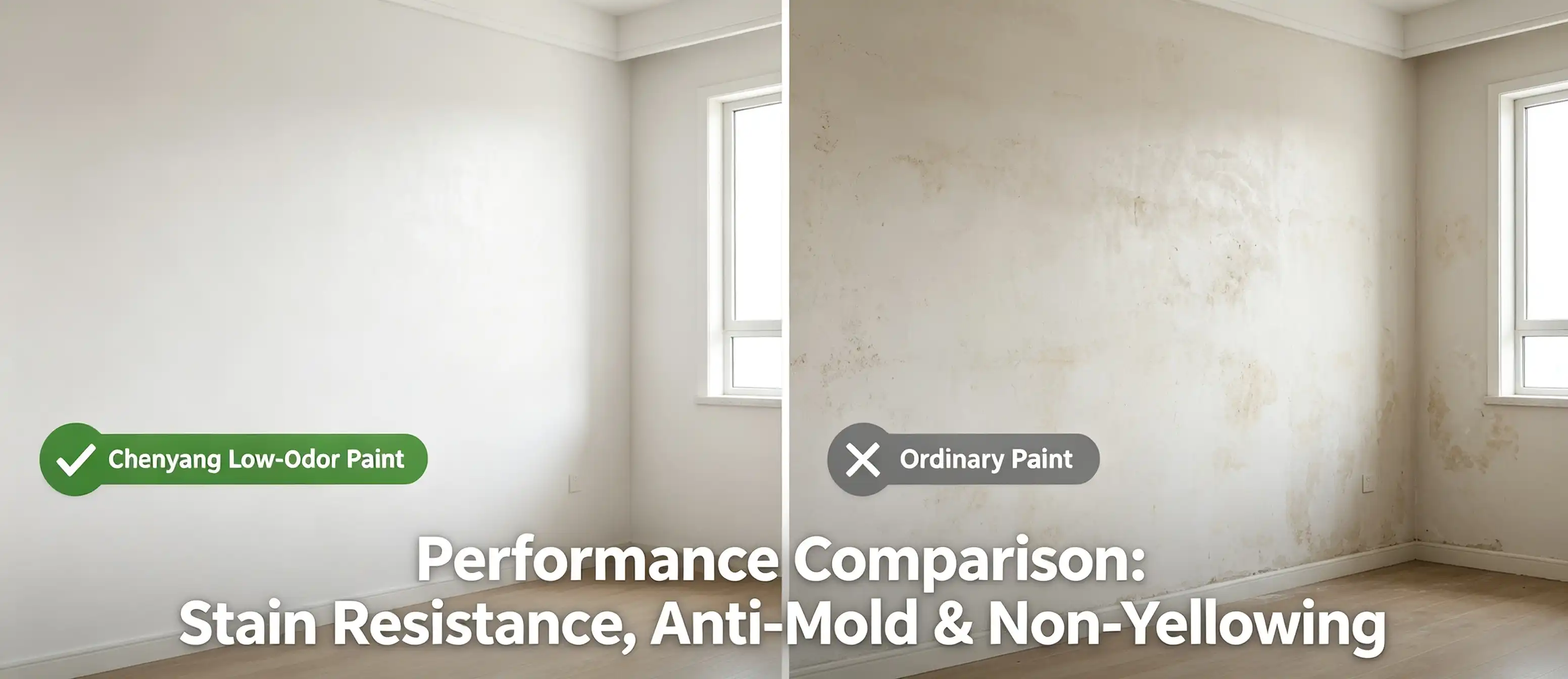

Understanding Low Odor Latex Paint: Definition and Benefits
What Makes Low Odor Formulations Different
Specialized acrylic resin systems are used in low odor latex paint and other water-based coats that are made to have lower odors. These systems are very different from regular building paints. During the formulation process, aromatic solvents and high-emission ingredients are swapped out for filtered water as the main carrier. This keeps VOC levels below 50 grams per liter. This new technology directly gets rid of the strong chemical smell that comes with regular painting while keeping the structural integrity of the film. Chen Yang Water Paint's engineering line is a good example of this method because it only uses water as a solvent and doesn't use any dangerous chemicals like benzene, toluene, or xylene.
Health and Environmental Advantages
Concerns about respiratory health are what push sensitive settings to use coverings with lower emissions. Medical facilities that treat vulnerable patients can't handle the irritants that traditional paints release into the air while they're being applied and dried. In the same way that schools care about student safety, they make sure that classes can be used as soon as the renovations are done. The environmental impact goes beyond people's health; lower emissions are a measurable part of green building ratings like LEED and BREEAM. Chen Yang's formulas have been tested and found to meet EU SGS and UK WRAS standards, showing that they meet the toughest international environmental standards. Products that have been approved to meet US FDA food-contact grade guidelines are even safer for even the toughest uses.
Performance Characteristics That Matter
Details about the technology behind these coats show why they work so well in tough business settings. Scrub resistance reaching 2,000 rounds under ASTM D2486 testing procedures makes sure that surfaces can handle being cleaned with detergents often, which is important for food service and healthcare facilities. High solids volume, between 35 and 45%, gives better hiding power, which means fewer coats are needed and the project can be finished faster. Touch-dry times of 30 to 60 minutes and full drying times of two hours allow for quick changes between shifts, which keeps operations running as smoothly as possible. Chen Yang's mirrored insulation coatings have these performance benefits because the surface dries in just 30 minutes at 25–30°C, and they only need to be recoated every two hours, which makes project organizing much easier.

Comparing Low Odor Latex Paint with Alternative Paint Types
VOC Content and Odor Intensity Analysis
Knowing the range of pollution levels helps people who work in buying choose materials that are right for them. Low odor latex paint usually has 50 g/L VOCs or less, which significantly reduces lingering chemical smells compared to regular latex paints that usually have 50 to 150 g/L VOCs. Zero-VOC formulations get less than 5 g/L, but they might not last as long in places with a lot of foot activity. Versions with less smell are a good compromise between being good for the environment and working well physically. While oil-based options stick well to some surfaces, they need to be handled carefully and with care, which makes operations much more difficult. Chen Yang's water-based formulations make exporting much easier because they are considered non-hazardous materials and only need standard MSDS paperwork instead of the complicated hazmat certifications that oil-based goods need.
Durability and Long-Term Performance
Coatings that keep looking good after years of use are needed by commercial and public clients. Cross-linking acrylic technology in new water-based formulas makes molecular links that are better at stopping yellowing, chalking, and microbial growth than older rubber chemicals. When temperatures change, building materials expand and contract, but elasticity grades keep them from breaking. The reflective insulation line from Chen Yang has five great qualities: it has high solar reflection, high hemispherical emissivity, superior weather resistance, excellent elasticity, and strong stain resistance. This shows that advanced formulation is better than single-purpose goods. This detailed performance profile meets the requirements of GB/T 25261-2018 for mirrored insulation coats, so it can be used reliably in tough situations like grain silos and hospital exteriors.
Application Scenario Suitability
In different settings, the covering needs to have certain properties that go beyond just reducing smells. Healthcare facilities need antimicrobial additives and materials that are easy to clean and won't get damaged by strong cleaning procedures. Educational buildings need finishes that can be cleaned and can handle being touched by kids every day. Hospitality places try to finish projects quickly so they don't lose money on income from empty rooms. Spaces used for making things in factories need to be chemically resistant to process pollution. Chen Yang's engineering water-based paint series meets these different needs with formulas that can be changed to fit specific project sizes and surfaces. The paints come in a range of finishes, from matte to semi-gloss, and can be mixed in different amounts to make them work best with rollers, brushes, or high-pressure airless sprayers.

Applying Low Odor Latex Paint: Best Practices for B2B Renovation Projects
Surface Preparation Requirements
To get the best adhesive and durability, you need to start long before you open the paint can. Using measured meters, the moisture level of the substrate must be less than 10%. Too much water stops the film from forming properly and could lead to failure early on. If the pH level is above 10, it means that the substance is alkaline, which breaks down acrylic bonds and needs to be neutralized before covering. Cleaning the surface has a direct effect on how well it sticks. Getting rid of dust, grease, and other loose materials stops delamination. To get the recommended performance, Chen Yang's technical specs say that the bases must be firm, smooth, and clean. This is in line with best practices in the industry that make sure warranties are honored and customers are happy for a long time.
Optimal Application Techniques
Choice of tools directly affects the performance of low odor latex paint, including coverage rates, level of finish, and how quickly a job is completed. High-pressure airless spray equipment makes the most even film thickness over big business areas, which saves time and money by cutting down on waste. Roller application works best for smaller tasks where the cost of moving the tools outweighs the time saved. For precise trim and cut-in areas, brushwork is still important. Dilution ratios are very important. Chen Yang's formulas say that roller and brush uses shouldn't add more than 20% water, but airless spray systems need 10% or less to keep the right thickness and film build. The drying chemistry is affected by the environment during application. For good curing with no surface flaws, temperatures between 5 and 35°C and humidity levels below 85% must be maintained.
Timing and Scheduling Considerations
Rapid reoccupancy is useful for project managers who have to balance remodeling timelines with keeping operations running. Touch-dry times of 30 minutes let you move carefully through painted areas, but it takes 14–21 days for surfaces to reach their highest level of resistance to scrubbing. This difference is important to keep in mind when setting up furniture or starting a deep cleaning routine. At least two hours must pass between coats to keep the liquid from getting trapped, which can cause bubbling or poor bonding between coats. Chen Yang's standard 7–10 day production cycles for custom orders let procurement teams arrange material delivery with contractor access. This cuts down on the need for storage and makes sure that fresh product gets to the right place at the right time.
Procurement Insights for Low Odor Latex Paint: Smart Buying for B2B Clients
Evaluating Supplier Capabilities
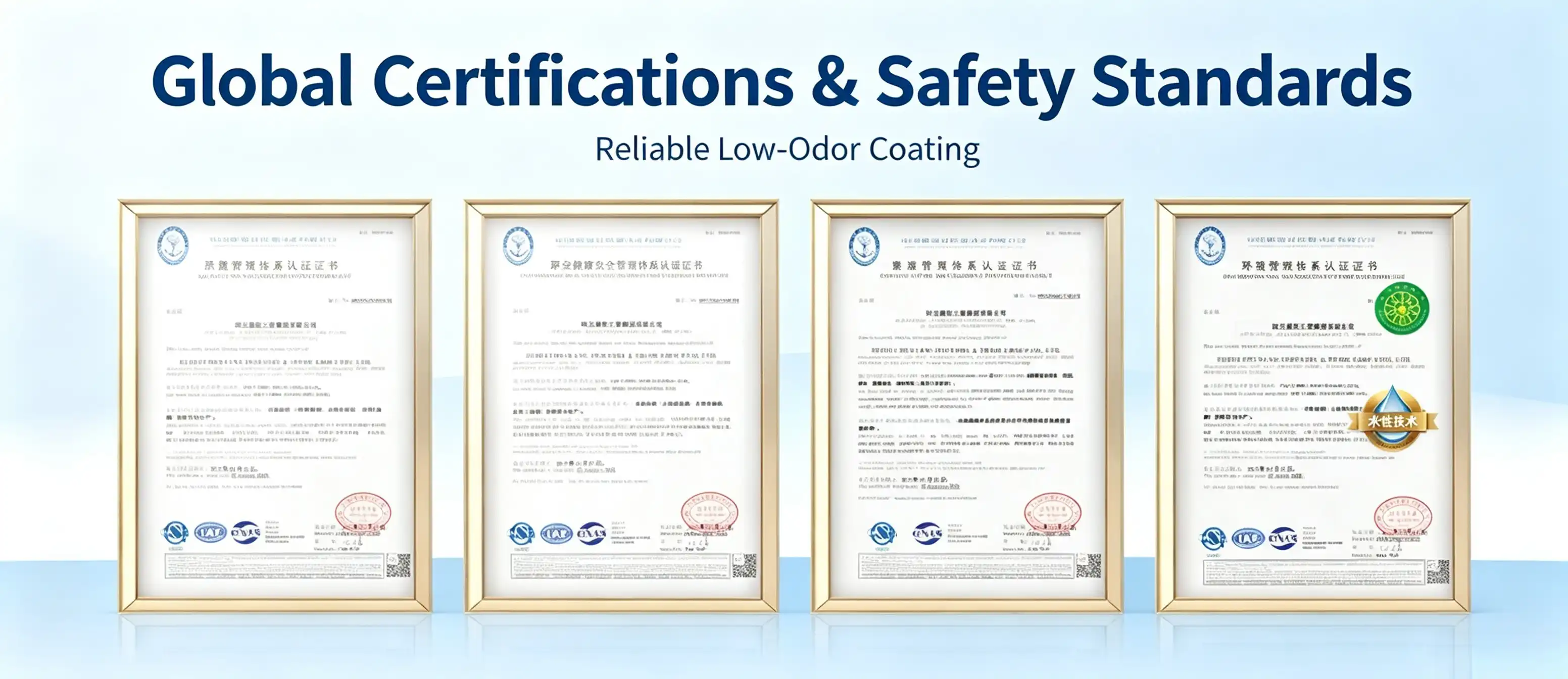
Sourcing decisions for low odor latex paint aren't just about unit price; they also affect supply chain stability and technical support frameworks. How quickly suppliers can fill big orders depends on how much they can make. For example, Chen Yang's yearly production of over one million tons from automated facilities makes sure that there is always inventory, even during busy construction seasons. Third-party tests in certification portfolios back up what products say they can do. For example, EU SGS approval, German TÜV certification, UK WRAS compliance, and US FDA food-contact ratings all show that quality systems meet established market standards. Intellectual property portfolios show how innovative a company is. For example, Chen Yang has more than 1,000 patents and is involved in more than 100 industry standards. This shows that the company consistently invests in research and development, which leads to better products over time.
OEM and Customization Options
Distributors and builders can set themselves apart in the market by offering private-label products and meeting specifications. Customizing colors beyond standard themes lets companies and institutions show off their brand identities. Changes to the packaging are made to account for area tastes and government rules. Label design integration helps with marketing plans and follows rules for local language and safety information. Chen Yang's OEM/ODM services are very flexible, and they even offer recipe changes that let you get the best performance in different climates or substrates. Full English technical paperwork, such as TDS and MSDS, makes it easier to register and clear customs for international projects. This solves a problem that exporters and international workers often have.
Cost-Benefit Analysis for Bulk Purchasing
Aside from per-unit savings, bulk purchasing of low odor latex paint provides significant economic advantages. Combining shipments lowers the cost of freight and makes it easier to coordinate operations. Consistency in inventory makes sure that colors and batches fit across projects with many stages that last for months or even years. Building relationships with suppliers often frees up priority placement during material shortages that happen from time to time in the building industry. As the value of an order goes up, it becomes easier to negotiate better payment terms. Chen Yang's classification of non-hazardous materials greatly lowers the cost of international shipping compared to oil-based options that need hazmat fees and specialty carriers. In most cases, this lowers the total landed costs for buyers from other countries by 15 to 30 percent.

Why Low Odor Latex Paint Is the Rational Choice for Modern Renovations
Alignment with Corporate Sustainability Goals
Environmental, Social, and Governance (ESG) reporting calls for more and more proof of action on things like worker safety and environmental effect. The choice of coating has a direct effect on both measures by lowering chemical exposure and pollution footprints. GREENGUARD Gold certification and other similar third-party approvals give companies proof that can be checked and used in their green reports. Green building standards, such as LEED points for low-emitting materials, make it necessary for projects that want to reach certification levels to specify finishes that meet certification requirements. Chen Yang's work on China's National 863 Program and famous projects like Tiananmen Square and the Bird's Nest Stadium shows that he is a star in environmental protection and quality control, which is something that institutional procurement groups can relate to.
Emerging Technology Trends
Coating chemistry keeps getting better by using nanotechnology, changing surfaces so they clean themselves, and using phase-change materials to control temperature. Chen Yang's reflective insulation coats are an example of this trend. They combine high solar reflection and hemispherical emissivity to make buildings cool down much more efficiently. Claims of saving energy in industry and civil construction, grain storage facilities, and oil sites have been tested in the field and found to be true. As climate change makes cooling needs stronger around the world, thermal management surfaces move from being used in niche situations to being standard. Purchasing teams that get ahead of this acceptance curve gain a competitive edge through early knowledge and relationships with suppliers.
Market Demand Drivers
As regulations get stricter in developed markets, the basic standards for building products keep going up. California's strict VOC limits often show how adoption will happen across the whole US. Chemical limits in the European Union, such as REACH, are slowly getting rid of traditional ingredients in formulations, causing companies to either change their recipes or leave the market. As more people become health-conscious, stores and contractors are under more pressure to sell and define safer options. As more people work from home, more homes are being renovated because people want to make their living areas better. As these forces come together, the need for water-based, low-emission paints that meet changing standards and give builders and building owners the performance they expect will continue to grow.
Conclusion
Low odor latex paint has evolved from a niche product into a mainstream solution that meets strict performance standards without compromising safety or efficiency. Chen Yang Water Paint has been growing for 28 years, has many foreign certifications, and can make a lot of paint. This makes the company a trusted partner for B2B clients who need quality, consistency, and quick service. Environmental laws, business pledges to sustainability, and people's knowledge of their own health all work together to make sure that the market for water-based technologies keeps growing. When purchasing managers build partnerships with certified manufacturers now, they get technical help, the ability to customize products, and a stable supply chain that their smaller or less well-known rivals can't offer.
FAQ
Does reduced odor mean the coating is completely VOC-free?
The difference in terms is important for checking compliance. "Low odor latex paint" usually means that the VOC content is less than 50 g/L thanks to better formulation, and "zero-VOC" means that the VOC content is below 5 g/L, as tested by EPA Method 24. There are a lot of good low odor latex paint products that are getting close to zero-VOC levels while still having few combining agents that help the film form. Chen Yang's water-based formulas get rid of all benzene, toluene, and xylene while keeping VOC levels that meet or beat international standards.
Can these coatings be applied over existing oil-based finishes?
For surfaces to be compatible, they need to be properly prepared. To make bonding profiles, oil-based substrates need to be mechanically abraded. Next, they need high-quality transition starters that make sure different chemicals stick together. Chen Yang's technical support team gives advice on how to prepare different substrates and find suitable primers so that delamination mistakes don't happen when the right steps aren't taken.
How quickly can renovated spaces be reoccupied safely?
Water-based solutions are different from solvent-based ones because they can be used right away. Touch-dry times of 30 minutes let people walk on the surface carefully, but furniture shouldn't be put down until the surface is fully dry. Ventilation during application and for two hours afterward speeds up the removal of any smell that is still there. Painting is often done in the evenings in healthcare and educational buildings so that the next morning's classes can go on as planned.
Partner with a certified low-odor latex paint manufacturer.
Chen Yang Water Paint has been using water-based paints for almost 30 years and has received many international clearances, such as those from EU SGS, German TÜV, UK WRAS, and the US FDA. Our automated production plants offer consistent quality across their million-ton annual capacity. This means that your projects will always get what they need, no matter how big or small the order is. We know how important it is to deliver on time and meet strict quality standards because we are a trusted supplier for important national structures like Tiananmen Square and the Bird's Nest Stadium. To make sure your exact needs are met, our engineering team offers full technical data, OEM/ODM customization, and application support. Our low odor latex paint formulations give your projects the performance and safety they need, whether you're a distributor looking for private-label solutions, a builder handling sensitive healthcare makeovers, or a building manager planning upgrades at multiple sites. Email our team at sales@chenyangpaint.com to talk about your needs and get technical specs that are specifically made for your purpose.
References
1. U.S. Environmental Protection Agency (2021). Indoor Air Quality and Volatile Organic Compounds in Paint Products. EPA Publication Series on Building Materials.
2. American Society for Testing and Materials (2020). ASTM D2486-17: Standard Test Methods for Scrub Resistance of Wall Paints. ASTM International Standards.
3. Green Building Council (2022). LEED v4.1 Building Design and Construction: Low-Emitting Materials Credit Requirements. USGBC Technical Manual.
4. National Institute of Standards and Technology (2019). Performance Metrics for Water-Based Architectural Coatings. NIST Technical Report Series.
5. European Chemicals Agency (2021). REACH Regulation Compliance for Construction Coatings. ECHA Guidance Documentation.
6. Occupational Safety and Health Administration (2020). Indoor Air Quality in Commercial and Institutional Buildings: Paint and Coating Selection Guidelines. OSHA Technical Publication.
Send Inquiry
You may like