Painting Plasterboard: Everything You Need to Know
When painting drywall or gypsum board, you can't just roll on any paint and hope it turns out even. When choosing the best paint for gypsum board, you should think about how porous the substrate is, how the absorption rates are different between the paper face and the joint compound, and how easily the substrate gets wet. Paints made with high-solids acrylic resins that are professional-grade stick to surfaces better, keep joints from showing, and give the whole wall a uniform shine. If you know these basic requirements, you can be sure that your project meets the standards for durability, good looks, and environmental responsibility that are needed in the building market today.
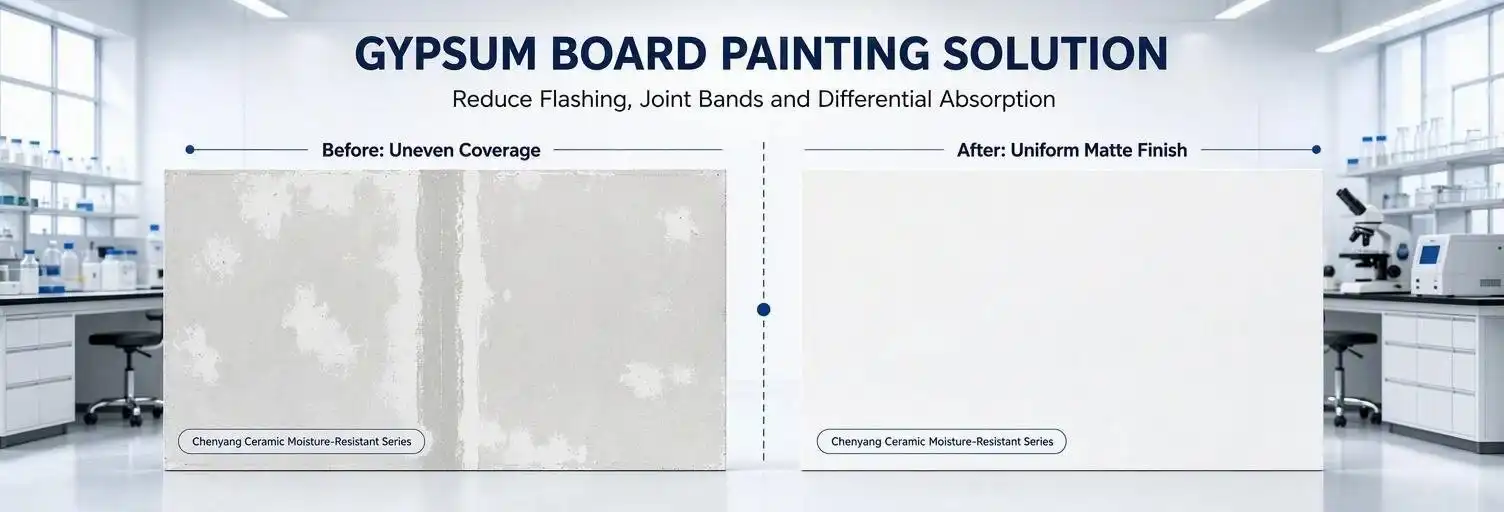
Understanding Gypsum Board and Its Painting Challenges
Composition and Structural Characteristics
The heart of gypsum board is made of gypsum, and the outside is made of two pieces of paper. It's light and easy to put up because of this, which is why it's used so often in both business and home building. The paper surface absorbs water in a different way than the gypsum core or joint solution used to seal the seams. This is known as "differential absorption." When this happens, gaps and places where fasteners were often show up as darker or lighter spots after painting. The name for this is "flashing" or "joint bands." Choosing the best paint for gypsum board helps minimize these visible imperfections and creates a more uniform finish.
Common Surface Challenges
Because gypsum board is porous, it can make coverings not work as well as they should. When boards are first put together, the paper surface soaks up a lot of paint. This can make it hard to hide and mean that more coats are needed. Joint compound patches leave behind smooth areas that stand out against the wrinkled paper when you sand them. In some lights, this can help you see flaws on the surface better. Wet areas like kitchens, bathrooms, and basements can weaken the bond between the paper and gypsum if you use the wrong covering method. This can cause the paper to peel off or mold to grow.
Why Surface Preparation Matters
How well the surface is made has a direct effect on how long the finished system lasts and how nice it looks. Use a cleaner or a wet cloth to get rid of all the dust from cleaning. If there are any bits left over, the glue won't stick properly. Fill and smooth out small flaws like nail pops and surface gouges before you put on paint. You will have to pay more for repairs, and the project will take longer if you don't do these steps. All of these issues are ones that project engineers and procurement managers work hard to stay away from when applying the best paint for gypsum board.
Choosing the Best Paint for Gypsum Board: Key Factors to Consider
Water-Based vs. Oil-Based Formulations
A lot of people use water-based acrylic paints on gypsum board because they stick well, don't smell bad, and are safe for the environment. Most of the time, these mixes dry in 30 to 60 minutes, which means that projects can be finished faster than with solvent-based choices. Oil-based paints are better at getting into raw wood, but they have a lot of problems, like being labeled as dangerous, taking longer to dry, and giving off VOCs that are against many environmental laws in many areas. Water-based ways are safer and easier to cross borders with. They also save you money on shipping costs when you buy things from other countries. For most commercial and residential projects, water-based coatings remain the best paint for gypsum board applications.
Primer Selection as Foundation
The prep layer is very important because it's what keeps the topcoat on top of the gypsum surface, which is broken up. There is no difference in how fast different types of surfaces absorb water when high-solids sealers are used. This stops what's called "picture framing" from happening around patches and changes. The swollen paper fibers that show up when you sand are locked down by special resins in premium starters. This makes a smooth base for the next coats. Projects that use certain bases need fewer topcoats to get to the level of clarity that is wanted. In other words, the cost of the materials is 15–25% less than when "self-priming" paint is put on raw gypsum.
Environmental and Compliance Considerations
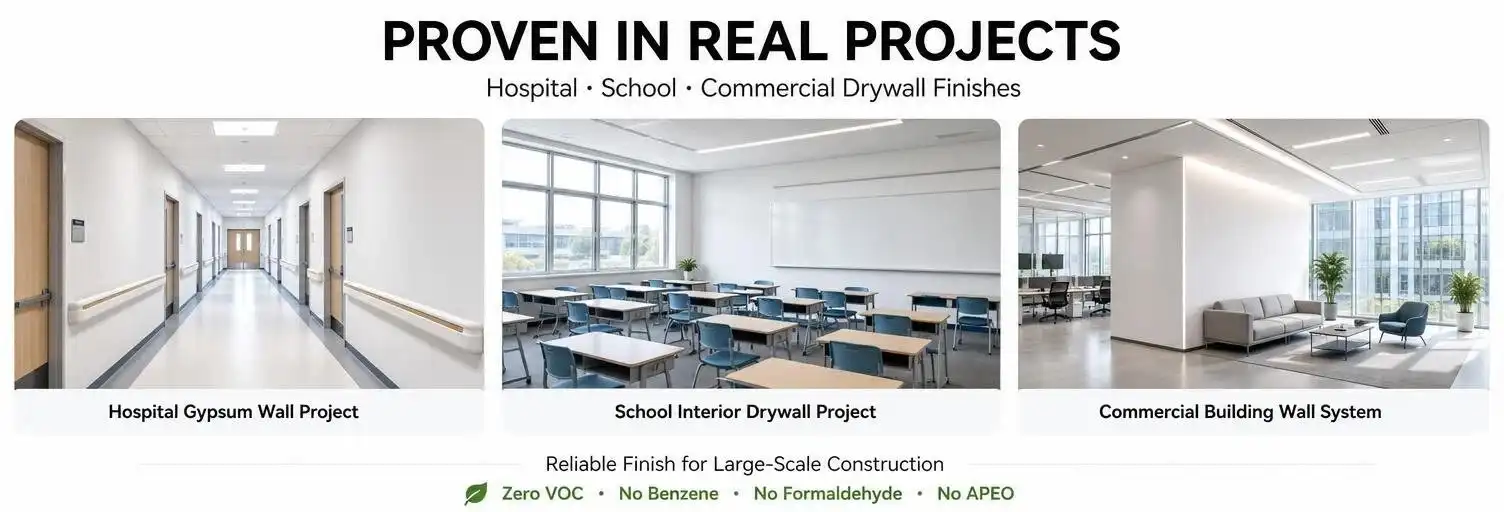
Because building rules are getting tighter, low-VOC and zero-VOC formulas are no longer just for a few people; most builders need them now. Certifications like GREENGUARD Gold and LEED v4.1, as well as local rules like California's SCAQMD Rule 1113, say that a building must meet certain pollution limits. Benzene, formaldehyde, and APEO are taken out at their source by water-based films made with fake minerals that are natural or man-made and meet these standards or go beyond them. When projects need to comply with laws in other countries, the China Environmental Labeling Ten-Ring Certification and the French Indoor Environment A+ Certification give them extra peace of mind. Today, the best paint for gypsum board must also meet environmental and indoor air quality standards.
Step-by-Step Guide: How to Paint Gypsum Board Like a Pro
Surface Preparation Protocol
To find flaws that need to be fixed, you should first look at the whole surface in bright light. You can fix nail holes, dents, and seam gaps with joint cement. After letting it dry for a while, sand it smooth. You can use fine-grit sandpaper (180 to 220 grit) to smooth out rough paper and concrete edges without taking too much away from the surface. Wipe off all the sanding dust with a microfiber cloth that is just a little wet. It is best for the coating to stick well if the substrate's pH value stays below 10 and its moisture level stays below 10%. Proper preparation ensures the best paint for gypsum board performs as intended.
Primer Application Technique
To put on the paint, you need a brush with the right nap thickness: 3/8 inch for smooth gypsum surfaces and 1/2 inch for walls with some grooves. As you work in small chunks, keep the edge wet to avoid lap marks. There is no better way to cover large industrial jobs evenly than with high-pressure airless spray tools. Roller and brush application is still a good choice for small areas. It should take between two and four hours, depending on the weather and temperature, for the primer coat to be completely dry. It's then up to you to decide if you need a second prep coat or not.
Topcoat Application Best Practices
The finish should be put on in thin, even coats instead of one thick coat. Painters who do their jobs usually use two finish coats. If the temperature is between 25°C and 30°C and the humidity is below 85%, you should wait at least two hours between clothes. Dilute water-based paints the way the manufacturer tells you to. If you want to use a roller or brush, don't water them down more than 20%. If you want to use an airless spray, don't water it down more than 10%. The surface will be dry in 30 minutes, but the paint will be fully hard in 60 minutes. Only then can you check to see if it's covered and plan your next coats. Applying the best paint for gypsum board correctly ensures a smooth, professional-grade finish.
Troubleshooting Common Issues
If something is peeling or popping, it means that the surface isn't dry or hasn't been properly prepared. If the paint peels off the paper, it means that the base probably had more than 10% water when it was worked on. I think the layer was either too thick or put on top of a primer that didn't work well with it because it has cracks in it. It means the primer didn't cover the changes in porosity well enough if you can see joint telegraphing. Usually, this problem can be fixed by applying another coat of paint. These tech tips will help quality control teams quickly figure out what's wrong and fix it before it causes the project to be held up.
Comparing Top Paint Brands and Products for Gypsum Board
Performance Parameters That Matter
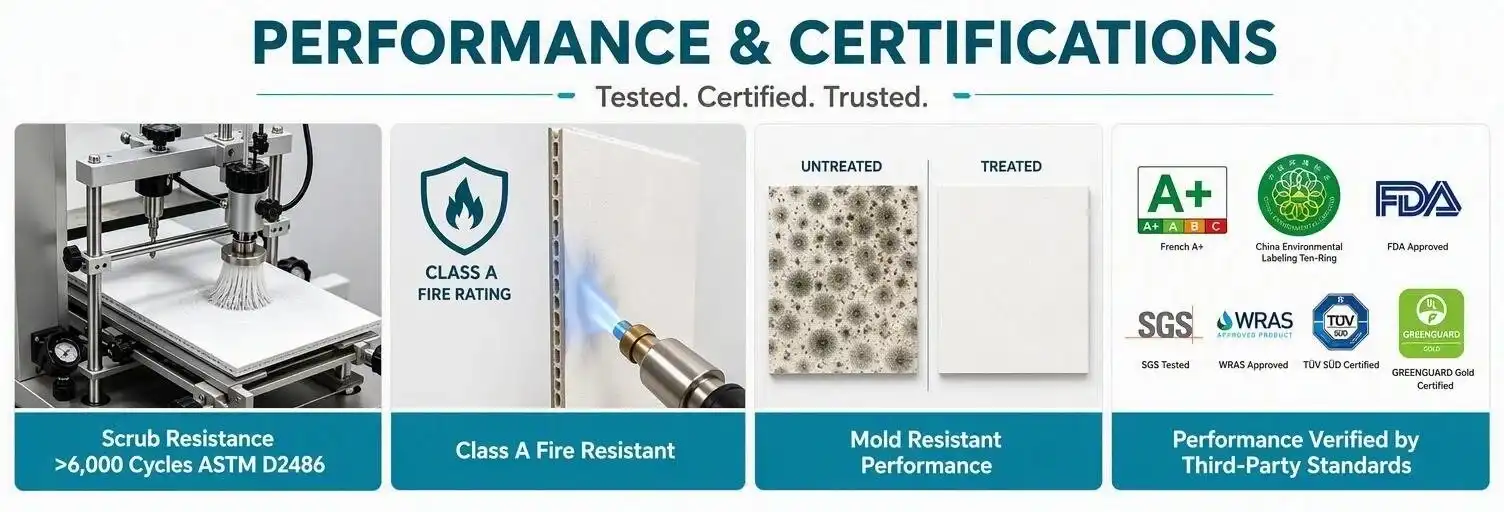
When considering covering options, people who work in procurement look at data that can be measured instead of marketing claims. The ASTM D2805 test checks how well paint covers things up. The best paints can do this with just two coats on different surfaces. This test, ASTM D2486, tells you how long something can last after being cleaned. Most school and hospital coatings last over 6,000 cycles, which is a lot longer than the 1,500 rounds that home coatings are supposed to last. The adhesion strength (ASTM D3359) makes sure that the bond between the covering and the base stays stronger than the combined strength of the gypsum itself. When the layers are pressed, this keeps them from coming apart. These metrics help buyers identify the best paint for gypsum board in commercial settings.
Chenyang Ceramic Moisture-Resistant Series Advantages
| Parameter | Specification |
|---|---|
| Theoretical Coverage | 11-14 ㎡/L per coat |
| Dry Film Thickness | Approximately 30 microns |
| Surface Drying Time | 30 minutes (25-30℃) |
| Complete Drying Time | 60 minutes (25-30℃) |
| Recoat Interval | ≥ 2 hours |
| Dilution Ratio | Roller/Brush ≤20%, Airless Spray ≤10% |
| Application Methods | Roller, brush, spray (airless spray recommended) |
| Application Temperature | 5-35℃, humidity <85% |
| Substrate Moisture | <10%, pH value <10 |
| Wash Resistance | >6,000 times |
| Fire Rating | Class A (non-combustible) |
| Packaging Options | 6kg / 20kg / 25kg per bucket |
| Storage Temperature | 5-35℃ in sealed container |
A new type of recipe technology was used to make these Chenyang Ceramic Moisture-Resistant Water-Based Natural Multi-Functional Inorganic Coatings that are made to work with gypsum board. There are a number of measurable benefits to this method that help meet important buying goals.
Class A fire resistance means that the artificial silicate film-forming material doesn't burn or make harmful smoke. This means that it meets strict safety standards for public buildings and other places with a lot of people. It doesn't protect against mold in the alkaline mixture because it creates an environment that isn't good for mold to grow in. Because of this, it works really well in damp places and places that are likely to get wet. Because it's made of a thick film, it can be washed more than 6,000 times. This makes it cheaper to maintain in places like hospitals, schools, and business areas where a lot of people walk by.
The French A+ Certification and the China Environmental Labeling Ten-Ring Certification both say that the water-based mixture does not contain any benzene, formaldehyde, or APEO. People can move into the building right away without having to worry about off-gassing because this mixture is naturally quiet. This high-opacity mix covers base colors and joint compound well in fewer coats. It also makes the best use of the paint's resources, covering 11–14 square meters per liter per coat. After 30 minutes, the film is surface-dry, and after 60 minutes, it is hard-dry. This speeds up project timelines without affecting the quality of the film. These characteristics make it a strong candidate for the best paint for gypsum board in commercial and institutional applications.
The paper doesn't fall apart because it's bendable and doesn't absorb water, but it still lets air pass through, which is needed to keep the substrate's structure when the humidity changes. It can be used for any size job, from small home improvements to building whole businesses. It comes in packs of 6, 20, or 25 kg, and there is no set minimum order number. Different brands need different colors, and OEMs like design standards that allow colors to be changed from a white base.
Bulk Procurement Considerations
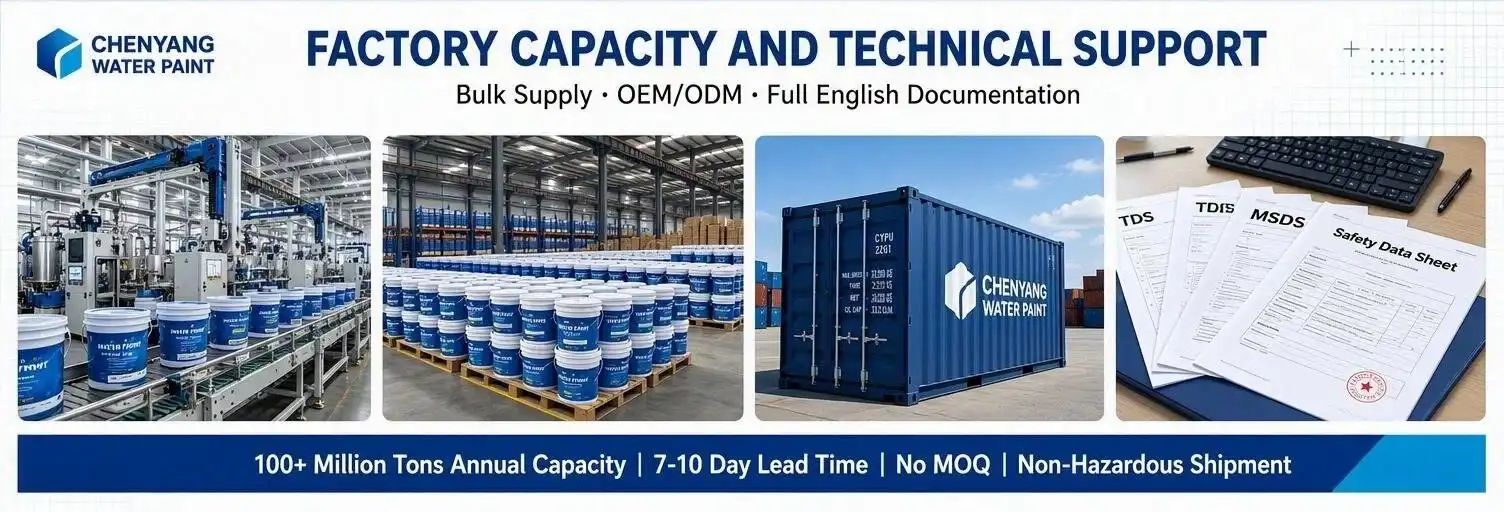
For big projects, suppliers need to be able to stick to tight production plans and make sure that all of their batches are of the same high standard. More than a million tons of goods are made every year, so there will always be enough, even during busy building seasons. Because just-in-time shipping works with standard production runs of 7–10 days, it costs less to stay on-site. Labeling something as "not hazardous" makes it easier to move things between countries. For example, to get through customs, you only need a normal MSDS and a transport condition certificate. This way, you don't have to deal with the costs and delays that come with dealing with dangerous products. A lot of different OEM/ODM services, like private labels, custom colors, and packing, help builders and wholesalers build their own names while sourcing the best paint for gypsum board.
Conclusion
To paint gypsum board properly, you need to know about the qualities of the substrate, pick the right covering systems, and follow the instructions given by professionals. The best paint for gypsum board is usually a water-based solution with high-solids acrylic resins or artificial minerals; they work the best and are the easiest to use. They are also good for the earth. If you prepare the surface and pick the right priming, you can get finishes that last, look good, and meet strict business standards. There is a shift toward coatings that are low in volatile organic compounds (VOCs), don't absorb water, and can be used in fires. This is because building rules are getting stricter and people want healthier places. At the top of the list for buying managers are accepted quality, production capacity, and expert support. These things help build supply chains that help projects succeed while keeping costs low and risk under control.
FAQ
Can water-based paint be applied directly to new gypsum board without primer?
However, professional standards say that new gypsum board should have a special primer put on it. Some products say they can prime themselves. There will be flashes if you put on the finish directly, since the paper face soaks up water more slowly than the joint solution. When you use primer, the holes are evened out, and raised paper threads are sealed. This makes the finish look even and uses less material overall.
What primer works best for moisture-prone gypsum installations?
Primers that don't get damaged by water and have antimicrobials and plastics that let air pass through them work best in bathrooms, kitchens, and basements. These mixes keep the base from getting moldy and the paper from coming apart while letting it breathe. Primers made from artificial minerals are naturally antibacterial because they are alkaline. You don't need to add biocides.
How long should gypsum board cure before painting?
Follow the manufacturer's instructions for drying gypsum board and joint cement that have just been put up. It takes 24 to 48 hours for light chemicals to do this but up to 7 days for heavy ones. At least 10% of the base must be dry before the layer is put on, and its pH must stay below 10. To make sure everything is ready, moisture meters give exact numbers out in the field.
Partner with a Trusted Water-Based Coating Manufacturer
The water-based paints that Chenyang Water Paint makes are allowed by governments all over the world and are made to be used on professional gypsum board. Our 28 years of experience making materials and cutting-edge inorganic mineral technology are used in our Ceramic Moisture-Resistant Series to help procurement managers and project engineers solve their toughest issues. Our approvals from the US FDA, the EU SGS, the UK WRAS, and the EU TÜV show that we are dedicated to meeting the high quality standards needed in developed nations. We can promise a steady supply even when demand is high because we can make more than a million tons of goods every year using automatic processes and production rounds that last between 7 and 10 days. Our expert team can provide full English records, such as TDS, MSDS, and application guides, to meet the needs of foreign projects and clear customs. Email our B2B solutions team at sales@chenyangpaint.com to talk about your project needs and find out how our water-based finishing systems can help you lower your sourcing risk while still delivering the best paint for gypsum board performance for commercial and residential applications.
References
1. "Gypsum Board Construction Handbook," Gypsum Association Technical Manual, 8th Edition, 2020.
2. "Performance Standards for Interior Architectural Coatings," ASTM International Standards D3278 and D2486, 2021.
3. "VOC Content Limits and Testing Protocols for Architectural Coatings," South Coast Air Quality Management District Rule 1113, 2019.
4. "Fire Safety Performance of Inorganic Coatings on Gypsum Substrates," Journal of Fire Protection Engineering, Volume 32, 2022.
5. "Moisture Management in Commercial Building Envelopes: Coating System Selection," Building Science Corporation Technical Report, 2021.
6. "Comparative Analysis of Water-Based vs. Solvent-Based Coatings for Interior Applications," European Coatings Journal, Issue 4, 2023.
Send Inquiry
You may like