Top Marine Anti Corrosion and Anti Rust Coating Solutions?
When it comes to protecting steel structures in demanding saltwater environments, the right anti-corrosion coating for marine use can mean the difference between decades of reliable service and costly premature failure. This guide helps procurement managers, coating contractors, and shipyard engineers navigate the most effective marine rust protection solutions available today—covering coating chemistry, selection criteria, application best practices, and supply chain strategy—so every purchasing decision delivers maximum asset longevity and regulatory compliance.

Understanding Marine Anti-Corrosion Coatings
Anti-corrosion coatings for marine use, such as epoxy primers, zinc-rich primers, and polyurethane barrier coats, keep the steel underneath from oxidizing chemically or by sacrificing itself. Anti-fouling treatments, on the other hand, keep living things from living on ship surfaces. Both work well on their own, but they are often stacked together.
What Makes Zinc-Rich Primers the Industry Benchmark
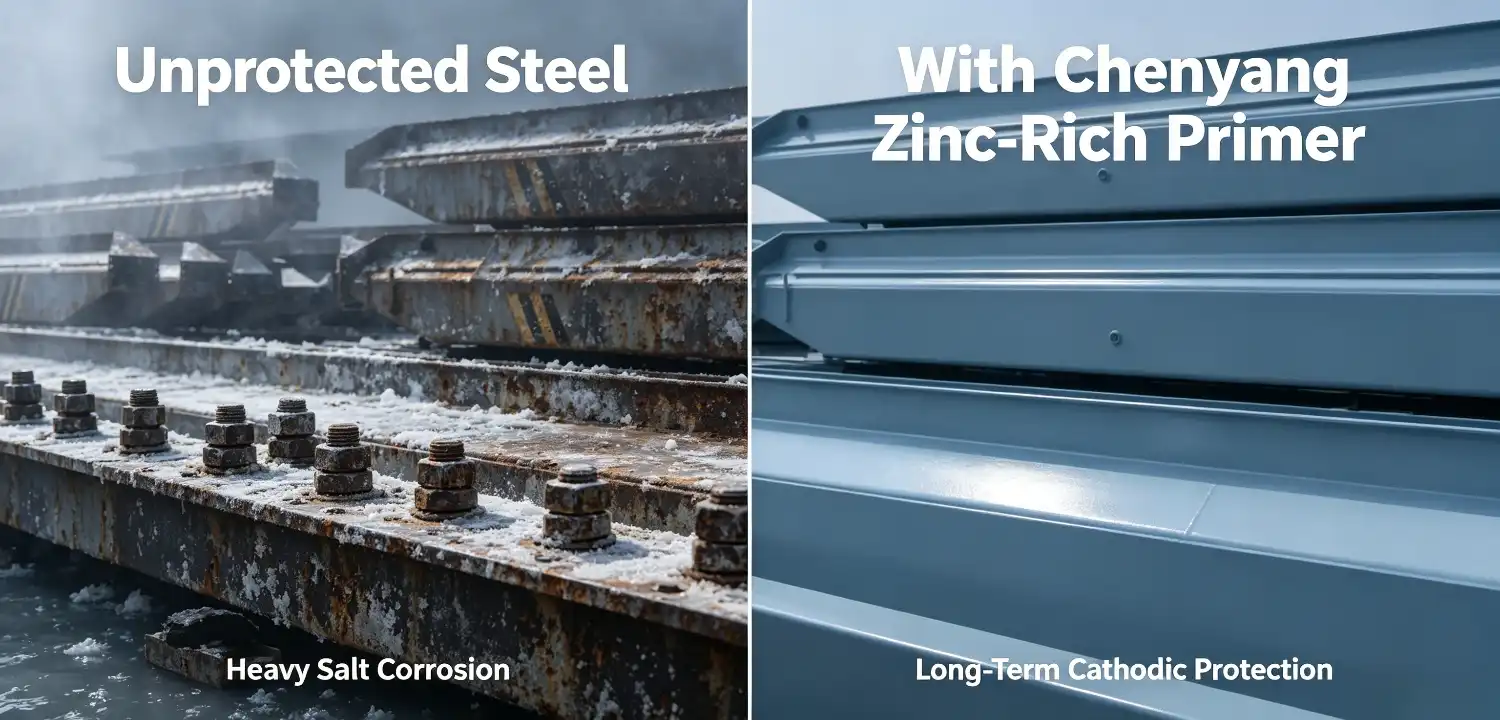
Primers that are high in zinc provide sacrificial cathodic protection. When the covering film gets scratched or damaged mechanically, the zinc particles rust first, protecting the steel below. ISO 9227 salt spray tests, which show that high-zinc formulations usually last longer than 5,000 hours, prove that this mechanism works. This is the best primer technology for ship hulls, ballast tanks, and splash-zone steel in terms of performance to cost.
Waterborne vs. Solvent-Based Formulations
Shipyards and coating contractors are moving away from solvent-based systems because of VOC rules set by the IMO and regional environmental laws. Waterborne epoxy zinc-rich primers now have the same or better corrosion protection as their solvent-based peers. They also reduce exposure at work and make moving dangerous materials easier.
Top Marine Anti-Corrosion and Anti-Rust Coating Solutions in 2026
To choose the best protective system, you need to compare different coating methods based on the outdoor area. Here are the main types of solutions that procurement teams should look at:
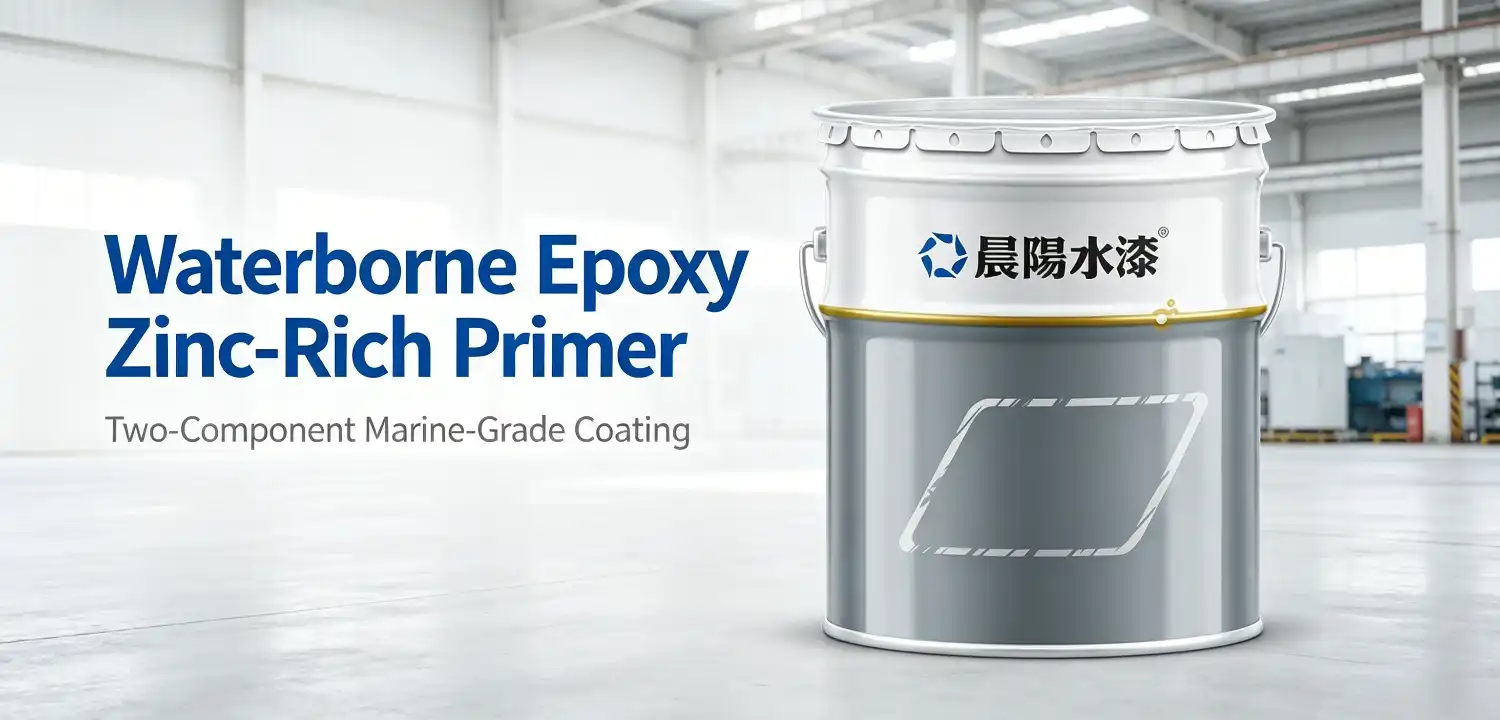
- Waterborne Epoxy Zinc-Rich Primers provide sacrificial cathodic protection with low VOC emissions, the ability to weld through, and a shipping rating of "not hazardous." The two-part waterborne epoxy zinc-rich primer from Chenyang uses graphene-enhanced film technology to make a stronger molecular barrier against chloride ion penetration. This makes the primer stick well to carbon steel, weathering steel, and galvanized substrates. It ships as non-hazardous goods, which cuts the cost of foreign freight by a lot.
- Solvent-Based Epoxy Primers are still used a lot in older shipyard systems, but they are coming under more and more regulatory pressure. They have higher VOC loads and are classified as hazardous for transport, which makes the total landed cost higher.
- Polyurethane Topcoats protect atmospheric-zone steel from UV rays and chemicals. They work best when put on top of a zinc-rich filler instead of being put on bare steel.
- Glass-Flake Reinforced Epoxies are used in splash zones offshore, where floating objects hitting the surface and fast wet/dry cycles make the layer break down faster. Their high build thickness and laminar glass reinforcement make it a lot longer between maintenance visits.
- Epoxy Mastic Coatings can still be used if the surface isn't perfectly smooth. They're also useful for fixing things while they're in use, since blasting to Sa 2.5 isn't always possible.
- Inorganic Zinc Silicate Primers cure through moisture in the air and have the best heat resistance of all zinc primer types, so they can be used in engine rooms and stack areas.
- Hybrid Bio-Based Formulations represent a new technology that is just starting to be used. They are good for buyers who need to be environmentally friendly, but they need to be carefully tested for performance before they can be fully specified.
These seven groups cover all possible situations where marine corrosion protection is needed. The difference between a system that lasts and one that needs to be recoated too soon is matching the right technology to the right exposure zone.
How to Choose the Best Marine Anti-Corrosion Coating
Key Technical and Commercial Criteria
The three technical standards that can't be changed are pull-off adhesion strength, dry film thickness capability, and salt spray endurance. Buyers should ask for ISO 9227 test reports and make sure that the results match the real market product and not a lab prototype. All certifications are important. For example, CCS type approval, EU SGS, and German TÜV recognition all mean that a supplier's quality system has been checked against well-known international standards.
Weld compatibility is a requirement for shipyards that many industrial industrial anti-corrosion coatings for marine use don't meet. When welding, a zinc-rich primer must burn smoothly, without giving off harmful fumes or weakening the joint. The supplier's public weld-through data can help you confirm this.
For international projects, system compatibility documentation for the primer, intermediate coat, and finish coat must be available in English. Approval delays happen at the factory and with classification society inspectors because of missing paperwork for the coating system.
Application and Maintenance Best Practices for Marine Coatings
When applied wrong, even the best coating system doesn't work as well as it should. Surface preparation is always the most important factor in determining how long a finish will last.
Surface Preparation Standards
For new buildings, ISO 8501-1 Sa 2.5 abrasive blast cleaning is still the standard. Before primer is applied, the soluble salt level must be less than 20 mg/m² (Bresle method). To keep moisture from getting trapped under the film, the substrate temperature must stay at least 3°C above the dew point.
Application Windows and Curing Conditions
When it comes to cold or humid places, waterborne epoxy zinc-rich primers can't be used as often as solvent-based alternatives. Chenyang's recipe for anti-corrosion coating for marine use solves this problem with a properly measured two-part A/B package that keeps mixing ratios stable and lowers mistakes made on-site. For big hull sections, airless spray is one way to apply it. A brush is used for seams and complicated shapes, and a roller is used for repair work. The moderate pot life gives crews a good window of time to work without wasting activated material.
Post-application inspection should follow NACE SP0188 holiday detection protocols. Calibrated electromagnetic gages should be used to compare the dry film thickness to the system build that was described.
Procurement and Supply Chain Insights: Where and How to Buy Marine Anti-Corrosion Coatings
For shipyards that have set delivery times, a reliable supply chain is just as important from a business point of view as good product performance.
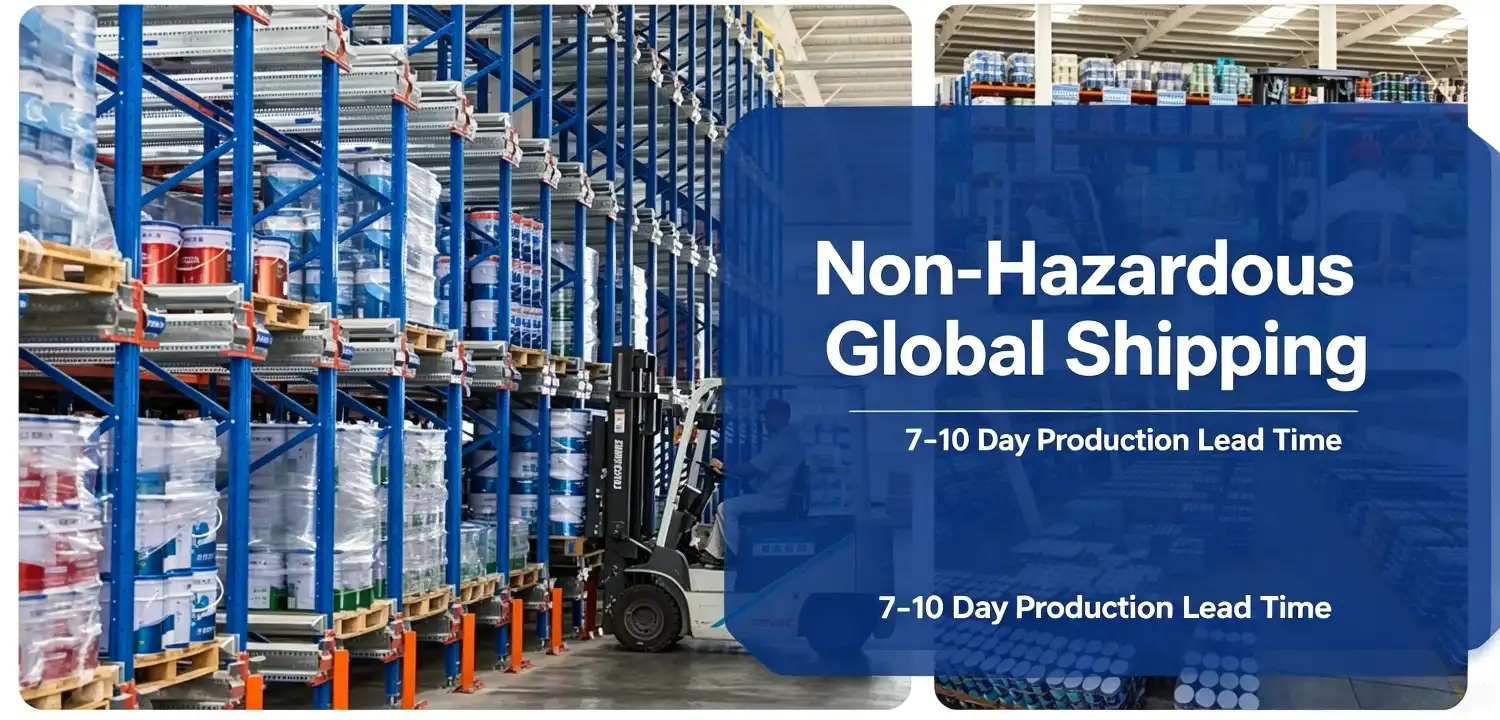
People in the US, Europe, and the Asia-Pacific region can save money by doing business with manufacturers who have standard lead times and high-capacity automated production facilities. Chenyang has three production bases that together produce more than 1.25 million tons of goods every year. This helps them keep the standard of their products high even for big orders. The normal production cycle takes 7–10 days, so deliveries are always on time, even during busy times for new builds.
Distributors and local coating workers who need branded supplies can choose from OEM and private-label packing choices. For customs clearance and classification society filing, full English-language technical paperwork including TDS, MSDS, and system specification sheets is available. This is a real differentiator for projects involving export vessels or foreign flag registrations.
Non-hazardous cargo classification for waterborne products gets rid of hazmat fees and makes customs procedures easier in many places, which directly lowers the total cost of buying for people in other countries.
Conclusion
To keep marine steel structures safe, you need a anti-corrosion coating for marine use system with tested chemicals, independent certification, and a steady supply. Shipyards, marine contractors, and port infrastructure owners now expect zinc-rich epoxy starters with graphene enhancement, non-hazardous waterborne formulas, and full multi-layer system compatibility to work at their best. When you buy something, putting approved technical data ahead of unit price always leads to lower total lifetime costs and fewer dry-docking interruptions. The seven types of solutions we've talked about here give buyers an organized way to match coating technology to exposure conditions and project compliance needs.
FAQ
1. What distinguishes an anti-corrosion coating from an anti-fouling coating?
Steel is protected from oxidation by anti-corrosion coatings, which work as either barriers or sacrifices. Marine animals can't stick to ship surfaces because of anti-fouling coatings. Both are usually part of a full hull protection system, but they do different things and are described in different ways.
2. Why is zinc content critical in a marine primer?
Zinc acts as a sacrifice for cathodic protection. If the film gets damaged, zinc rusts instead of the steel underneath, stopping rust from spreading from the damaged area.
3. How does water temperature affect coating durability?
Tropical seas that are very warm speed up the movement of chloride ions through the covering film. For ships that go on warm-water routes, it is best to use high-build epoxy systems with graphene or glass-flake reinforcement.
4. How often should marine coatings be inspected?
Every 2.5 to 5 years, IMO rules say that major corrosion checks should happen at the same time as intermediate and special class exams. Ultrasonic thickness gaging during dry docking checks that the steel underneath the coating is still solid.
5. Can waterborne marine primers meet shipyard environmental requirements?
Yes. Water-based formulations meet the IMO's goals for reducing VOCs and regional emission rules. They also have the same corrosion resistance as solvent-based options, as shown by ISO 9227 salt spray tests that lasted over 5,000 hours.
Partner with Chen Yang Water Paint for Certified Marine Coating Supply
With over 1,000 inventions and 28 years of experience, Chen Yang Water Paint brings a lot to every job. Large-scale OEM packaging, full English TDS/MSDS documentation, EU SGS, German TÜV, and UK WRAS certification are just a few of our anti-corrosion coating for marine use supplier capabilities. To get specifications, salt spray test data, and a competitive bulk quote for your shipyard or offshore project, email our technical sales team at sales@chenyangpaint.com or visit chenyangpaint.com.
References
1. IMO. International Convention on the Control of Harmful Anti-fouling Systems on Ships (AFS Convention). International Maritime Organization, 2021.
2. ISO. ISO 9227: Corrosion Tests in Artificial Atmospheres — Salt Spray Tests. International Organization for Standardization, 2022.
3. ISO. ISO 12944: Paints and Varnishes — Corrosion Protection of Steel Structures by Protective Paint Systems. International Organization for Standardization, 2018.
4. NACE International. SP0188: Discontinuity (Holiday) Testing of New Protective Coatings on Conductive Substrates. NACE International, 2006.
5. IMO. IMO Performance Standard for Protective Coatings (PSPC), Resolution MSC.215(82). International Maritime Organization, 2006.
6. SSPC: The Society for Protective Coatings. SSPC-SP 10/NACE No. 2: Near-White Blast Cleaning. SSPC, 2020.
Send Inquiry
You may like