What Is the Best Paint for Gypsum Board and Plaster Walls?
It is very important to choose the best paint for gypsum board when painting over plaster or drywall surfaces. A good water-based acrylic finish that is made to fix weak surfaces, stop joint telegraphing, and last a long time is generally the best paint for gypsum board and plaster walls. These paints don't soak up water like some others do. They spread well and are good for the land. These things stick to plaster and walls very well. To make sure your project looks good and works well, you need to choose the right product.
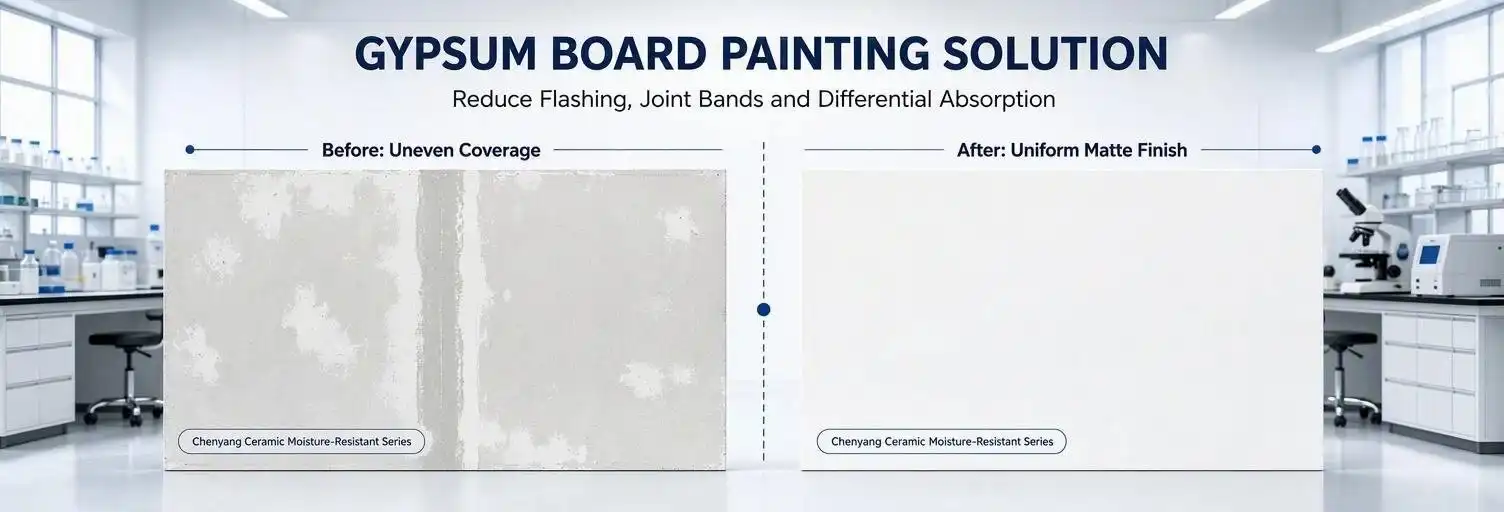
Understanding the Challenges of Painting Plaster and Gypsum Board
Different construction materials require different coatings, and selecting the best paint for gypsum board is essential to achieve a durable and uniform finish on plaster and drywall surfaces. To get a nice finish, you need to know how they work.
Why Porosity and Surface Texture Matter
Gypsum board and plaster surfaces require the best paint for gypsum board because both materials have high porosity. Places and walls that have different kinds of paper on them soak up paint at different rates. This could cause flashing or joint bands to show up. In bright light, the finish isn't always as smooth as it could be because of the uneven absorption. When the taped edges and skim-coated parts have different designs, it's even harder to coat things.
Moisture Sensitivity and Mold Risks
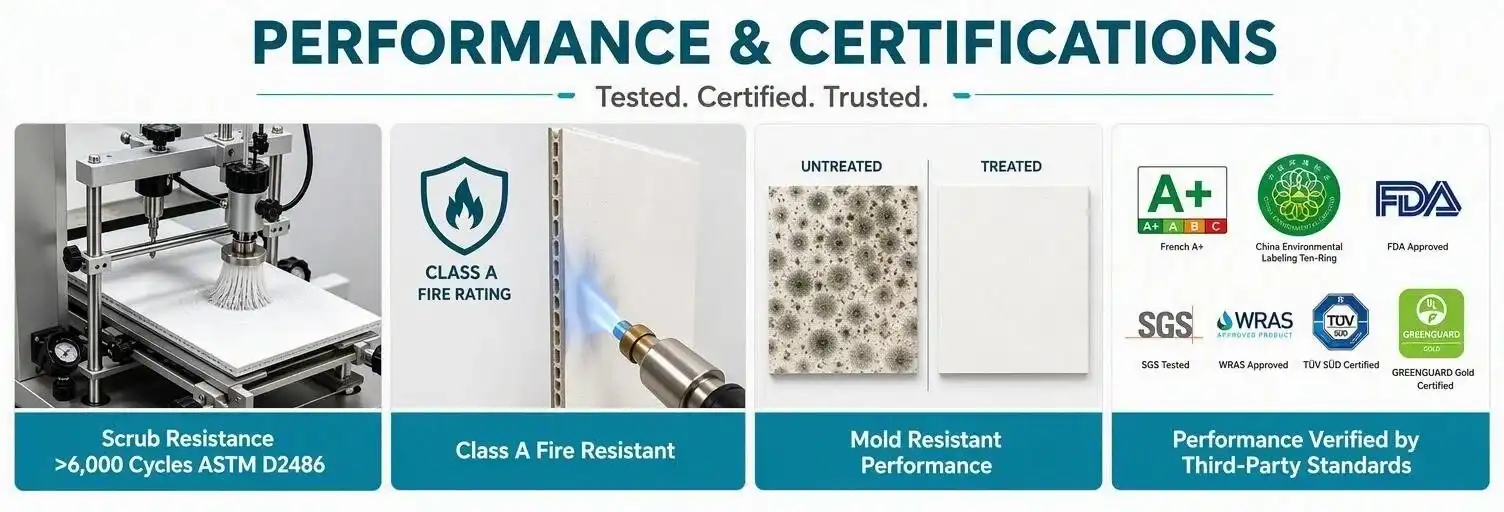
Homes, companies, and workplaces all have problems with water all the time. The pores in plaster and gypsum board let water stay in them, which is great for mold and mildew to grow. In places with a lot of foot traffic, like schools, hospitals, and homes, this risk is very important for health and care. To stay healthy and avoid long-term damage, choose a layer that doesn't let germs grow on its own and lets air flow through it.
Surface Imperfections and Finish Quality
Even when plaster and drywall are properly prepared, using the best paint for gypsum board is necessary to hide sanding marks, joint imperfections, and surface irregularities.
It's not just about how someone looks when you're trying to solve these problems. You won't have to fix things as often if you use the right paint. It also makes the surface last longer and costs less. Spending money on the right finishing system will make the project last longer and be more successful in the long run. People who plan and source projects should know this.
| Parameter | Specification |
|---|---|
| Theoretical Coverage | 11-14 ㎡/L per coat |
| Dry Film Thickness | Approximately 30 microns |
| Surface Drying Time | 30 minutes (25-30℃) |
| Complete Drying Time | 60 minutes (25-30℃) |
| Recoat Interval | ≥ 2 hours |
| Dilution Ratio | Roller/Brush ≤20%, Airless Spray ≤10% |
| Application Methods | Roller, brush, spray (airless spray recommended) |
| Application Temperature | 5-35℃, humidity <85% |
| Substrate Moisture | <10%, pH value <10 |
| Wash Resistance | >6,000 times |
| Fire Rating | Class A (non-combustible) |
| Packaging Options | 6kg / 20kg / 25kg per bucket |
| Storage Temperature | 5-35℃ in sealed container |
Types of Paint Suitable for Plaster and Gypsum Board: An In-Depth Comparison
There are many technical and useful things to think about when choosing the right paint for plaster and gypsum board.
Latex vs. Acrylic: Understanding the Differences
You can easily and cheaply find these paints. They usually have plastic or styrene-acrylic tops. On the other hand, acrylic paints are often considered part of the best paint for gypsum board systems because they provide superior adhesion, flexibility, and long-term durability. They are made of plastic resins all the way through. Because of this, acrylics are great for places of work that need to look good for a long time. In cold weather, they don't change shape, and over time, they don't turn yellow.
Oil-Based Paints: When Are They Necessary?
Oil-based paints leave a hard finish that lasts a long time. The ones that get cleaned, touched, or get dirty a lot are the ones that work best. A lot of people like oil-based paints, but not as many people use them these days because they smell bad, take longer to dry, and have a lot of volatile organic compounds (VOCs). There are now many places that limit or ban their use in business buildings. This makes choices that use water more useful.
Specialty Primers and Moisture-Resistant Coatings
To make sure of even uptake and a sealed base, it's very important to use primers made for porous surfaces. When high-solids sealers are used, the amount of finish that is wet on the joint cement and paper face shouldn't be different. In damp places like bathrooms, kitchens, and buildings near water, you need paint that doesn't grow mold or soak up water. More often than not, these things contain antimicrobials and bendable film structures that allow trapped water to escape without harming the covering.
Finish Selection: Matte to Semi-Gloss
When choosing the best paint for gypsum board, the finish selection directly affects durability and appearance. Flat or smooth things don't show flaws as much, but they are messier to clean. Satin and white finishes look good and are simple to clean. They can be used in places like workplaces and schools. There is a lot of foot traffic in halls, industrial kitchens, and healthcare settings. Semi-gloss finishes are great for these areas because they are easy to clean and don't damage when they get wet.
If buying teams know about these choices, they can be sure that the style they choose will work for the project. In this way, both efficiency and conformity are guaranteed.
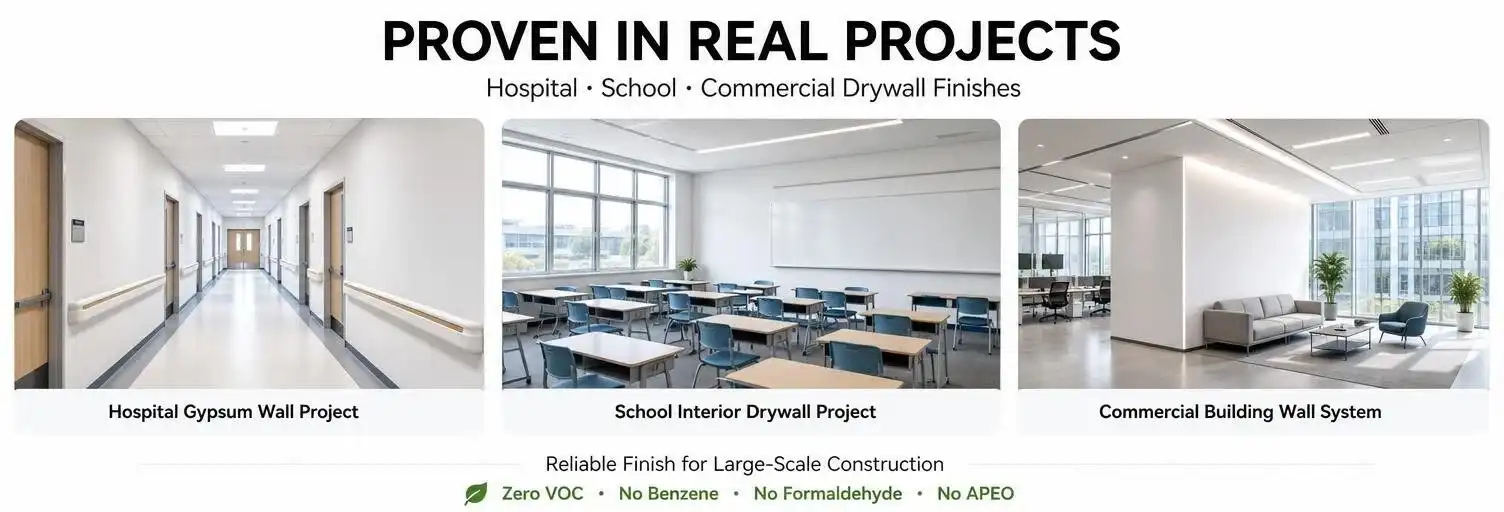
How to Properly Prepare and Paint Gypsum Board and Plaster Walls
The first thing you need to do before painting on plaster or drywall is to make sure the surface is smooth.
Cleaning and Surface Smoothing
Places need to be clean of dust, grease, and other small things before they can be covered. A wet cloth or cleaner can get rid of dust and dirt that might make it hard for things to stick. You need to sand to get rid of swollen paper fibers, smooth out joint compound wrinkles, and finish the job. When you sand something with fine-grit paper, the surface gets smoother without getting rough.
Priming for Optimal Adhesion
When selecting the best paint for gypsum board in commercial environments, a high-quality primer is essential to ensure even absorption and surface stability. Primers make the surface smooth, stop different steps of absorption, and get the surface ready for the finish. A bad primer job could make the paint look patchy, and the joints will show through the finish. Acrylic bases with a lot of solids are best for making a smooth base and keeping paper fibers in place.
Application Methods: Roller, Brush, or Spray
Proper application techniques are essential when using the best paint for gypsum board, especially in large commercial projects where consistency and film thickness matter. Rollers are useful for making the surface rougher or smoother on big, flat areas. You need tools to make small cuts and lines. With tools that don't need air, spraying is the fastest and best way to finish big business jobs. There is less overspray when you spray without air, and the film width stays the same. This is important for meeting deadlines and quality standards for projects.
Drying and Curing Times
Drying and curing performance is another key factor when evaluating the best paint for gypsum board, particularly in fast-paced commercial construction schedules. If everything goes as planned, the surface will be dry in 30 minutes. Feel free to be gentle with it. The weather and temperature can make it take up to an hour or more for something to fully heal. This is the hardest and strongest part of the layer. It's important to give the film enough time to dry between coats so that the coats stick well.
It will look good and last a long time if you follow these steps for getting it ready and putting on the finish.
How to Choose the Best Paint for Gypsum Board in Commercial Projects
When choosing coatings for large-scale projects, procurement teams must evaluate whether the system qualifies as the best paint for gypsum board in terms of cost, durability, and compliance.
Evaluating Durability and Cost-Effectiveness
The first price of paint is important, but the long-term price is what matters. It may cost more up front, but better finishes last longer, don't need to be sprayed as often, and are easier to keep up. How much does it really cost per square meter over time? To get a better idea, look at things like scrub resistance, secret power, and covering rates.
Meeting Environmental Compliance and Sustainability Goals
All over the world, the rules about VOCs are getting stricter. Paints with low or no VOCs are now required in many places. Certifications like LEED, GREENGUARD Gold, and French A+ must meet strict rules about the cleanliness of the air inside a building. Earth is in better shape when you use water-based paints instead of solvent-based colors. This helps companies follow the rules and be better for the environment.
Bulk Purchasing and Supplier Selection
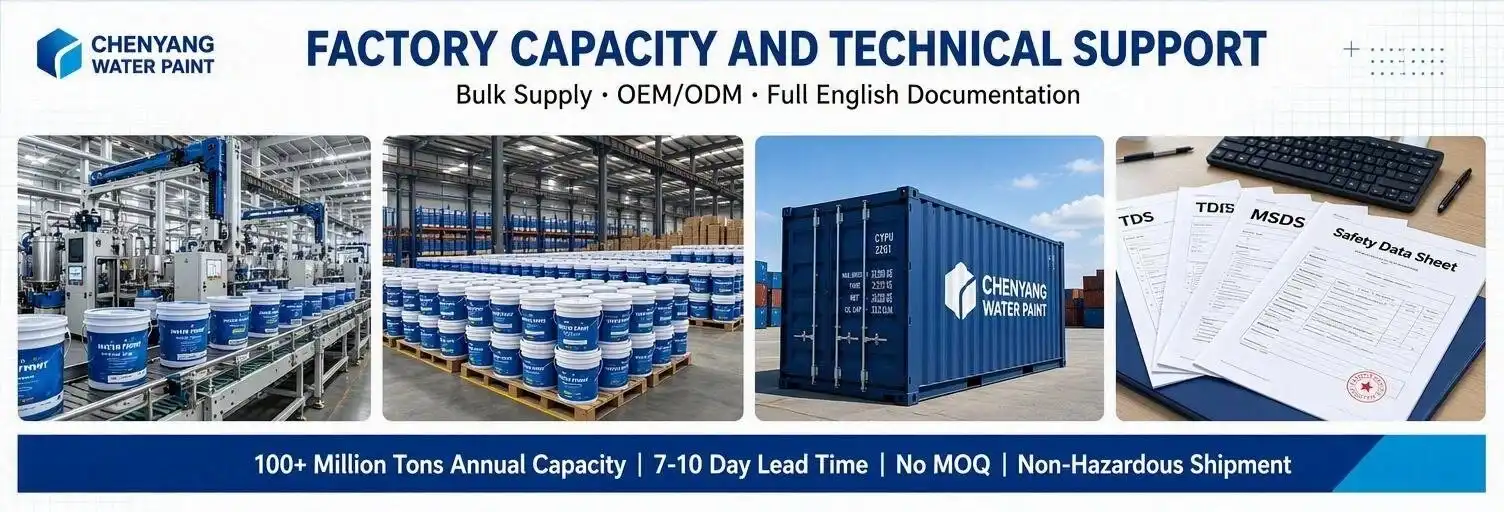
It is very important to find reliable sources that can help you with your job and help you reach your production goals. When you buy in bulk, you save money and avoid running out of things when you need them most. When you work with OEM/ODM companies, you can change the color and make the package fit the needs of the project. You can also use your own name for big projects.
Leading Industry Brands for Plaster and Gypsum Board Applications
In the market for industrial paints, some well-known names are Ben Moore, Sherwin-Williams, and Dulux. There is a lot of scientific information and tests done in the field to back up their lines of goods, which are made to work with porous surfaces. You can trust their goods because they meet international standards for how well they work, how safe they are, and how they treat the earth.
To pick the right paint, you need to do more than just look at its specs. You need to plan ahead to make sure that professional work meets long-term project goals, price limits, and safety needs.
Top Recommended Solution for Gypsum Board and Plaster Walls in Commercial Environments
Aqua paint made from clay is one of the newest and most advanced types of paint. For tough jobs in business and industry, they're great.
Chenyang Ceramic Moisture-Resistant Water-Based Inorganic Coating
Chenyang Water Paint has a Ceramic Moisture-Resistant Series that is made to make things better for surfaces made of plaster and gypsum board. This wrapping method is made of objects that come from nature and man-made sources. With water that doesn't contain any benzene, formaldehyde, or APEO, it makes an eco-friendly product. It has been accepted by both the French Indoor Environment A+ and the China Environmental Labeling Ten-Ring. This means it meets the strictest standards for indoor air quality in the world.
Big things are the best things about this offer. It works well in all kinds of weather, keeps things from getting too wet while still letting air flow, and makes a strong paint film that lasts a long time. Bacteria can't grow on the manmade silicate glue because it is naturally acidic. This makes it great for damp places like bathrooms, commercial kitchens, and areas near the coast. The film is bendable, so it lets the water that is trapped leave without harming the layer. This keeps it from getting peely and burning.
It can be washed over 6,000 times, which is a lot more than what the national standards for first-class products say. It will last a long time in places that get a lot of use. Because the thick mixture covers well and hides flaws and base colors on the surface, it saves money on colors and work. Class A fire protection means that the material used to make the fake silicate film can't catch fire and doesn't give off dangerous smoke when it does. This safety feature should be in public places, schools, and hospitals at all times.
Application, Certification, and Supply Capability
The app works well and is easy to use. You can use a roller, a brush, or a spray gun with this thing. For big jobs, the best spray gun is one with high pressure and no air. Most of the time, the top dries in 30 minutes and the whole thing cures in 60 minutes. This helps get things done quickly. There are two hours between coats, so one job can include more than one coat. It's a great way to use the stuff because each coat can cover 11 to 14 square meters.
This finishing paste comes in 6 kg, 20 kg, and 25 kg packages. You only need to order one box to start. You can choose from many jobs. Teams that buy things can meet specific style needs because colors can be changed. The EU SGS, the German TÜV, the UK WRAS, and the US FDA have all cleared the product from Chenyang. This means that it meets all of their quality and safety standards.
Chenyang Water Paint has been making water-based paints for more than 28 years. They are known for always being there for you and having fresh ideas. People know how skilled and careful the company is with quality because it worked on the National 863 Program in China and on famous projects like Tiananmen Square and the Bird's Nest Stadium. In Chenyang, there is a green business that can make over a million tons of goods each year. This makes sure that there is always enough and that wait times are only 7 to 10 days, even when demand is high.
Conclusion
Choosing the best paint for gypsum board and plaster walls directly affects durability, maintenance cost, indoor air quality, and long-term structural performance in commercial and residential projects. Water-based coatings on plastic and fake clay stick better than solvent-based coatings. They also don't soak up water, stop mold growth, and are better for the earth. Think about the issues that come with weak bases before you buy something. Also, make sure the product is accepted and that the company you're dealing with is honest. People who work in procurement put life, safety, and environment at the top of their list. This way, they can finish projects that meet strict technical requirements, keep costs low, and help the business reach its environmental goals.
FAQ
Why Is Priming Essential Before Applying Paint on Gypsum Board?
Primer goes over the porous gypsum paper and joint cement. Inequality in water absorption leads to flashing and joint bands. This stops it. A primer with a lot of solids helps the finish stick better, makes the base flat, and traps paper fibers. This makes sure that the whole area has the same finish.
What Is the Best Paint for Gypsum Board in High-Traffic Commercial Spaces?
Most things will last longer and be easier to clean with a smooth or semi-gloss finish. They will look good for a long time because you can clean them often and they won't lose their shine. Because of this, they work well in rooms, hospitals, and schools.
How Can I Prevent Mold Growth on Plaster Walls in Humid Environments?
Coverings that don't let mold grow, work against germs, and come in film forms that let air flow through them should be used. It is important to have enough air flow, keep the temperature inside in check, and use water-based paints that are naturally neutral to stop mold and mildew from spreading.
Is Water-Based Paint the Best Paint for Gypsum Board Compared to Oil-Based Coatings?
Acrylic and fake clay paints that are water-based these days last as long as or longer than oil-based paints. They won't scratch, stick well, and are bendable, so they're perfect for business projects. Another thing is that they are eco-friendly and give off fewer VOCs.
Partner with Chenyang Water Paint for Superior Gypsum Board Coatings
If purchase managers and project engineers need the best paint for gypsum board from a company they can rely on, Chenyang Water Paint will give them what they need. Chenyang makes paints that are water-based and work well in harsh businesses. They are approved by the US FDA, the EU SGS, the German TÜV, and the UK WRAS and have more than 1,000 patents. Our Ceramic Moisture-Resistant Series is fire-safe to Class A, doesn't let mold grow, and lets air flow through it to control moisture. It only takes a short time to make something, and you can change the OEM/ODM services. If you email us at sales@chenyangpaint.com with what you need for your job, you can save a lot of money on large orders.
References
1. American Society for Testing and Materials (ASTM). "Standard Test Methods for Scrub Resistance of Wall Paints." ASTM D2486-17.
2. National Paint and Coatings Association. "Guide to Selecting Coatings for Porous Substrates in Commercial Construction." 2021 Edition.
3. Building Research Establishment (BRE). "Moisture Control and Mold Prevention in Interior Wall Systems." BRE Technical Report 2020.
4. International Code Council. "Standards for Fire Resistance and Indoor Air Quality in Building Materials." ICC Evaluation Service Report 2022.
5. Green Building Council. "LEED v4.1 Requirements for Low-VOC Interior Coatings and Paints." USGBC Publication 2023.
6. European Chemical Agency. "Regulation on Classification and Labeling of Water-Based Paints and Coatings." ECHA Guidance Document 2022.
Send Inquiry
You may like