What Should You Know About Latex Paint?
If you walk into a business building that has just been painted and the strong chemical smell is gone, that means the paint is probably water-based latex, which is supposed to smell less. When it comes to building coats, low odor latex paint, especially those made to give off very little gas, is a big step forward. These items use modern acrylic resins and water-based chemicals to give surfaces high-performance finishes that don't make the air inside less healthy. If you're in charge of a big industry project, remodeling a hospital, or buying supplies for schools, you need to know everything there is to know about current latex paint, from how much VOC it has to how it can be used.
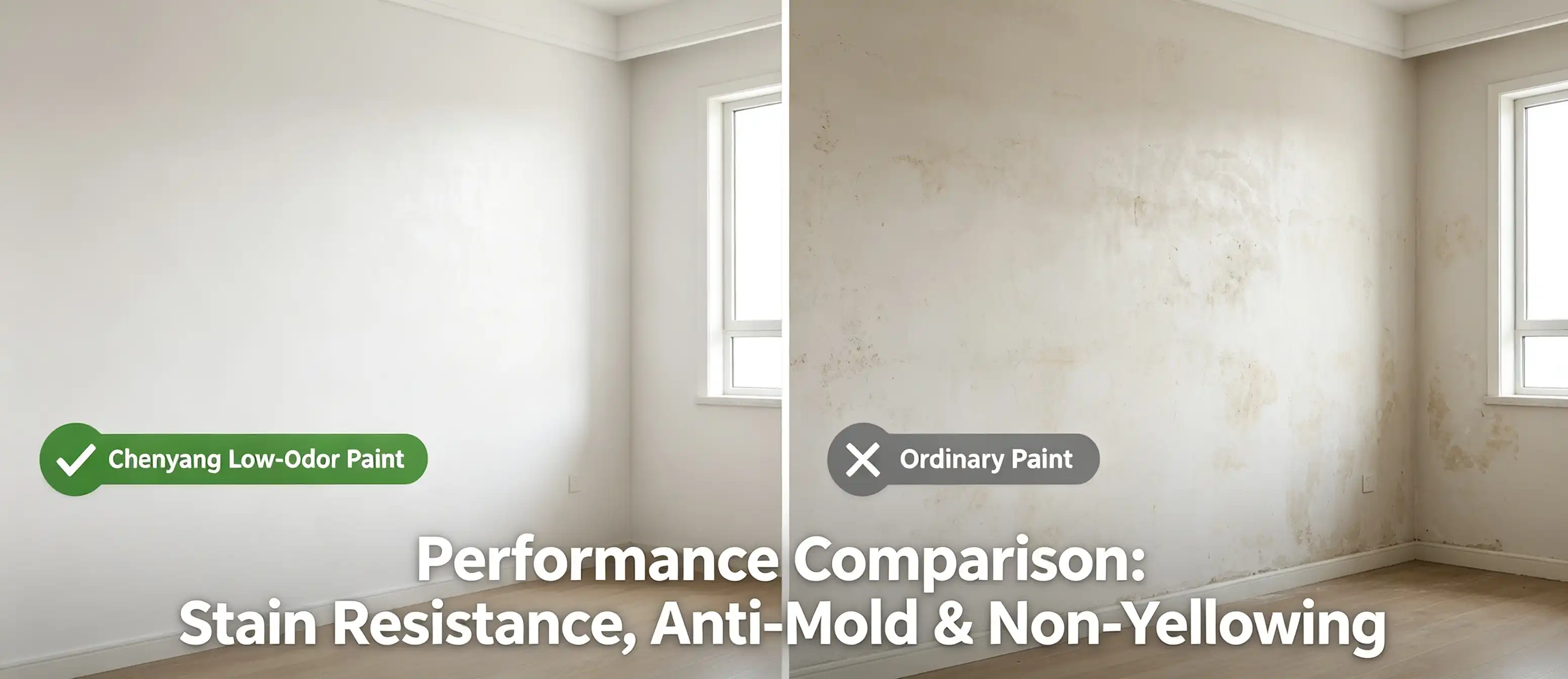

Understanding Low Odor Latex Paint: Basics and Benefits
Today's latex paint is a lot better than the simple wall covers of the past. Water is what latex paint is made of instead of chemicals made from fuel. This changes how the paint works while it's being put on and after it's dry. Modern versions don't usually use real rubber latex, so the word "latex" can be hard to understand. They use acrylic, vinyl-acrylic, or styrene-acrylic binders instead, which dry out and leave behind thick films.
Chemical Composition and Environmental Profile
Acrylic resins that are 35 to 45% solids by volume are generally what make up a good water-based latex paint. Pigments give the paint its color and opacity, rheology modifiers control how the paint moves, and carefully chosen additives make the paint work better without giving off dangerous gases. In forms with less of an odor, aromatic hydrocarbons and other volatile organic chemicals are either not present at all or only present in very small amounts. There are less than 50 grams of VOC per liter in many formulas, and there are fewer than 5 grams of VOC per liter in top lines, which is almost nothing.
The fact that Chenyang Water Paint makes engineering-grade rubber coats shows how eco-friendly the business is. Our recipes don't have any benzene, toluene, or xylene in them; they only use water as a thinner. These chemicals are often found in normal paints. They can make the air inside your home less healthy to breathe and hurt the lungs. Products that are certified by both EU SGS and UK WRAS meet the strictest environmental standards around the world.
Key Benefits for Commercial and Institutional Applications
Modern low odor latex paint is better in many ways, not just that it smells better. The biggest benefit is cleaner air inside, which is especially helpful in busy places where normal paint fumes would make it hard to work. It's possible for hospitals to keep treating patients while improvements are going on. Schools can get classes back up and running in hours instead of days. And places that serve food and drinks can clean up overnight without leaving behind chemical smells that make guests uncomfortable.
Another important benefit is following the rules. It's safe to say that water-based latex paints that meet LEED standards and GREENGUARD Gold approval will still be used in the future, even though VOC pollution limits are getting tighter around the world. While protecting the health of the people who live or work in buildings, green standards are important for them. Low-emission paints help them reach their sustainability goals.
Latex paint is more useful because it is easy to move around and use. Solvent-based coatings are considered dangerous and need special paperwork and handling guidelines before they can be shipped. Water-based coatings are shipped as non-hazardous goods. This rate cuts the cost of shipping by a lot, makes it easier to get things through customs when buying them from other countries, and gets rid of the need for processes for getting rid of trash that is dangerous.

Technical Comparison: Low Odor Latex Paint vs Other Paint Types
You need to know how different paint technologies work in a number of areas that directly affect project timelines, worker safety, and long-term security before you can choose the right covering.
Performance Characteristics Across Paint Categories
VOC levels in regular latex paint are usually between 50 and 150 g/L. This means that the paint smells bad while it's being used and while it's drying. These mixtures work well for many home uses, but they show up as problems in business places that are already full. Something is "zero-VOC" or "no-VOC" if it has less than 5 g/L of VOC. This means it doesn't smell and works just as well as standard recipes.
When making plans for a job, the drying time is an important thing to keep in mind. If the low odor latex paint is at room temperature and humidity, it should be dry to the touch in 30 to 60 minutes and dry all the way in 90 to 120 minutes. At least two hours pass between coat changes, so workers can put on more than one coat in a shift. At 25–30°C, Chenyang's mirrored insulation coats dry to the touch in 30 minutes and fully in 60 minutes. This is because they cure quickly.
Professional-grade items last longer and can be washed, while consumer-grade items don't. ASTM D2486 testing standards say that good latex coatings can last for more than 2,000 scrub rounds. This means that professional cleaners can be used to clean the surface often without breaking down the film. Color stays the same even when it's exposed to UV light, especially in recipes that use current pigment stabilizers.
Interior vs Exterior Application Considerations
Many people think that latex paint can only be used inside, but newer paints that are water-based can be used in many places. The goal for interior items is to meet standards for indoor air quality, be easy to clean, and not damage easily. Better UV blockers, moisture shields, and chemicals that don't grow mold are used for models that will be outside and exposed to the weather.
Chenyang's industrial water-based paint series is proof of this. It has special paint recipes for painting on ceilings, walls outside, pipes, and roofs. Five things about the line of reflective insulation coats work really well: they reflect a lot of sunlight, are very flexible, don't get stained easily, and can stand up to bad weather. The GB/T 25261-2018 performance standards for reflective shielding coatings are very strict. These coatings meet those standards for reflecting the sun and emissivity. This means you can see and count how much energy they save.

How to Select the Best Low Odor Latex Paint for Your Needs
When choosing what to buy, you need to look at more than just the price per gallon. Total cost of ownership, source dependability, certification validity, and the amount of expert support all have an impact on how happy people are in the long run and how well a project does.
Evaluating Suppliers and Certifications
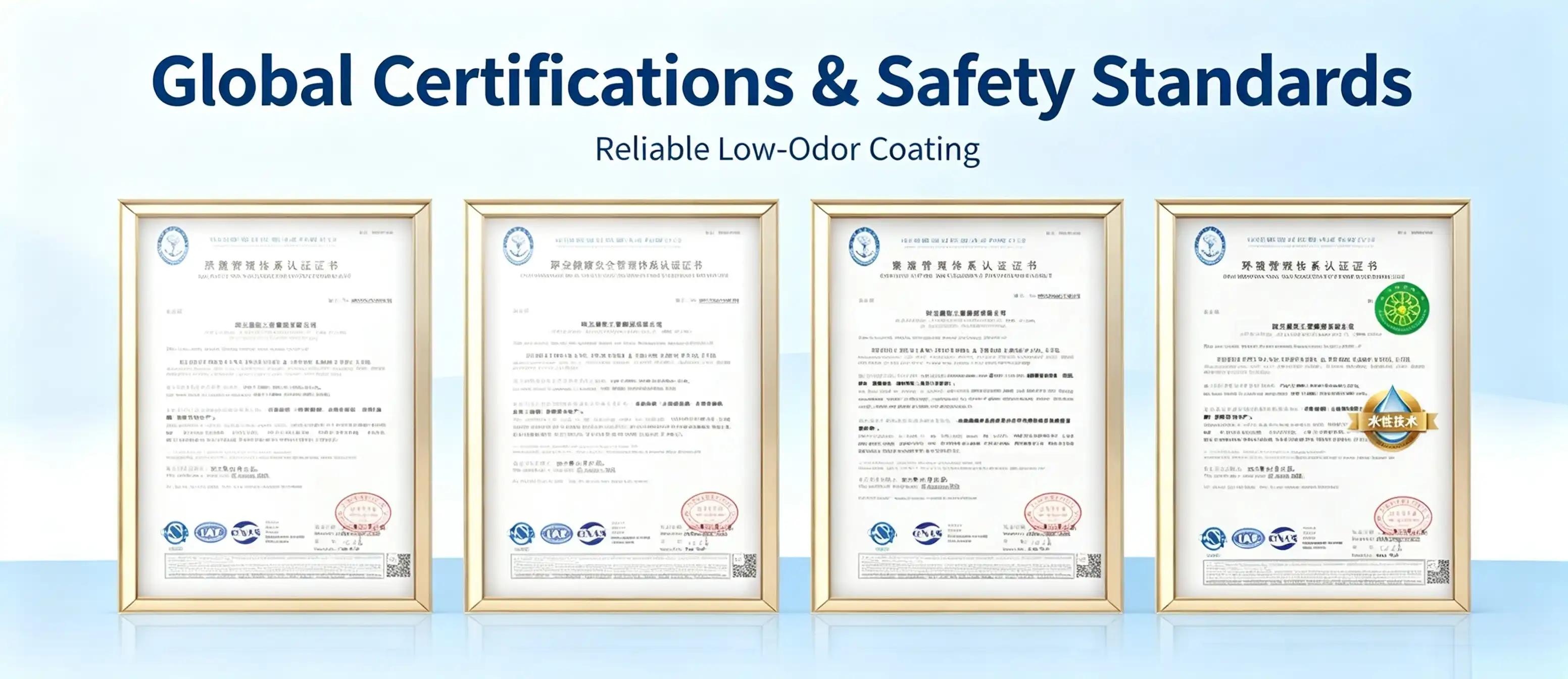
What people think about a brand is a good place to start, but well-known third-party certifications that back up claims are a better way to be sure. In all of Europe, EU SGS tests make sure that rules about safety and the environment are followed. When a product gets the German TÜV seal of approval, it means that it meets the high technical standards needed in developed markets. The surface is safe to use on surfaces that will come into contact with drinkable water systems because it has been approved by the UK WRAS. This is something that should be thought about for healthcare, food service, and institutional settings. Premium lines of low odor latex paint have been approved by the US Food and Drug Administration (FDA) as food-contact grade. This means they can be used in the most sensitive places where coverings can touch food.
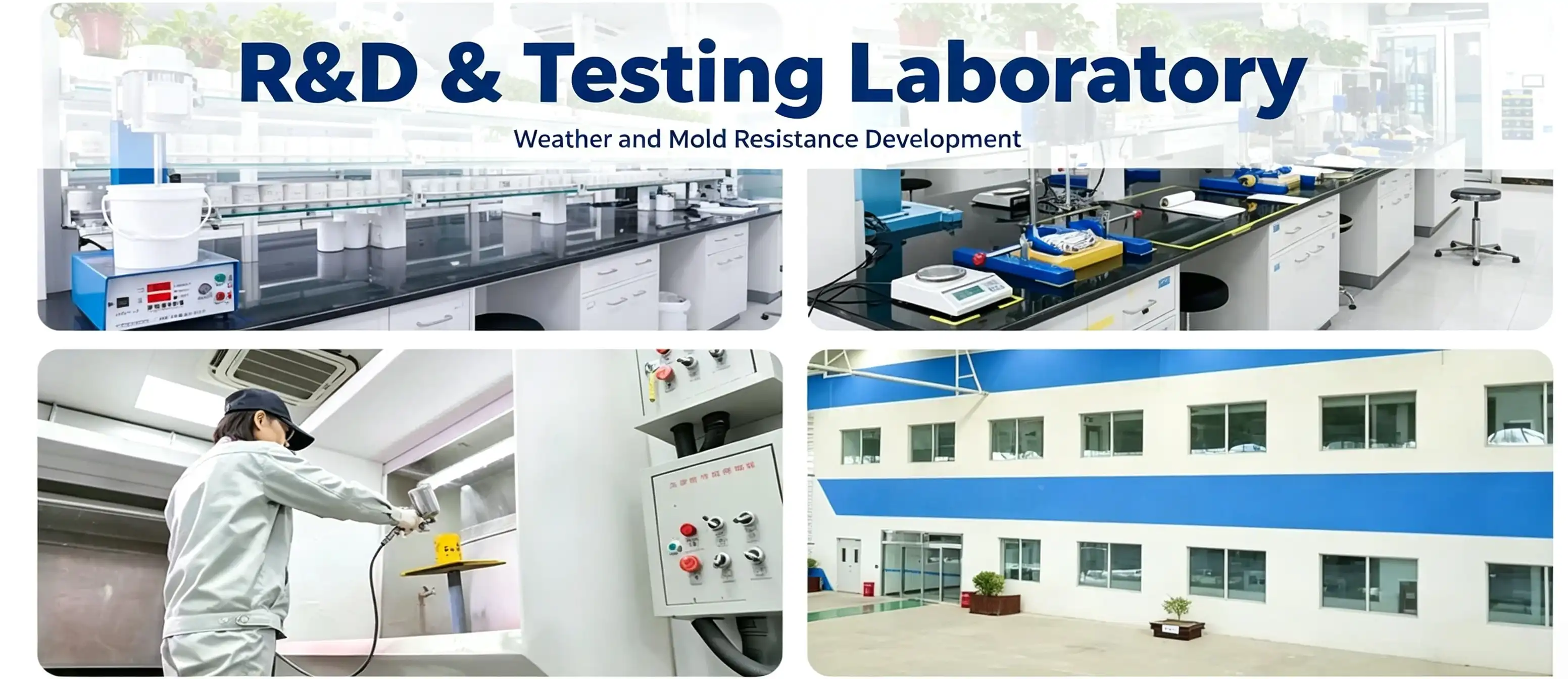
Chenyang Water Paint has all of these well-known approvals. They have been a part of more than 100 business standards and have more than 1,000 patents to back them up. People trust that the things will work as stated in a lot of different places and situations because of this level of technical detail.
Matching Specifications to Application Requirements
Times call for answers that are unique to those times. When it comes to healthcare buildings, areas that are safe, easy to clean, and kill germs are very important. To protect the developing lungs of children, schools need finishes that last a long time and can handle being touched and worn. Also, these products have to follow the tightest VOC rules. In industrial settings, it's important to protect against chemicals and get back to work quickly so that production runs as easily as possible.
When you buy in bulk, you need to be able to change the things you buy. As part of its OEM/ODM services, Chenyang can match colors to exact specifications, make custom packages to keep brands consistent, and mark products privately for distributors. Full English technical paperwork, like Technical Data Sheets (TDS) and Material Safety Data Sheets (MSDS), makes it easier to meet project documentation standards and gets through customs at a foreign level.
Application Best Practices and Problem-Solving with Low Odor Latex Paint
If you use the right method, you can get the most out of the performance features that good coats have built in. You can also avoid making usual mistakes that damage their look and longevity.
Surface Preparation and Application Methods
What's on the base has a direct effect on how well and how long the layer sticks. The surfaces must be clean, dry, and sound before they can be used. To keep the covering surface safe from damage by alkaline solutions, the pH level should stay below 10, and the amount of water should stay below 10%. Get rid of junk that doesn't belong, dust, grease, and old coats that won't stick in order to build a stable base.
For each type and size of area, a different method of treatment is used. If you water down the low odor latex paint by up to 20%, you can use a brush to cover large, flat areas. Brush methods work well for both fine and bold lines when the dilution settings are kept the same. Wet high-pressure spray doesn't need to be watered down more than 10%, so it works best for big jobs. It's very clear from Chenyang's mirrored insulation coats that roller and brush applications can handle up to 20% dilution, but airless spray applications can only handle up to 10% dilution.
Conditions in the area during treatment have a big impact on the outcome. It should be between 5°C and 35°C, and less than 85% of the air should be wet. There are no problems in the film during the flow, leveling, or fix because of these factors. For example, the film doesn't blush, dry slowly, or cross-link poorly.
Troubleshooting Common Application Issues
Things can go wrong even if you use the right method. A good recipe should leave very little of a smell behind, but it can stay in places that aren't well aired or on surfaces that are dirty. This problem can usually be fixed by letting more air flow through the area while it is being applied and while it is healing. If you think the base is dirty, use the right primer to clean it up before adding the finish.
A bad dilution or application process can often lead to flaws in the film, such as roller lines, brush marks, or changes in the spray structure. A regular look can be achieved by keeping the mil width the same, using the right overlap shapes, and making sure the equipment is set up properly. When surfaces get destroyed or need to be refreshed after being used for a long time, they need to be touched up and painted. To make sure that new coats stick well to old films during maintenance, make sure that the right steps are taken to prepare the surface.

Procurement and Supply Chain Insights for Low Odor Latex Paint
You need to know how the market works, what your suppliers can do, and how shipping affects the time and cost of a job in order to buy low odor latex paint efficiently.
Sourcing Strategies and Bulk Purchasing
For big jobs and long-term maintenance agreements, it's best to work directly with producers. Getting rid of dealer markups and having access to technical support, customization services, and a production plan that ships before others gives you an edge over them. Chenyang can make more than a million tons of concrete a year, so there is always enough, even during busy building seasons. It only takes 7–10 days from the time we get proof of an order to the time we ship it.
Inventory management looks at things like risks of running out of items and the prices that come with them, which can slow projects. When you work with sellers who can handle different order sizes and reliable shipping times, you don't need as much storage room and can still be sure that materials are available when they're needed. Since water-based latex paint isn't thought to be dangerous, it's easier to store than solvent-based paints, which need special fire safety and air systems.
Market Trends and Future Outlook
The paint business is still being changed by people who want safer paints. VOC limits are slowly being lowered around the world, and green building standards are calling for more and more water-based systems. It is always getting better at polymer chemistry, color technology, and additive systems. As a result, there are not many or any differences between how well water-based and solvent-based goods work.
Energy efficiency is becoming more and more important in the paint business. Reflective roof paints that are good at reflecting the sun's rays and letting heat escape save money on cooling costs. This trend is shown by these coatings from Chenyang, which offer ways for business buildings, food storage facilities, oil infrastructure, and industry and civil construction projects to save energy and do less damage to the environment.
Conclusion
There are now a lot of different kinds of low odor latex paint that can be used in modern businesses and public places. Traditional paints have had issues for a long time that can be fixed with water-based formulas that give off little to no smell. These mixtures protect the quality of the air inside, make it easier to handle, make sure rules are followed, and let improvements happen in places that people are already living. You should only work with providers who have a stable output capacity, full certifications, and specialized skills that have been proven. If buyers understand the performance traits, application needs, and buying factors described here, they can make choices that balance short-term needs with long-term value. This is always the case when they are writing specifications for paints in hospitals, schools, factories, or building projects.
FAQ
Does 'low odor' guarantee the paint is completely VOC-free?
Not all the time. Things that give off very few volatile organic compounds (generally less than 50 g/L) are said to not smell strong. If something says "zero-VOC," it means that it has less than 5 g/L of it. Some people may still be able to smell something when either type is being used, even though they don't smell very strong.
Can water-based latex paint match the durability of oil-based alternatives?
Paints made with acrylic latex last as long as or longer than oil-based paints these days. It doesn't rub off, keeps its color, and stands up to the weather as well as or better than normal choices. They are also easier to use and better for the earth.
What certifications should procurement managers verify?
An approval from GREENGUARD Gold shows that low chemical emissions are real. That quality and safety standards in Europe are being met is shown by EU SGS and German TÜV. The UK WRAS license proves that it is safe to touch water that can be drunk. It is best to use the US FDA's food-contact-grade license for the most sensitive tasks.
How quickly can painted spaces return to normal use?
Touch-dry times are between 30 and 60 minutes, so you can do small things within hours. That takes 14 to 21 days. A full fix makes something last as long as possible and be easy to clean. With this product, people can easily come back much faster than with solvent-based products, which need to be left out for days to dry.
Partner with Chenyang Water Paint for Your Coating Projects
For 28 years, Chenyang Water Paint has used low odor latex paint and other water-based coatings. They can help hire workers who want to be sure they get quality products from a trusted source. Our source for engineering-grade latex paint has been fully approved by the US FDA, EU SGS, German TÜV, and UK WRAS. This shows that the product is safe and will work well in the toughest conditions. Our automatic green plant at the national level can make more than a million tons of goods every year. This means that you will be able to finish your projects on time. Seven to ten days are a normal work cycle. Color matching, private marking, and box design are just some of the ways we can customize OEM and ODM products. It's easy to ship things to other countries because all of this comes with full English technical instructions. Instead of sending risky materials, use recipes that have worked well on well-known projects like Tiananmen Square and the Bird's Nest Stadium. Contact our technical team at sales@chenyangpaint.com to discuss bulk pricing, product samples, and customized solutions for your specific application requirements.
References
1. American Coatings Association. (2022). Architectural Coatings: Formulation and Performance Standards. Washington, DC: ACA Publications.
2. Green Building Council. (2023). LEED v4.1 Credit Requirements for Low-Emitting Materials. U.S. Green Building Council Technical Manual.
3. Johnson, R. M., & Chen, L. (2021). Advances in Water-Based Architectural Coatings Technology. Journal of Coating Science and Technology, 18(3), 245-267.
4. National Institute of Building Sciences. (2023). Indoor Air Quality Guidelines for Commercial Construction. NIBS Whole Building Design Guide.
5. Peterson, K. T. (2022). Comparative Analysis of VOC Emissions in Modern Paint Systems. Environmental Science & Technology, 56(12), 8234-8249.
6. Society for Protective Coatings. (2023). Application Standards for Water-Based Coatings in Industrial Environments. SSPC Technical Publication Series.
Send Inquiry
You may like